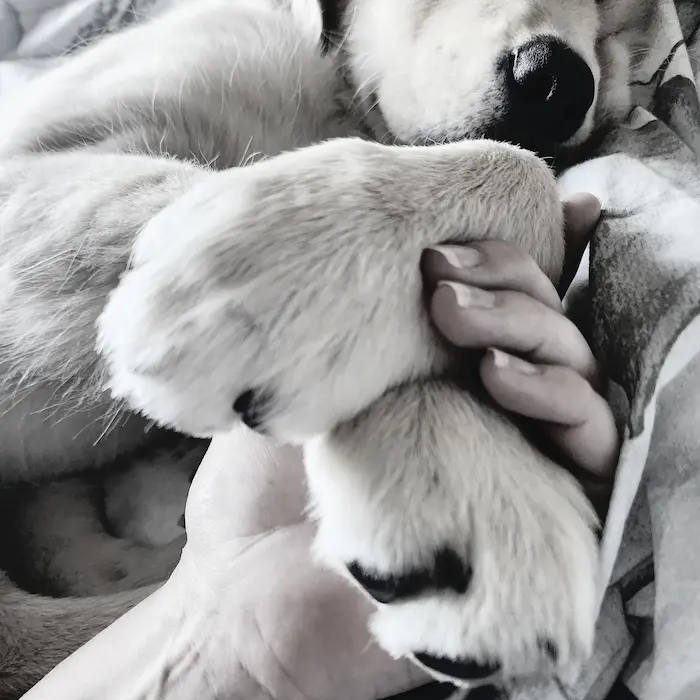
What is a therapy dog? The comfort, connection and joy they bring
Somewhere right now, a child is reading aloud to a dog who will never correct a single word. Somewhere else, an elderly resident is smiling as a therapy dog settles quietly beside them. Somewhere in a hospital room, a patient is forgetting about their worries for a few precious minutes because a wagging tail just walked through the door.
A therapy dog doesn't fix anything. They don't take away illness. They don't erase loneliness. They simply show up.
This article shares my personal research and experience and is not professional, veterinary, medical or legal advice. Lana has not yet been assessed as a therapy dog. Requirements and terminology differ between organisations and countries, so always confirm current information with a recognised organisation where you live.
You have probably seen them somewhere. A golden retriever curled up next to a hospital bed. A gentle old labrador lying beside a child who is reading out loud. Maybe you paused on the video a little longer than you meant to, and thought, what a lovely thing that is.
I have always been intrigued by therapy dogs. Properly intrigued, the kind that makes you start reading late at night. So I did the research, partly out of curiosity and partly because it is a dream I have quietly had for Lana since she was small. This article is what I found, written down in case you have been wondering the same things I was.
Ever since Lana was a puppy, I've had a simple dream.
To be a light in other people's lives, just as she has been in mine.
Those who have followed Lana's journey on Instagram will know that making people smile has always been at the heart of what we do. It was never about chasing numbers, followers or becoming "Instagram famous." If I'm being completely honest, I've never really cared much about any of those things.
My dream has always been much simpler.
I want Lana to make a difference.
I want her to bring comfort.
I want her to bring joy.
I want her to be a little light in someone's day.
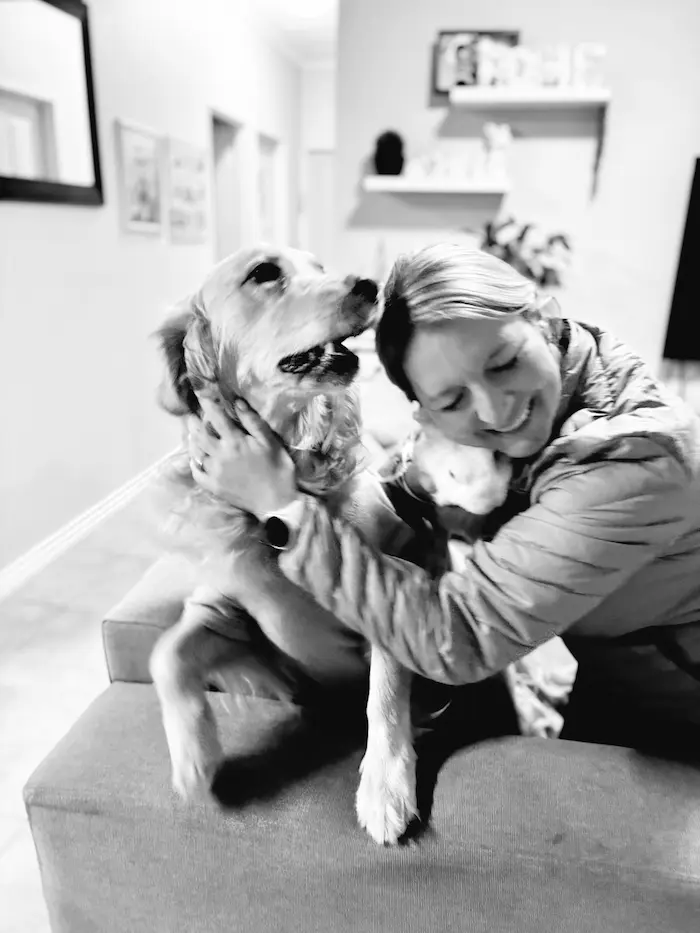
And somehow, without trying too hard, we've already seen glimpses of that happening. Over the last three years, more than 14,000 people have chosen to follow Lana's journey online, not because she's famous, not because she's extraordinary, but because something about her photos, videos or stories connected with them enough to stay.
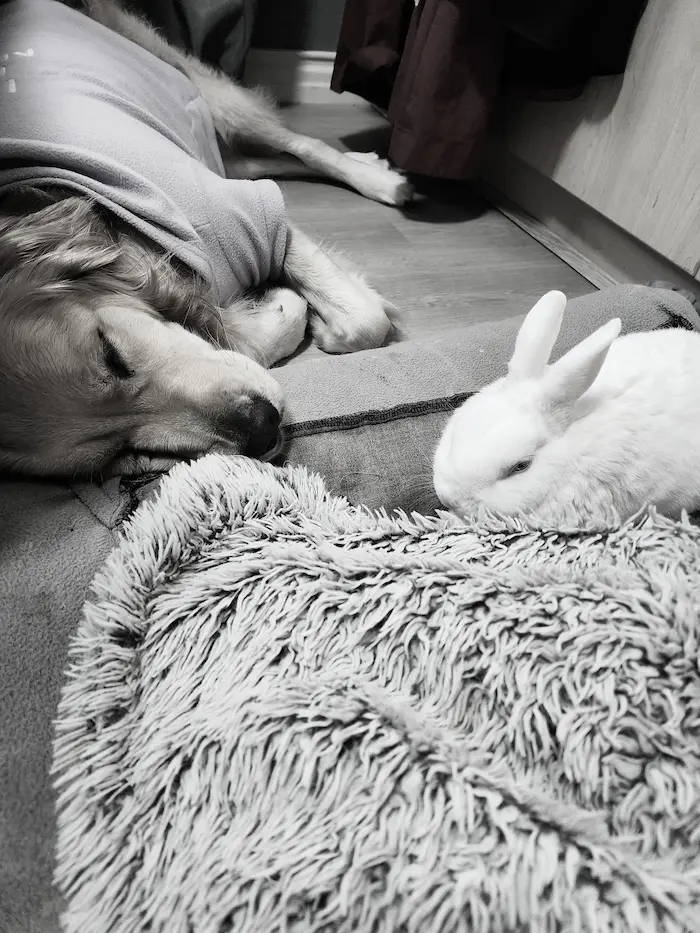
Every follow represents a real person. Someone who smiled at a photo. Who related to a story. Who found comfort in a quote. A person whose day may have been just a little brighter because of a golden retriever with a bow in her hair. (Marshie, our house rabbit, thinks he should also be considered for the role but that's a conversation for another day.)
And that got me thinking.
If Lana can bring joy to people through a screen, imagine the difference she could make in real life.
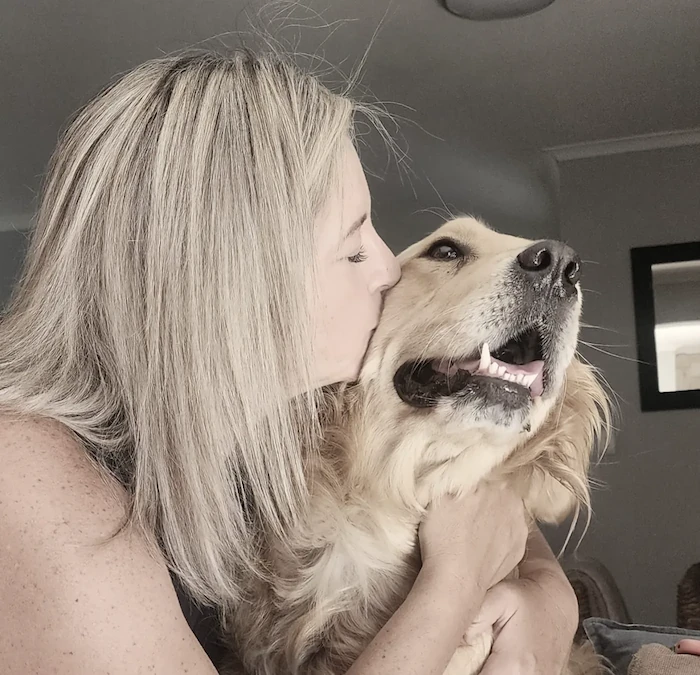
Where the dream started. She has been a light in my life since the day she arrived.
That's where my interest in therapy dogs began. Over the years I've followed several therapy dog accounts online and found myself fascinated by the work they do. The comfort they bring. The smiles they create. The difference they make in hospitals, schools, retirement homes and communities. The more I learned, the more I found myself asking questions.
What exactly is a therapy dog?
Could Lana become one?
What qualities do therapy dogs need?
Where do you even begin?
And perhaps the biggest question of all: could this dream actually become reality?
So I started researching, reading, learning and reaching out to people already doing this work. And the deeper I looked, the more I realised just how special these dogs truly are. So what exactly is a therapy dog, and why do they play such an important role in so many people's lives?
♡
Let's start at the beginning
So what exactly is a therapy dog?
A therapy dog visits people in organised settings such as hospitals, schools, libraries and care homes, offering calm companionship alongside its handler. Programmes, assessments and visiting requirements differ between organisations and locations.
That might sound simple. And in a way, it is. But that's also exactly what makes it so powerful.
Therapy dogs are not the same as service or assistance dogs. Service or assistance dogs are trained to support a particular person with disability-related tasks, while therapy dogs usually visit different people through organised programmes. Laws and terminology differ by country.
Therapy Dog
Visits many different people in organised settings, alongside their handler, and simply offers calm company.
Who they helpMany different people rather than one person, usually strangers in care, school or community settings.
Service or Assistance Dog
Trained to support one particular person with disability-related tasks, such as guiding or alerting.
Who they helpOne specific person, their handler, whose disability the dog is trained to assist with.
Emotional Support Animal
An animal whose company provides emotional comfort to its own person. Unlike a service or assistance animal, its role does not depend on performing trained disability-related tasks. Recognition and terminology differ by country.
Who they helpTheir own person, rather than different members of the public through an organised therapy-dog programme.
These are three different roles, often confused with each other. If one of them affects your daily life, the organisations working in that specific area will have the current requirements where you live.
♡
The people they reach
Who do therapy dogs help?
One of the things that surprised me most while researching therapy dogs was just how many different people they help.
1
Hospital patients
Think about what it feels like to be a hospital patient: the waiting, the worry, the clinical smell of it all. And then a dog walks in and sits beside you. For a few minutes, nothing else exists. That's not a small thing. For many people, those few minutes mean a great deal.
Offers calm companionshipMay provide comfortCreates a non-judgmental presence
2
Elderly people
For some residents in aged care, a therapy dog visit is the highlight of their week. Something warm and alive to look forward to. In places where loneliness can be a quiet daily reality, that matters more than most people realise.
Encourages gentle connectionMay provide comfortWeekly highlight
3
Children
There's something beautiful about a child reading to a dog. Dogs don't correct you. They don't sigh if you get a word wrong. They just listen. For kids who find reading stressful or who carry anxiety into school, that presence can quietly change everything. Reading programmes exist specifically for this purpose, and the confidence some children find in them is lovely to hear about.
Offers calm companionshipEncourages gentle connectionCreates a non-judgmental presence
4
People going through difficult times
Grief, illness, loneliness. There are moments when words just aren't enough. A therapy dog doesn't try to fix anything. They just stay close. And sometimes a warm weight beside you is exactly what gets a person through the next hour.
May provide comfortOffers calm companionshipCreates a non-judgmental presence
♡
The reason it works
Why dogs make such wonderful therapists
If you’ve ever had a difficult day and felt your dog quietly sit beside you, you’ve already experienced a small part of what makes therapy dogs so special. It is the same quiet instinct behind the way they always seem to know.
Dogs don't judge.
They don't care what job you have.
They don't care what you look like.
They don't care whether you've had a good day or a bad one.
They simply offer their companionship.
No advice, no questions. Just quiet company on the floor beside you.
There's something deeply grounding about the way dogs exist. They're not worried about yesterday. They're not anxious about tomorrow. They're just here, right now, completely present. And when you're in a hospital bed or a retirement home or a school hallway that feels too big, that kind of presence is rare and quietly steadying.
♡
What it actually looks like
What happens during a therapy dog visit?
If you've ever wondered what a therapy dog visit actually looks like in practice, here's a typical picture.
The handler arrives at the facility (a hospital ward, a school library, a retirement home lounge) with their dog on a lead. They're usually met by a staff member who guides them through the setting. The dog moves calmly from person to person, settling beside whoever reaches out. Some people want to stroke the dog. Some just want to watch. Some want to talk, and the dog gives them a reason to.
Visit length varies according to the organisation, facility and the individual dog’s needs. The handler watches their dog's body language throughout, making sure the dog is comfortable and not becoming tired or overwhelmed. This matters: a therapy dog's welfare is just as important as the comfort they provide, and a good handler knows when their dog has had enough.
Afterwards, handlers may give their dogs quiet decompression time: a calm walk, rest at home, or simply time to be a dog again. Therapy work is rewarding, but it's also mentally engaging, and good rest between visits keeps dogs happy and willing.
How often teams visit varies according to the organisation and the facility’s needs.
♡
Could it be your path too?
Could your dog become a therapy dog?
Not every friendly dog is automatically suited to therapy work, and that's completely okay. What matters most isn't breed; it's temperament.
Dogs of many breeds, mixes, sizes and ages may be suited to therapy work. What matters most is temperament, not pedigree.
1
Calm temperament
Therapy dogs need to stay relaxed and settled in unpredictable environments, from busy hospital corridors to quiet retirement home lounges. Calmness isn't just preferred; it's essential.
Relaxed in new placesUnfazed by equipmentSettles easily
2
Good manners & obedience
Basic obedience and reliable behaviour around people, equipment and other animals is essential for safe, successful visits. Everyday house rules are where that starts. A therapy dog should respond reliably to its handler and behave calmly around people, equipment and other animals in the settings where it visits.
Therapy dogs meet new people constantly: children, elderly residents, patients, people using wheelchairs and medical equipment. They need to be genuinely comfortable, not just tolerant, in those interactions.
Welcomes strangersComfortable with all agesNot shy or fearful
4
Enjoyment of human contact
Perhaps the most important quality of all. A therapy dog should genuinely enjoy human contact. Confidence and good manners can be developed, but this kind of interaction should never be forced.
Seeks human contactThrives on connectionGenuine love for people
Many therapy organisations also ask for a formal assessment before a dog starts visiting. What that involves differs from one organisation to the next, but these are the things they commonly look at.
Age & maturityAge requirements differ between organisations. Some set minimum and maximum ages, and younger dogs may need more time to mature before they are ready for assessment.
Basic obedience firstBefore any assessment, a dog should respond reliably to everyday cues like sit, stay, leave it and come. A recognised good-manners qualification, where one is offered, is a helpful foundation.
Temperament assessmentAn assessor usually looks at how the dog responds to strangers, unfamiliar sounds, medical equipment, wheelchairs and the ordinary surprises of a real visit.
Handler assessmentIt isn't only about the dog. Handlers are often assessed too, on how well they read their dog's body language, manage interactions and step in if their dog shows stress. Dog and handler are assessed as a team.
Where do you begin?
Notice whether your dog genuinely enjoys meeting unfamiliar people, keep building the trust between you and calm everyday manners, and contact a recognised therapy-dog organisation in your area. It is worth approaching more than one, since requirements differ from organisation to organisation. They can explain what they currently ask for and help you understand whether this path may suit both you and your dog.
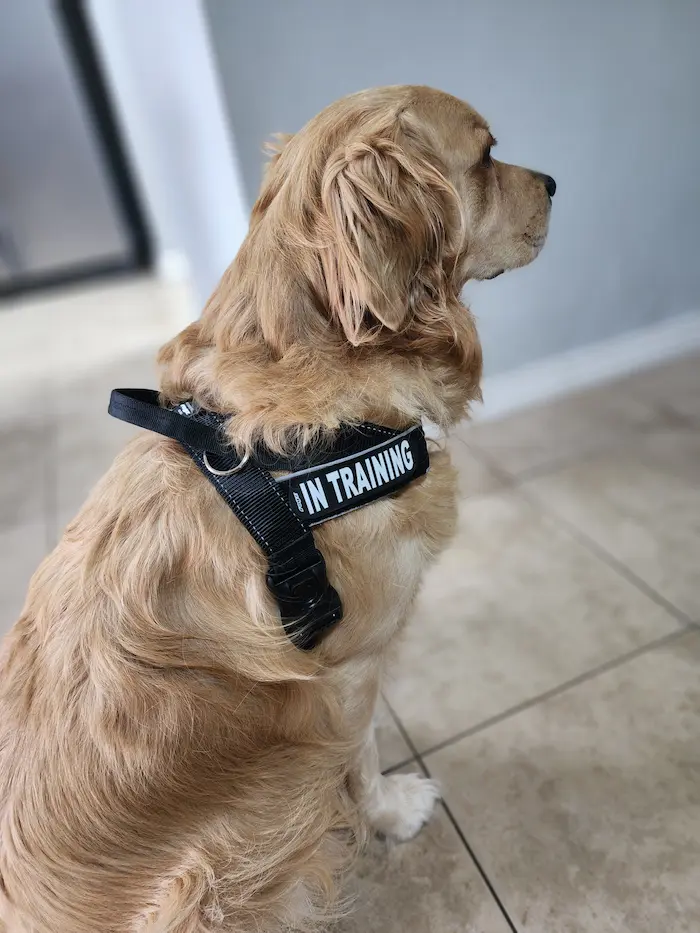
Lana in her general “In Training” harness. Still very much a work in progress.
And even if your dog never becomes part of a recognised therapy-dog programme? That doesn't mean they aren't already bringing comfort and making a difference at home. Every dog who curls up beside someone having a hard day, who makes a child laugh, who gets a tired person off the sofa for a walk, they're already making a difference. Maybe just to one family. But that's not nothing. That's everything.
Where we are right now
Lana trains once a week and we are still building the foundations, obedience, calm manners and confidence around new people and places. Nothing more than that yet. When we feel she is ready, the next step is to contact an organisation and ask what their assessment actually involves, and I will write about exactly what they tell us here. If you are somewhere on the same road with your own dog, I would love to hear where you are. Come and say hello on Instagram at @lana.thegoldenretriever.
♡
Sometimes comfort doesn't come from words. Sometimes it arrives with four paws, a wagging tail and a heart full of love.
Anelda Bosch · Light Paw Studio
♡
Whether Lana ever officially becomes a therapy dog or not, she has already brought me comfort more times than she'll ever know.
Through stressful days.
Through difficult moments.
Through ordinary mornings when life felt overwhelming.
And through sharing her online, I know she's already brought comfort and smiles to many other people too.
Comfort on four paws. Your own dog is probably already doing the same for you.
My dream is still to see whether Lana has what it takes to become a therapy dog one day. Maybe she'll pass every assessment. Maybe she won't. The truth is that not every dog is suited to therapy work, and that's perfectly okay.
Some dogs serve entire communities.
Some serve their families.
And some do both.
Whatever the future holds, I'm willing to give it my very best and see where the journey takes us. Because even if Lana never earns a therapy dog title, she will always be my comfort on four paws. ♥
♡
Frequently asked questions
The questions people most often search for when learning about therapy dogs, answered honestly.
Can any dog become a therapy dog?
Dogs of many breeds, mixes, sizes and ages may be suited to therapy work. What matters most is temperament rather than pedigree: a suitable dog should be calm, friendly, comfortable around unfamiliar people and genuinely enjoy human contact.
Do therapy dogs have to be purebred?
Not at all. Mixed breed dogs make wonderful therapy dogs. What assessors look for is temperament, behaviour and the dog-handler relationship, none of which have anything to do with breed registration.
What do therapy dogs actually do?
A therapy dog visits people in organised settings such as hospitals, schools, libraries and care homes, offering calm companionship alongside its handler. Unlike a service or assistance dog, it is not there to perform disability-related tasks for one particular person. Visits take place by arrangement through an organisation or facility.
What is a reading programme with therapy dogs?
Reading programmes invite children to read aloud to a calm, visiting therapy dog. Some children may feel more relaxed and confident reading aloud to a calm dog. Reading programmes provide a gentle, non-judgmental setting, and their requirements differ between organisations and schools.
Do therapy dogs enjoy their work?
A well-matched therapy dog absolutely can, and should, enjoy their visits. Dogs that genuinely love human contact often thrive in these settings. A responsible handler always monitors their dog during visits and stops if the dog shows signs of being overwhelmed. A dog who doesn't enjoy the work should not continue it.
How do I find a therapy dog organisation near me?
The best first step is to contact a recognised therapy-dog organisation in your area and ask about their current requirements. In South Africa, organisations include TOP Dogs (therapytopdogs.co.za), PAT. Pets as Therapy South Africa (pat.org.za), Angel Paws Therapy Dogs (angelpawstherapydogs.org.za) and Paws for People (pawsforpeople.co.za). Elsewhere, searching for a recognised therapy dog organisation in your own country is the place to start. Each organisation sets its own requirements and onboarding process.