Why does my dog destroy things when left alone? It may be separation anxiety
Coming home to a torn cushion or a chewed couch can make your heart sink. Before you decide your dog is being difficult, take a breath. It doesn't always mean what it looks like.
Coming home to a torn cushion, chewed couch, scratched door, or stuffing scattered across the floor can make your heart sink. For a moment, you just stand there. Then all the questions come rushing in. Why did my dog do this? Were they angry with me? Are they being naughty? Did I do something wrong?
And if you love your dog deeply, the guilt usually arrives right behind the frustration. But before you decide your dog is being difficult, take a breath. A dog who destroys things when left alone is not always being "bad." Sometimes it's boredom. Sometimes it's too much energy. Sometimes it's a young dog still learning what is and isn't allowed to be chewed.
And sometimes, especially when it happens together with barking, crying, pacing, or panic around you leaving, it may be a sign of separation anxiety or separation-related distress.
Before you decide what to do next, try recording your dog for a few minutes after you leave. What happens in those first moments, whether they settle down or start to panic, can tell you a lot.
It's not always about the couch
The damaged couch is usually the thing we notice first, mostly because couches are expensive and dogs seem to know exactly which part to chew for maximum emotional impact. But the couch is not always the real problem.
The real question is: what was your dog feeling when you were gone?
A dog who is calm, relaxed, and simply bored may chew something because it's fun, interesting, or available. But a dog who is anxious may chew, scratch, bark, pace, drool, cry, or panic because being alone feels overwhelming. That difference matters, because the solution is different. A bored dog may need more exercise, enrichment, supervision, or better management. An anxious dog needs something deeper: safety, confidence, structure, and a gradual way to learn that being alone is not something to fear.
Your dog may not be trying to be difficult. They may be trying to cope.
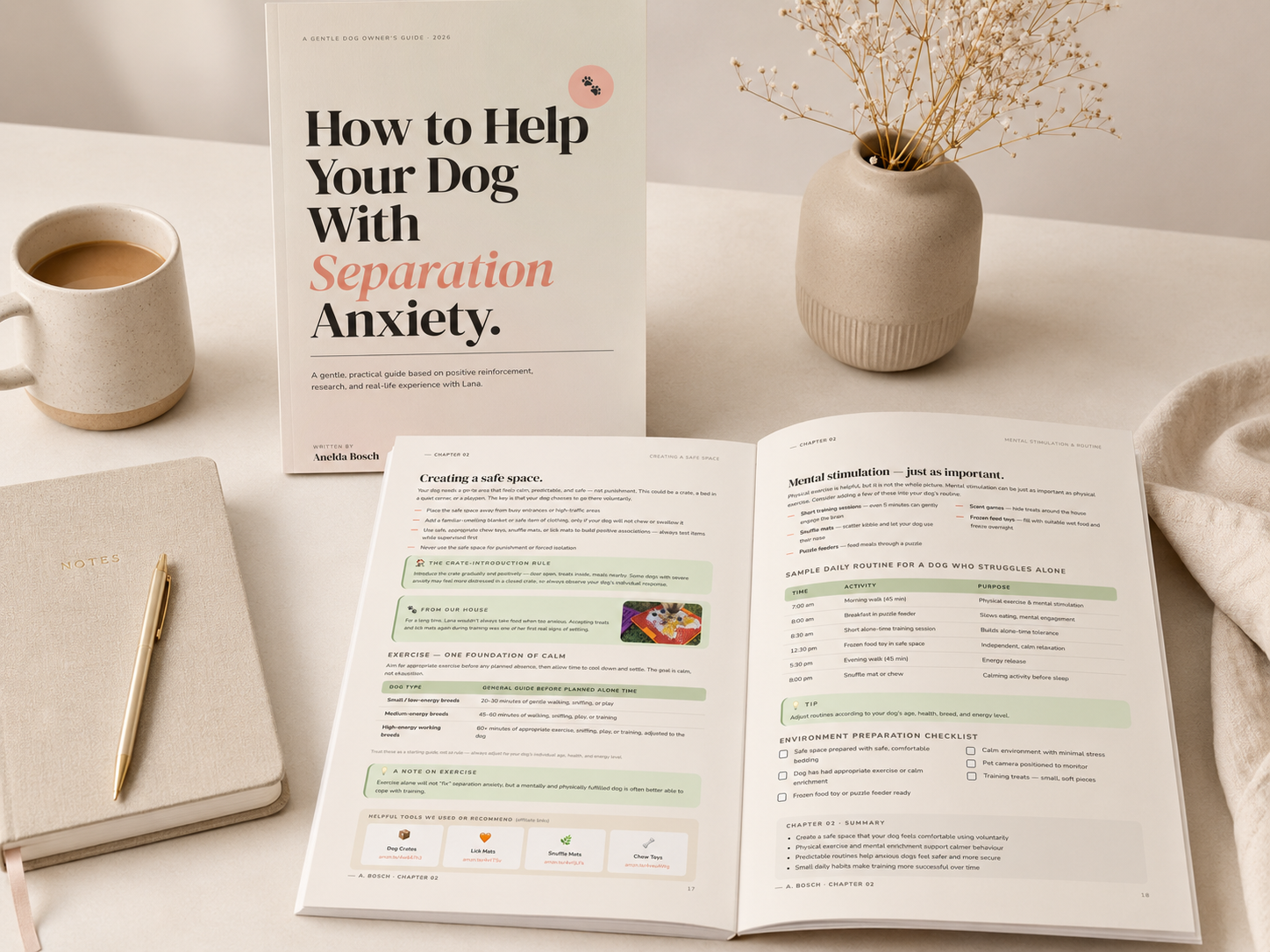
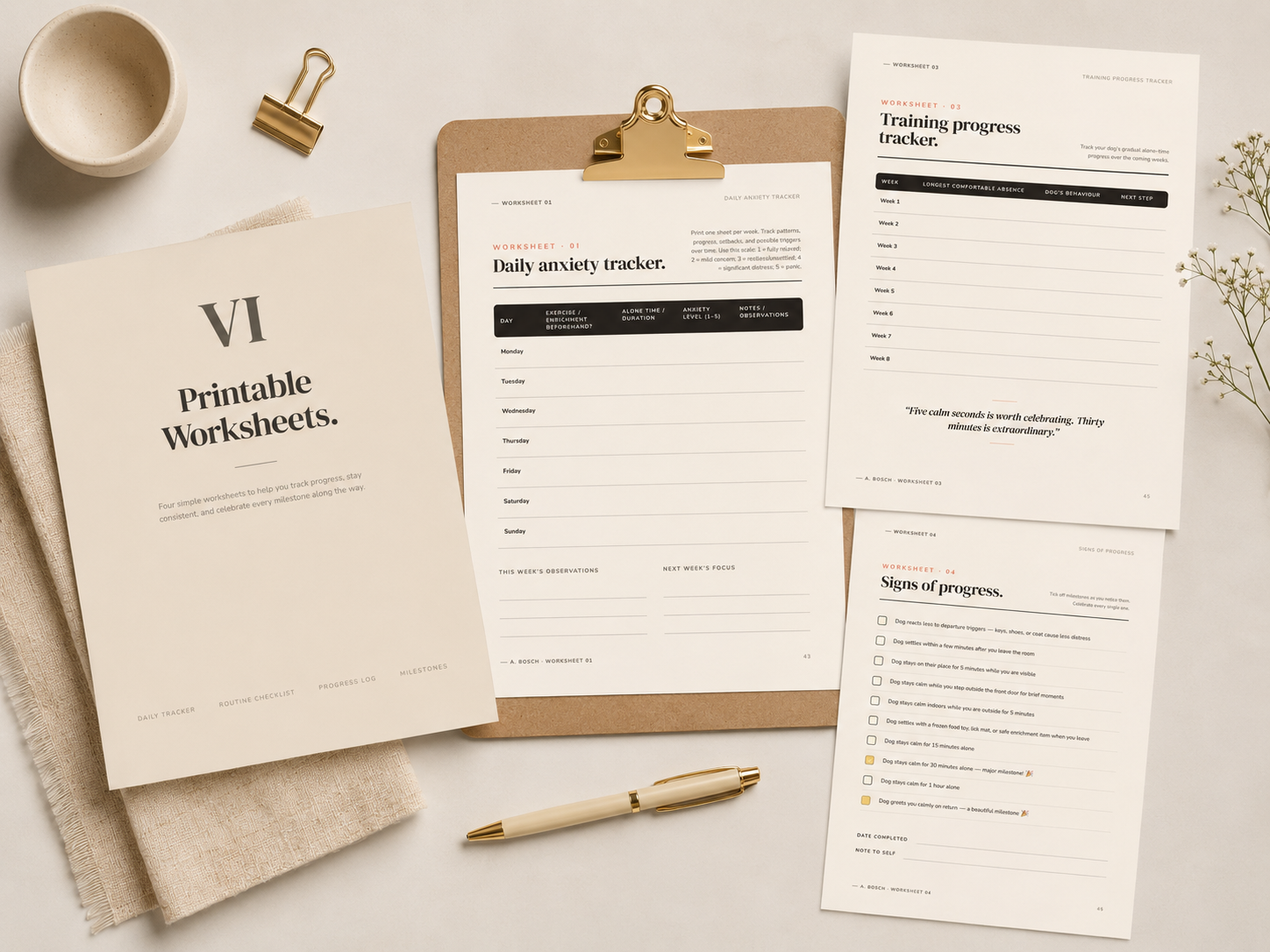
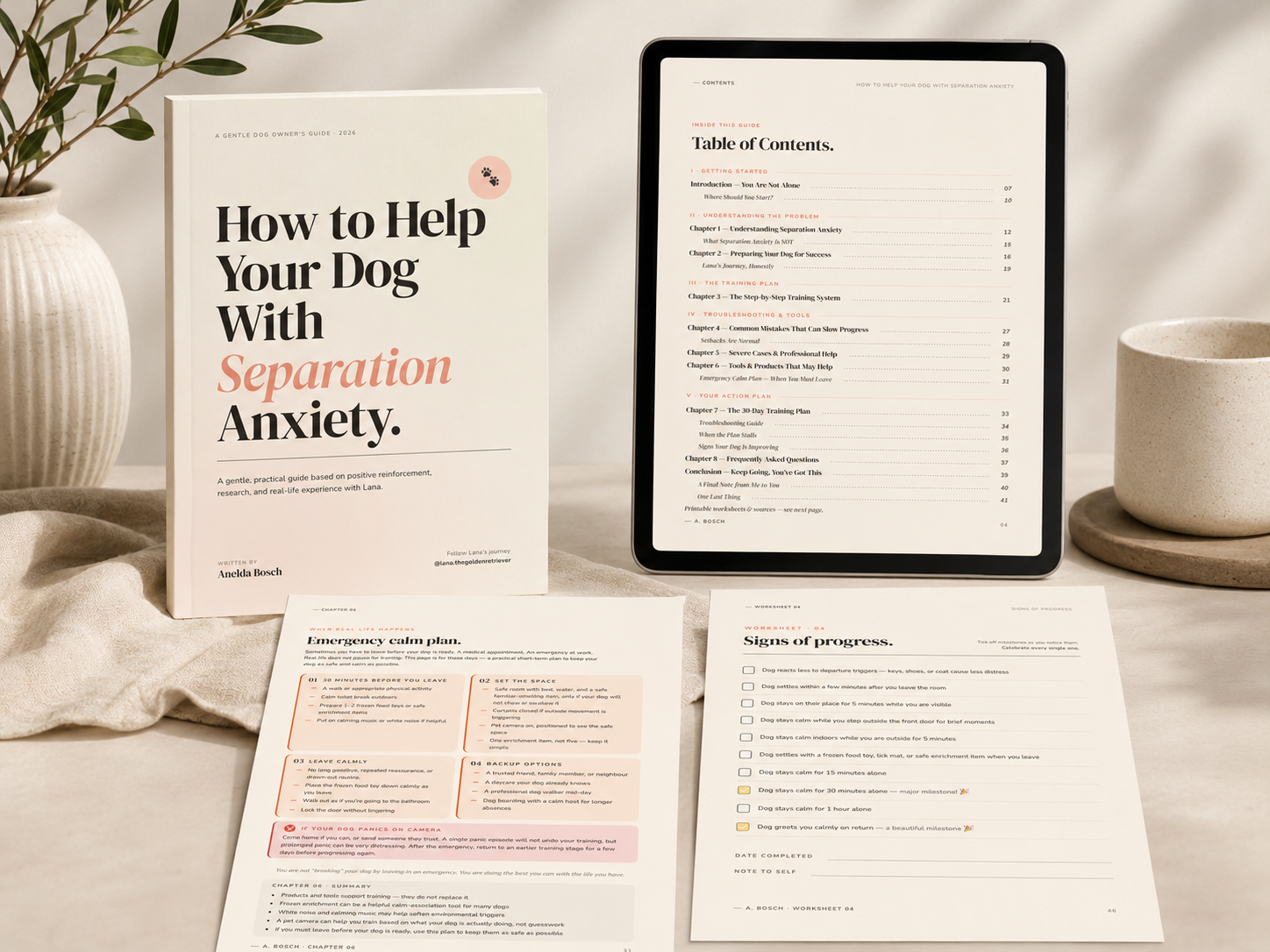
A gentle look inside the guide, calm explanations, practical pages, and printable worksheets to help you track progress.
Signs it may be separation anxiety
Destruction on its own doesn't tell the whole story. But if your dog is destroying things when left alone, it can help to look for patterns. You may also notice:
Barking, crying or howling after you leave
Scratching at doors, windows, crates or exits
Chewing furniture, cushions, bedding or door frames
Pacing, panting, drooling or restlessness
Refusing food or treats while alone
Anxious about keys, shoes, bags or coats
Struggling to settle before or after you leave
Very intense or overexcited when you return
If several of these sound familiar, your dog may not be trying to punish you. They may be struggling to cope. And that changes everything.
If the panic is severe, if your dog injures themselves, or if you notice a sudden change in behaviour, it's worth discussing it with your vet or a qualified behaviour professional sooner rather than later.
A gentle guide for overwhelmed dog owners
I created How to Help Your Dog With Separation Anxiety as a calm, practical starting point for dog owners who feel lost, guilty, and unsure where to begin. It's not a magic fix, but a gentle guide to help you understand what may be happening, and begin supporting your dog in a kinder, more structured way.
Need a calmer place to start?
How to Help Your Dog With Separation Anxiety
A gentle digital guide created for dog owners who feel overwhelmed and unsure where to begin. Inside, you'll find:
This is one of the most important things I wish more dog owners knew.
Dogs do not destroy the couch because they sat there plotting revenge after you closed the front door. They are not thinking, well, she left me, so there goes the cushion.
When dogs are anxious, their behaviour can look messy from the outside. Barking, chewing, scratching, pacing and destroying things can all be signs that their nervous system is overwhelmed. That is why punishment is not the answer, and why "just let them cry it out" often backfires. A dog who is panicking is not learning confidence. They are simply surviving the moment.
If your dog is already frightened when left alone, adding more fear when you return can make alone time feel even more unsafe. A scared dog does not need more fear. They need calm, patient guidance, and a plan that stays gentle and gradual rather than forcing them through panic.
Progress often starts smaller than people expect. It may begin with your dog staying relaxed while you pick up your keys. Or calmly watching you step outside for a few seconds. Five calm seconds may not sound impressive at first. But for an anxious dog, five calm seconds can be the beginning of everything.
What helped me with Lana
When I look back at my own journey with Lana, I can see how much I did not understand at first. I loved her deeply, but love alone was not enough. She also needed structure, calm routines, boundaries, confidence, and time to learn that being away from me did not mean something bad was happening.
We did not restart properly when she was a tiny puppy. Life got busy, routines changed, and before I knew it, we were working with a dog who already had habits, worries, and patterns in place. It was not perfect. Some days were slow. Some days felt like we were going backwards. Some days I questioned whether I was doing any of it right.
But we kept coming back to the same gentle truth: progress happens at your dog's pace, not yours. For Lana, that meant calmer departures, shorter absences, safe spaces, enrichment, patience, and learning to notice the small wins instead of only looking for the big ones.
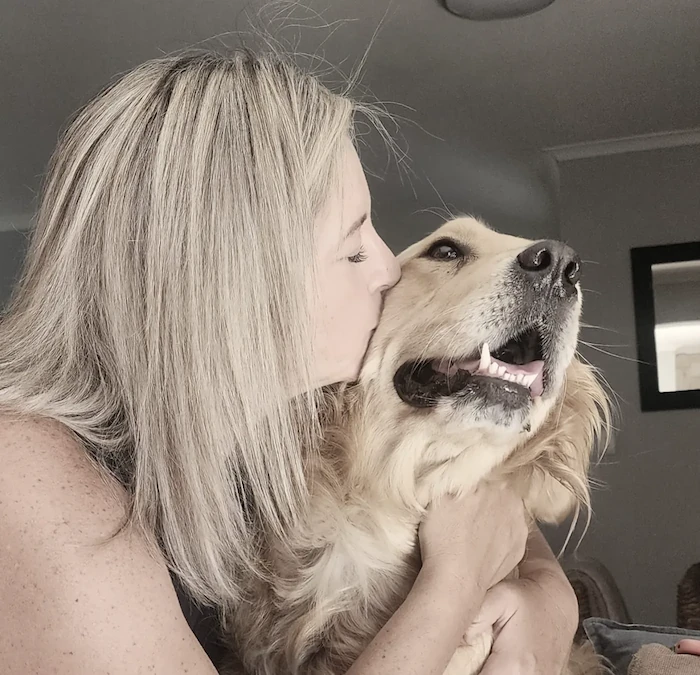
Calm, settled, and safe at home. ♡
That is what inspired me to create my ebook, How to Help Your Dog With Separation Anxiety. Not because I had a perfect story. But because I know how overwhelming it feels when you love your dog and still don't know how to help them.
“Your dog does not need you to be perfect. They need you to notice what they are struggling with, and begin again, calmly.”
Light Paw Studio ♡
What to do if your dog destroys things when left alone
The first step is not to panic. The second step is not to punish. The first real step is to understand what might be happening. Ask yourself:
Does the destruction only happen when your dog is left alone?
Does it happen near doors, windows, crates, or exits?
Do they react when you pick up your keys, shoes, or bag?
Do they struggle to calm down when you return?
If the answer is yes to several of these, it may be time to approach the problem as anxiety, not disobedience. And that means the goal changes. You are not simply trying to stop the damaged furniture. You are trying to help your dog feel safe enough that they no longer need to panic, chew, scratch, bark, or destroy things to cope.
You don't need to be perfect
One of the hardest parts of separation anxiety is the guilt. It shows up when you leave, when you come home to damage, when your dog cries, when progress feels slow.
But guilt does not help your dog learn. Patience does. Consistency does. Understanding does. Small, gentle steps do.
Your dog does not need you to be perfect. They need you to notice what they are struggling with, and begin again, calmly.
A final gentle reminder
If your dog destroys things when left alone, it does not automatically mean they are naughty, stubborn, or trying to upset you. There may be anxiety underneath it, or a sense of being overwhelmed, or simply a dog who hasn't yet learned that alone time is safe.
And if you are here, reading this, looking for a better way, that already says something important. You care. You are trying. And that is a very good place to start.
Every dog is different, and every small step counts. ♡
If you're walking through separation anxiety with your own dog and need a gentle place to start, I created a beginner-friendly PDF guide based on what I learned with Lana. It's written from personal experience, research, and positive reinforcement principles, and it's meant to help you feel less alone while giving you practical steps to begin.
I'm not a vet, certified behaviourist, or professional dog trainer, just a dog owner sharing what I've learned firsthand through life with Lana.
This article and ebook are based on my own experience and research, and are for educational purposes only. They do not replace veterinary, behavioural, or professional training advice.
Every dog is different. If your dog's anxiety is severe, worsening, causing injury, involving escape attempts, or not improving with careful training, please seek help from your veterinarian or a qualified behaviour professional.
Common questions
Good to know
Why does my dog destroy things only when left alone?
It can be boredom, excess energy, or a young dog still learning house rules. But if it happens alongside barking, crying, pacing or panic around your departure, it may be separation anxiety rather than simple naughtiness.
Is punishment an effective way to stop this?
No. If the destruction is anxiety-driven, punishment after the fact does not connect to the original behaviour, and can make your dog more fearful of your return, making alone time feel even less safe.
Should I let my dog cry it out to fix this?
With true separation anxiety, pushing too far too quickly can backfire, a panicking dog is surviving the moment, not learning confidence. A gradual, gentle approach tends to work better.
When should I see a vet or behaviourist?
If the anxiety is severe, worsening, causing injury, or not improving with careful, gentle training, it's time to involve your veterinarian, a veterinary behaviourist, or a qualified force-free trainer.