
Should you crate train your dog? the honest guide
If you've ever closed that crate door and immediately felt like the worst puppy parent in the world, you're not alone. But the guilt might be misplaced. Here's the honest truth.

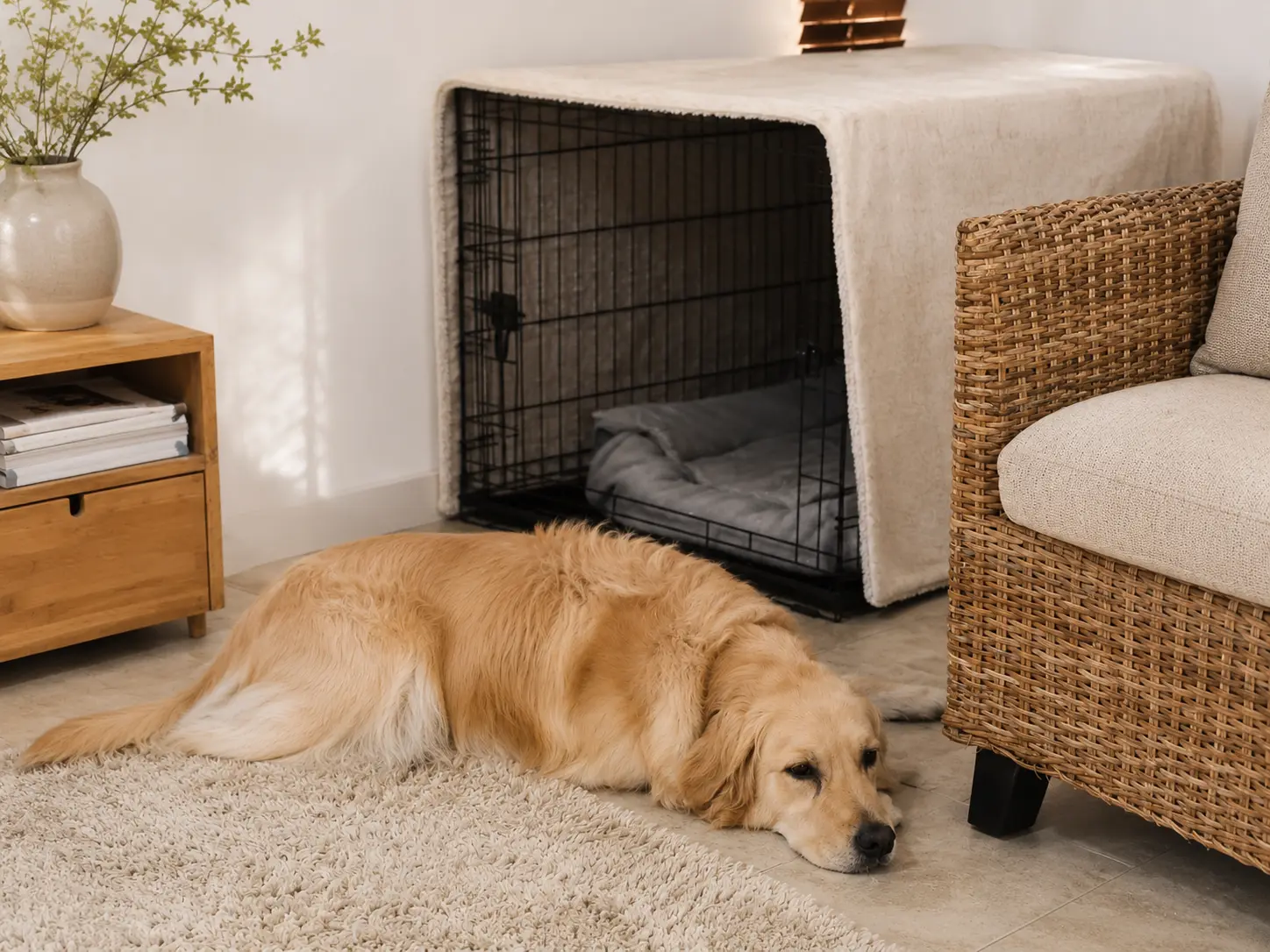
If you've ever looked at a crate and thought, that's a cage, I'm not doing that to my dog, I was you. For three years I did exactly the opposite. Lana slept where she wanted, had free run of the house, and I thought that was the loving choice. I genuinely believed crate training was for people who didn't want to deal with their dogs.
Then the problems started. Nothing dramatic, but enough that I reached out to a professional dog trainer and behaviourist. And almost immediately, crate training came up. I pushed back. Lana's trainer explained it patiently. I went home and did the research. And then, reluctantly, I started.
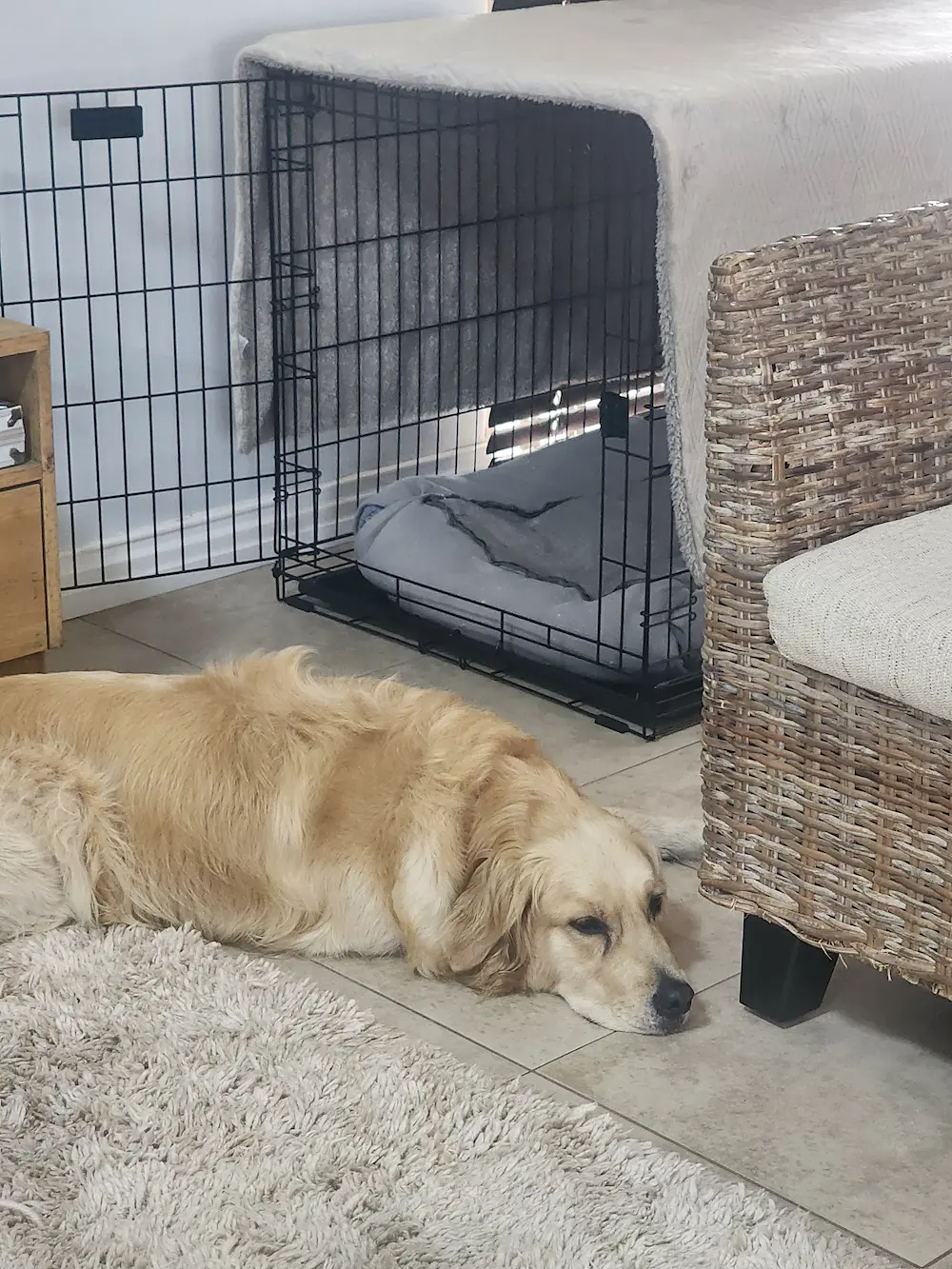
Lana was three years old. Four months later, she stands in front of her crate and waits for me to open it. She goes in by choice, when things get overwhelming, when she's had an exhausting day, when she just needs peace and quiet before the kids come home. The difference in her is enormous. And I wish I had done it sooner.
This is the article I wish I'd had three years ago. The myths, the honest pros and cons, and what the research and the professionals actually say, because you deserve the full picture, not just the guilt.
Why crate training matters
Crate training gets a lot of conflicting advice. Some people see crates as restrictive, but when introduced correctly, it isn't about confinement. Dogs naturally seek out den-like spaces, and a properly introduced crate taps into that instinct. It can help with house training, prevent destructive chewing when you can't supervise, encourage healthy sleep habits, and give your puppy a familiar place to retreat when life feels overwhelming.
Perhaps most importantly, a crate creates routine. And if you've ever lived with a young puppy, you already know that routine is often the difference between chaos and calm. Lana showed me that, once her crate felt cosy and familiar, she started seeking it out on her own.
A puppy that learns to feel comfortable in their crate isn't learning to be alone. They're learning that they're safe.
Not every dog needs a crate. Some dogs do perfectly well without one. The goal of this guide isn't to convince every owner to crate train, it's to help you make an informed decision and understand why so many trainers and veterinarians recommend it.
It's never too late to start
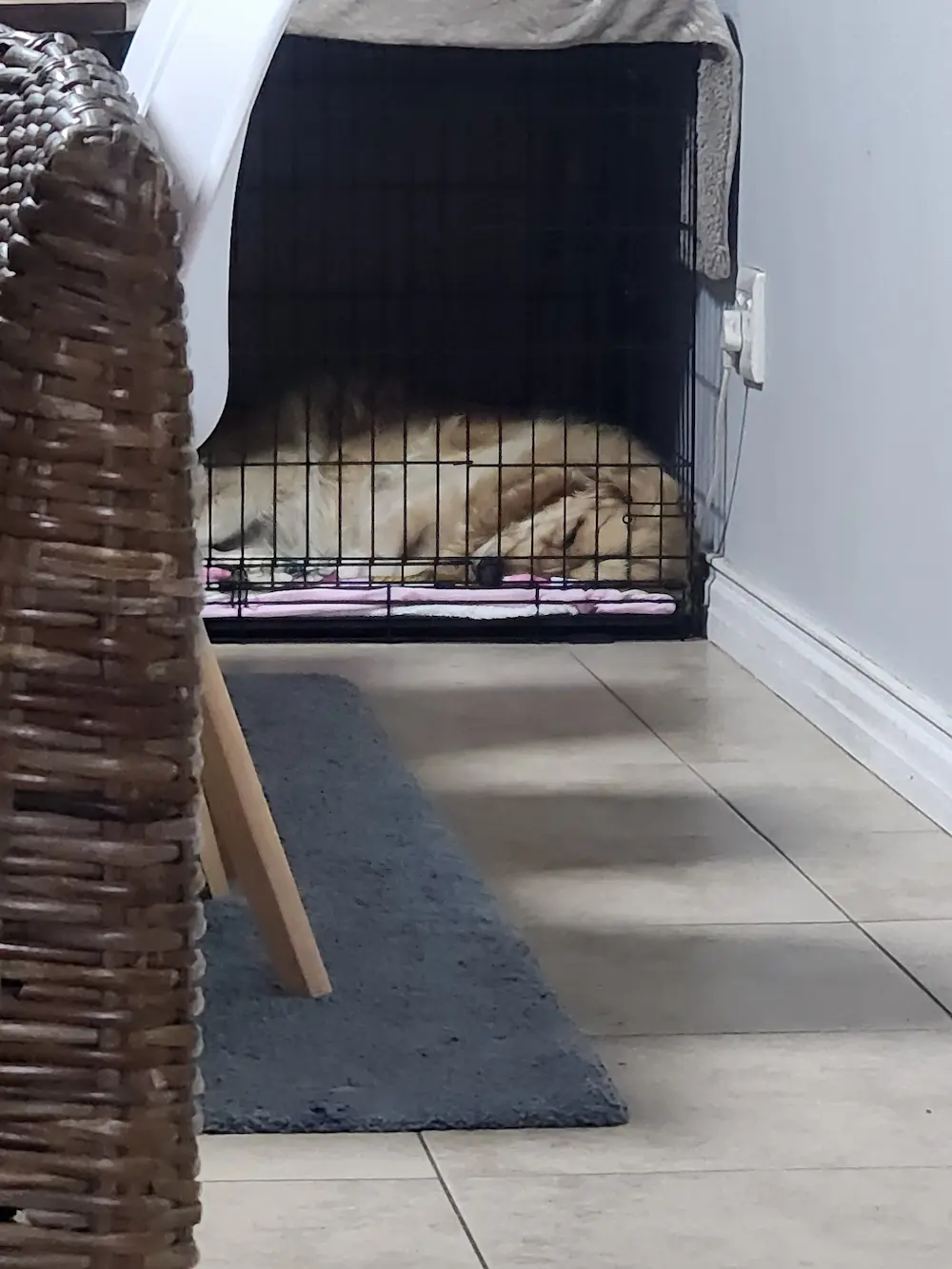
Crate training is almost always talked about as something you do with a puppy. But Lana was three years old when we started, and within four months she was asking to go in herself.
Our trainer introduced it as a solution to behavioural issues that had been building for years, things I didn't even connect to the absence of a safe space. The crate wasn't a punishment. It was the missing piece.
Adult and senior dogs benefit just as much as puppies, sometimes more. The key difference is patience. It may take a little longer, and you must never force it. But the result is the same: a dog who has a place that is entirely, reliably their own.
Here is how we actually use it day to day, because I think this is where most people get confused. It is not an all-day thing. I have a routine: Lana goes in around 11am after her morning training session for about an hour of deep, uninterrupted sleep before the kids get home. She sleeps in it at night. And when I feel she needs a calm, safe space, when she is overwhelmed or overstimulated, I put her in. It becomes a calm, familiar part of everyday life.
The crate is not a cage you lock your dog in. It is a tool for rest, regulation and safety, used for specific moments, not as a substitute for time together.
How I introduced the crate, day by day
I am not a trainer. This is just what worked for us. If your dog is showing real distress, always speak to a certified behaviourist. But if you are at the beginning and feeling lost, here is the honest step-by-step of how Lana went from barking at the crate to sleeping in it through the night, in two weeks.
Days 1–2, Just let it exist
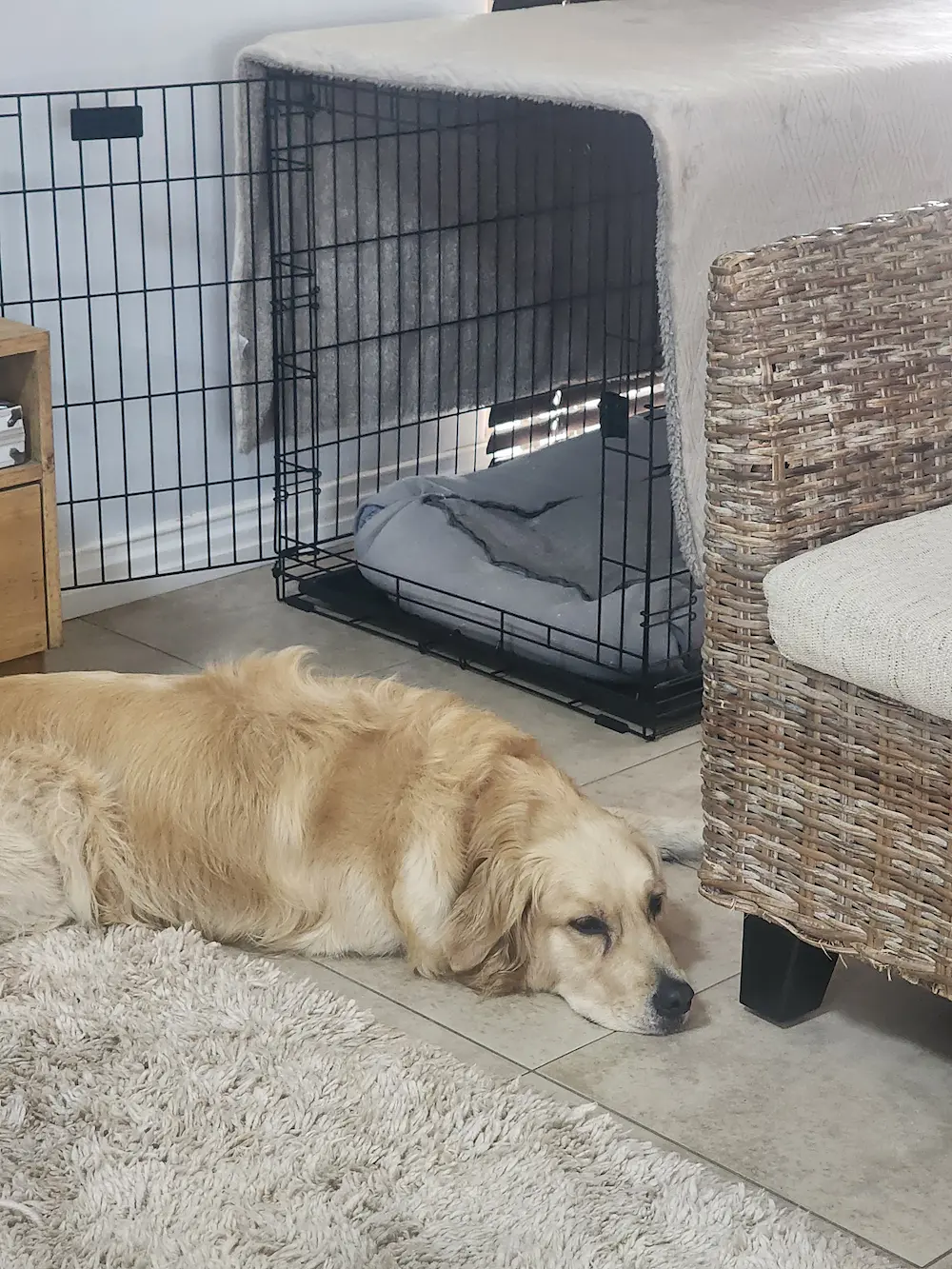
The crate went in the room with the door open. Lana barked at it, wanted nothing to do with it. I ignored her completely, no reaction, no comfort, no scolding. I let her figure it out on her own terms.
Day 3, First sniff
She started going near it and sniffing. I put one of her own blankets inside and occasionally dropped a treat in. She would dart in, grab it, and reverse out at full speed. I kept going without any reaction.
Days 4–5, Treats become a game
During play I would toss a treat into the crate. She started connecting it with good things. On day five she walked in on her own, turned around, and just stood there. I sat in front, tossed treats in calmly, door still open, no talking, no touching.
Days 6–9, Closing the door
Treat in, she goes in, I close the door for ten seconds. Then twenty. I was still sitting right there, quiet, calm, no eye contact. Then I started leaving the room briefly, coming back, opening the door. No fuss either way. This built slowly to longer stretches.
Week 2, First full night
By the end of week two, Lana slept in the crate through the whole night. Four months later she walks in herself, especially when the house gets loud and she needs peace. For many dogs, consistency and patience make the biggest difference.
The things people get wrong
These four misconceptions cause more crate training guilt, and more skipped training, than anything else.
"You're trapping them. It's basically a prison."
Dogs are descended from den animals. Wild canines and wolves naturally seek small, enclosed spaces to rest, feel secure, and raise their young. A properly introduced crate doesn't feel like confinement to a dog, it feels like a den. The instinct to want a small, safe space is hardwired into them. What feels like a prison to us feels like shelter to them.
"They'll be scared and lonely in there all night."
Brief whimpering during the first few nights is a normal adjustment response, not distress. Many dogs who are properly crate trained voluntarily return to their crates long after training ends because it's become their safe space. The goal of crate training is to create exactly that: a place your dog chooses to go to when they're tired, overwhelmed, or just want to settle.
"It's kinder to let them sleep in my bed instead."
Co-sleeping is a personal choice, and there's nothing inherently wrong with it. But it's not a substitute for crate training, it just delays the problem. A dog who has never learned to be alone can develop separation anxiety, clinginess, and destructive behaviour. And when the time comes that they need to be crated, surgery recovery, an emergency, a vet stay, an untrained adult dog will find it far more stressful than a puppy who learned early.
"Crate training causes trauma and anxiety."
Vets and certified trainers agree that crating serves an important educational purpose with minimal welfare impact when used appropriately. The AKC, ASPCA and Humane Society all endorse it. What causes anxiety is misuse: excessive hours, using the crate as punishment, or forcing a dog inside before they feel safe. Positive, gradual crate training is often used as part of a healthy independence-building routine and does not appear to cause separation anxiety when introduced appropriately.
Pros & cons of crate training
The benefits are real. So are the ways it can go wrong, which is why how you do it matters.
✓ The benefits
- Accelerates house training by working with natural den instinct
- Gives your dog a predictable safe space they can always rely on
- Prevents destructive behaviour when unsupervised
- Essential for travel, planes, cars, hotels
- Makes vet visits, boarding, and grooming far less stressful
- Can help build healthy independence and reduce the risk of separation-related problems.
- Invaluable during illness or surgery recovery
- Emergency preparedness, crate-trained dogs are easier to evacuate safely
- Senior dogs benefit too, rest, joint pain management, nighttime security
! Where it goes wrong
- Using the crate as punishment, it must never feel like a consequence
- Leaving a puppy in too long (beyond the age + 1 hour limit)
- Rushing the introduction, no slow intro means weeks of resistance
- Skipping exercise and play, a crate cannot replace physical and mental stimulation
- Crating anxious or rescue dogs without professional guidance
- Interpreting all whining as distress, brief fussing is normal adjustment
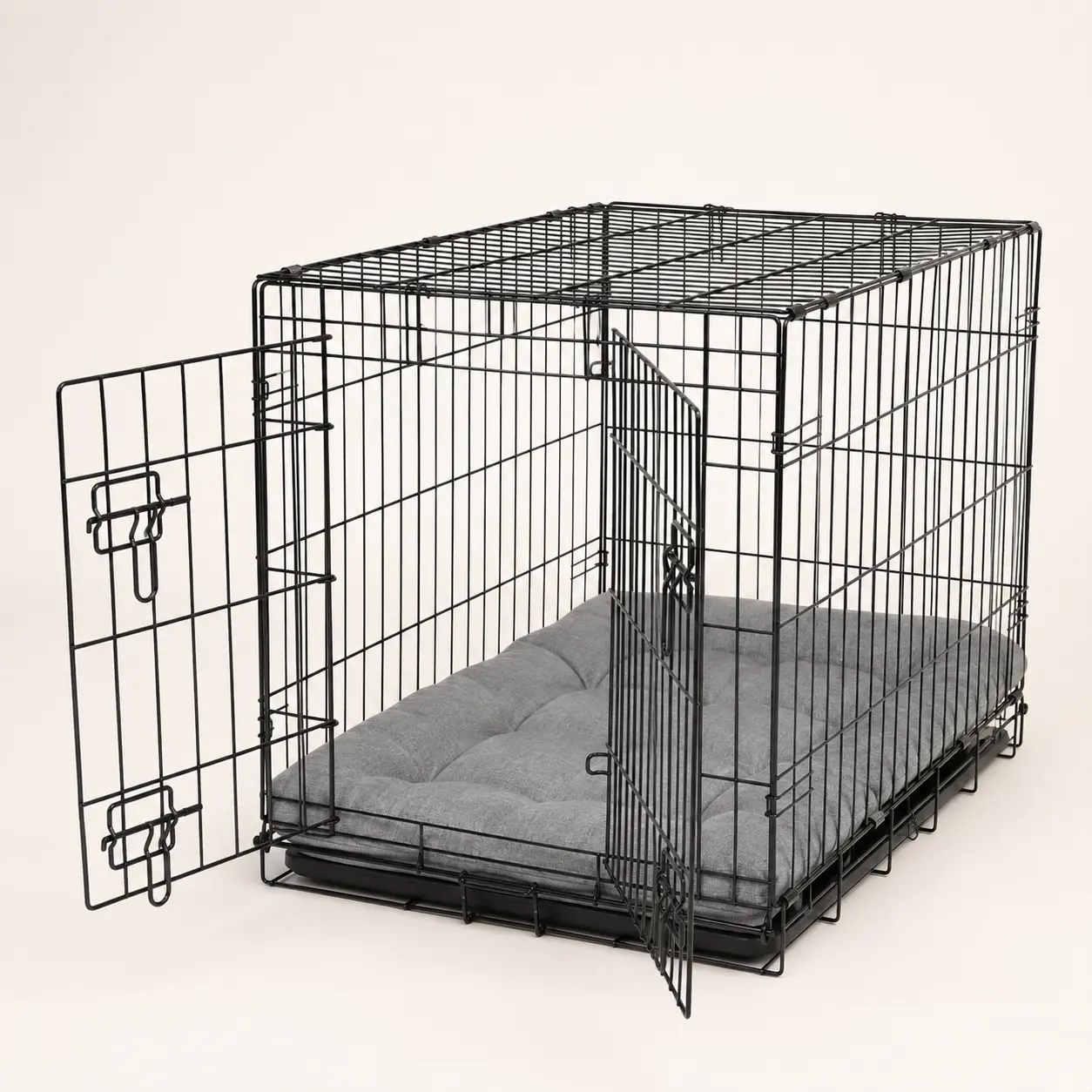
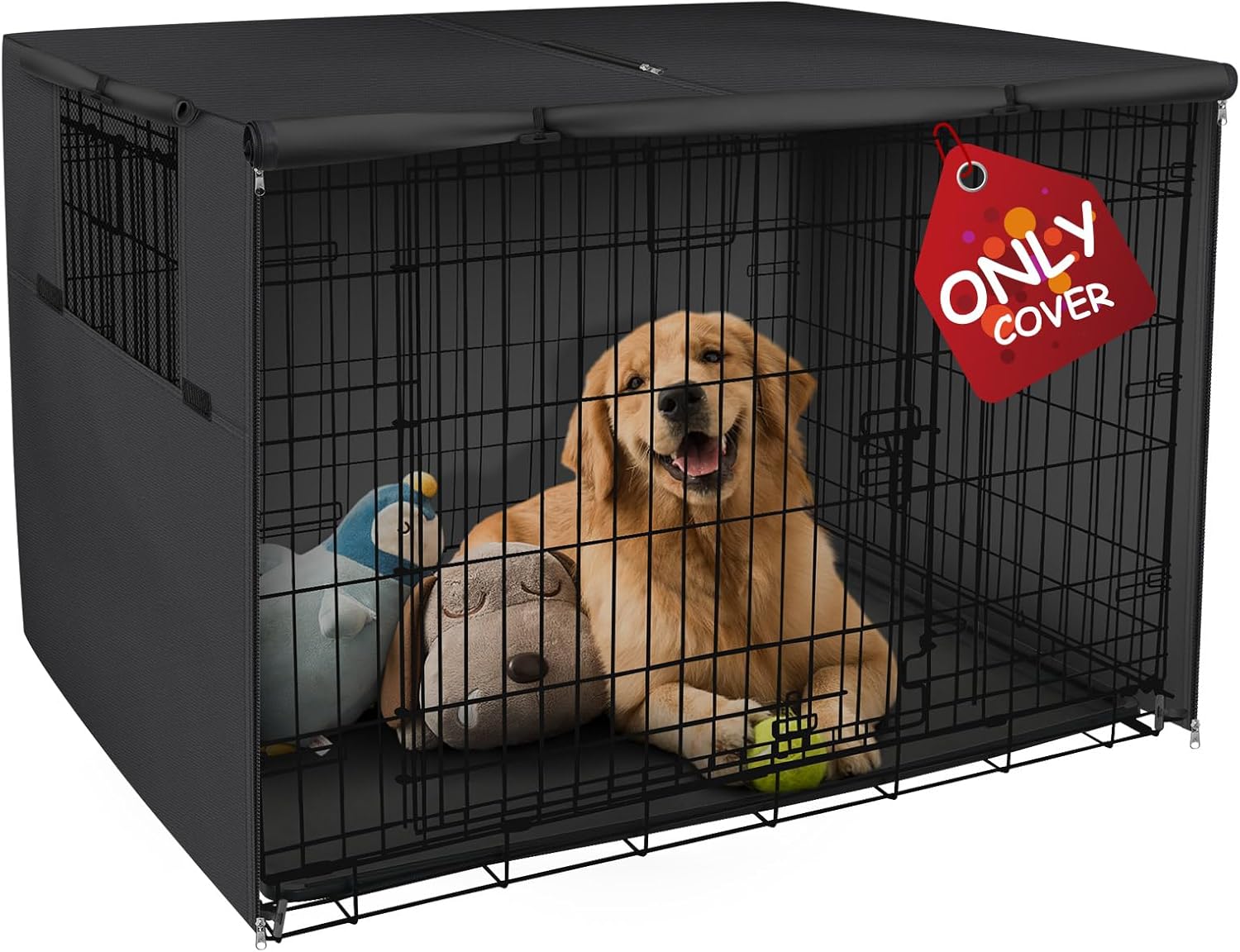
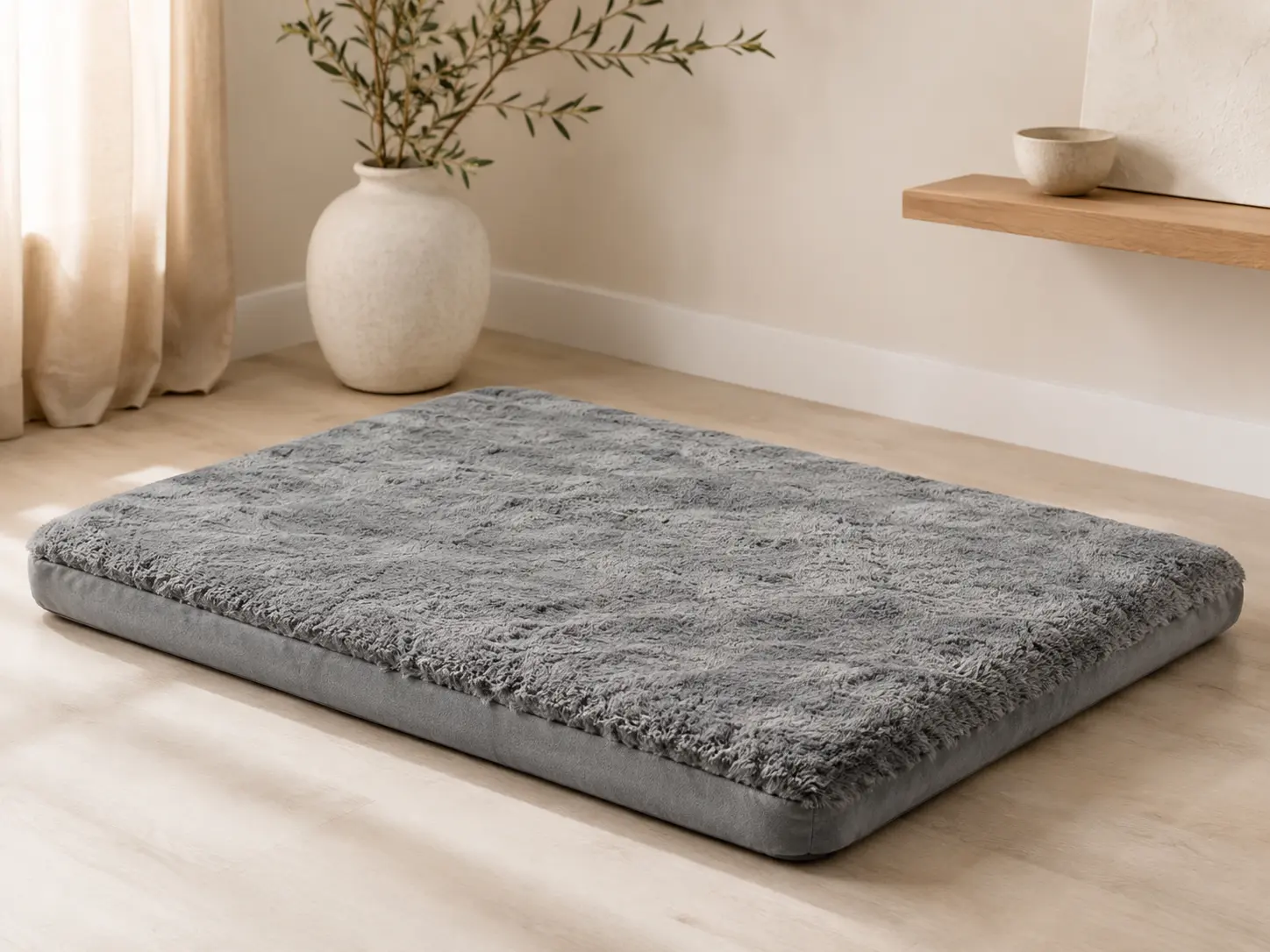
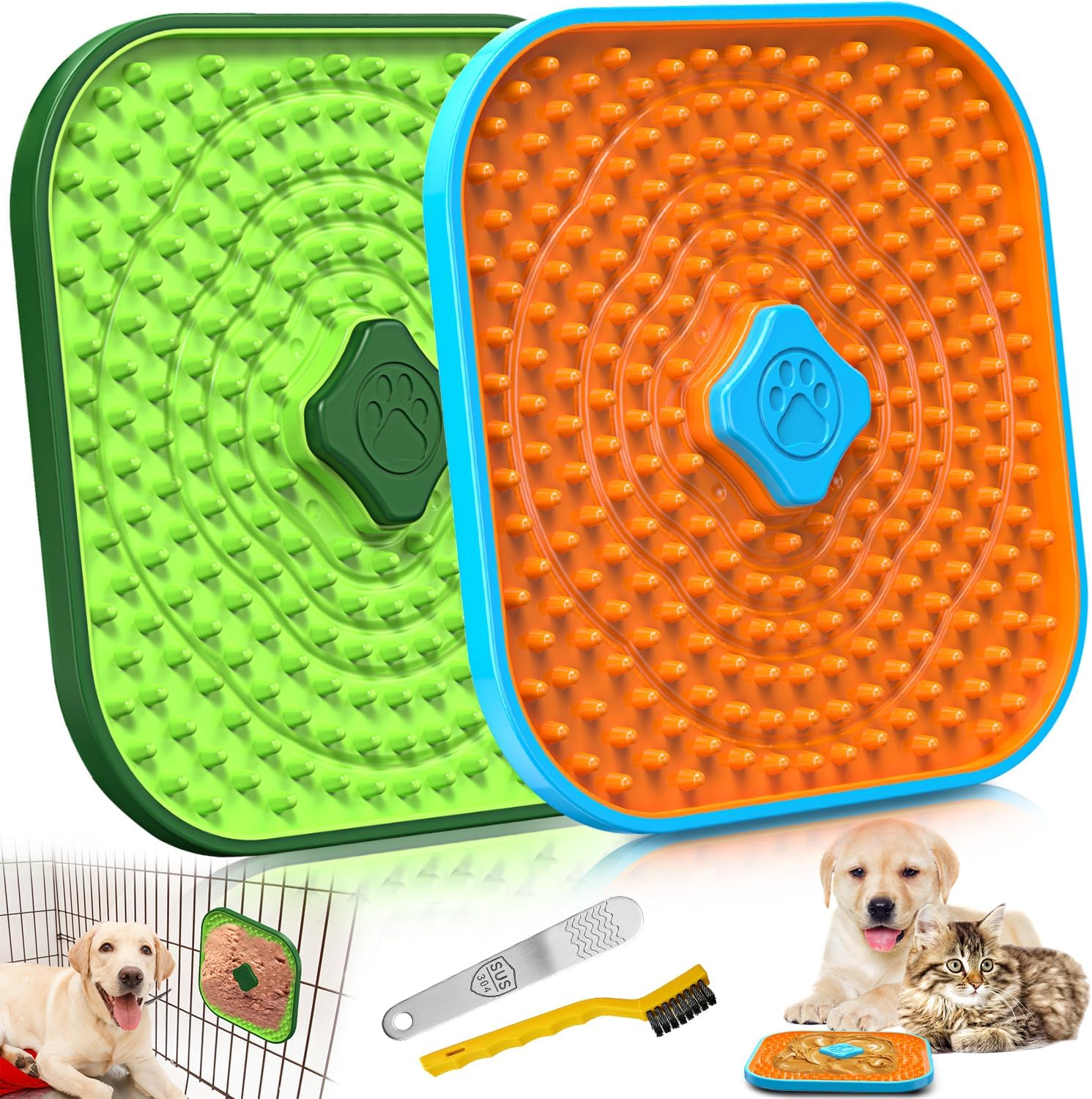
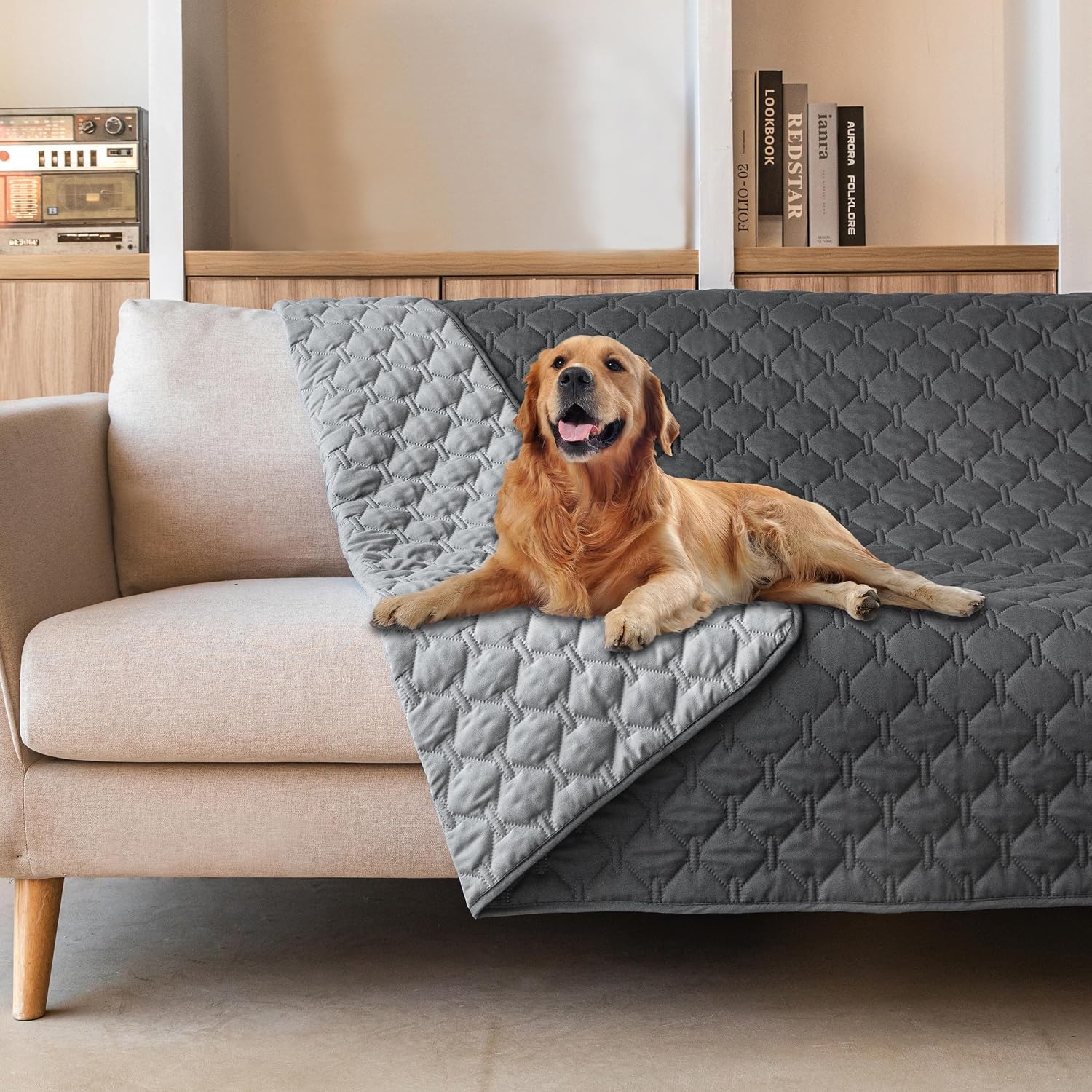
The crate essentials worth having
Keep it simple. These six make the biggest difference.

Good to know
Is crate training actually cruel?
No, when introduced gradually with positive reinforcement and used within appropriate time limits, crate training is not cruel. The AKC, ASPCA and Humane Society all endorse it. Vets and certified trainers consistently support crating as humane and effective when used correctly. What makes it cruel is misuse: too many hours, using it as punishment, or forcing a dog inside before they feel safe.
Why do professional trainers recommend crate training?
Professional trainers recommend it because it works with a dog's natural den instinct, accelerates house training, prevents destructive behaviour, builds healthy independence, and prepares dogs for essential life situations, vet visits, boarding, travel, and emergencies. PAWS Animal Welfare Society calls it "one of the quickest and least stressful ways to mold desirable behaviours in dogs."
Is it better to let a puppy sleep in my bed instead of crate training?
Co-sleeping is a personal choice and there's nothing inherently wrong with it. But it's not a substitute for crate training, it just delays the problem. A dog who has never learned to be alone can develop anxiety, clinginess, and destructive behaviour when separated. And when the time comes that they need to be crated, surgery, an emergency, a vet stay, an untrained adult dog will find it far more stressful than a puppy who learned early.
Can crate training cause separation anxiety?
Done correctly, crate training may help reduce the risk of separation anxiety rather than causing it. Short, positive sessions teach a puppy that being alone is safe and temporary. Problems arise when crating is used excessively, without adequate exercise and social time, or when a puppy is forced to stay beyond their biological limit. If you see genuine distress (not normal adjustment fussing), slow down and speak with a vet or certified trainer.
How long can I leave my dog in the crate?
Honestly, this differs from dog to dog, and I am not a professional or behaviourist, so please always take guidance from a certified trainer for your specific situation. What I can share is our routine with Lana. She goes in for about one hour after her morning training session, every day without fail, think of it like a toddler's midday nap. Then she sleeps in there overnight. Outside of that, I put her in for short windows when I know something is coming that triggers her, more on that below. So for Lana, the crate is not about long stretches of confinement. It's a consistent, short, purposeful routine.
When do I open the crate door, and when don't I?
This one is important. I never open the crate when Lana is barking or unsettled. I only open it once she has fully calmed down, breathing is normal, she is lying down, and the fussing has stopped. The moment you open the door while your dog is barking, you teach them that barking works. I wait, no matter how long it takes. Once she is calm and settled, then and only then does the gate open. This applies whether she's been in for 5 minutes or an hour.
Can I use the crate before a stressful situation?
Yes, and this is one of the most practical uses. Lana still gets very worked up when the delivery person arrives. So I put her in the crate about five minutes before they arrive, before she even has a chance to escalate. She stays in until she is calm and settled, and then I let her out. It works far better than trying to manage her once she is already in a heightened state. If you know a trigger is coming, visitors, the doorbell, loud noise, get ahead of it.
Are there rules around the crate itself?
A few that I feel strongly about. First, the crate should always be in a quiet corner, out of the way, safe, and never somewhere people walk past and bump into it. The crate must feel secure, not like something that wobbles or gets knocked. Second, and this is non-negotiable, never touch, cuddle, or reach into the crate when your dog is inside. That is their space. Respect it completely. The crate only works as a safe place if it is actually safe and private. No one in our home disturbs Lana when she is in hers.
My puppy barks non-stop in the crate, what do I do?
Do not respond to the barking, not to comfort, not to scold. The moment you react, you teach them that barking gets a response. See "How I introduced the crate, day by day" above for the exact steps we used to get Lana from barking to sleeping through the night, without ever opening the door on a bark.
Can crate training help with anxiety?
It helped Lana enormously, but I want to be honest about why. As a puppy, Lana never had a place to truly settle. There were always kids, noise, activity. Her sleep was constantly disturbed, and over time she began showing signs of anxiety. What she was missing was a space that was entirely, reliably hers. The crate gave her that. Now, the moment I sense she is tense or overwhelmed, I put her in, not as punishment, but because I know she feels safe there. If your dog is showing signs of anxiety, please speak to a certified trainer or vet. But for many dogs, a well-introduced crate is a genuine turning point.
Four months ago she would never have chosen the crate. Now she stands at the door and tells me when she needs it. That is not a dog who was forced into something, that is a dog who was given a safe place and learned to love it.Anelda · Life With Lana ♡
I spent three years convinced I was doing right by giving Lana her total freedom. In reality, I was giving her too much responsibility, to manage herself, to always be on, to never have a space where the world stopped asking things of her. The problems that eventually brought me to a trainer were a direct result of that.
Crate training, done without force and without rushing, gave her what she was missing: a place that is entirely hers. Our trainer advised us to keep the gate closed when she's not in it, so that going in feels like a privilege, not a default. And within four months, Lana started telling us when she needed it. She stands at the door. We open it. She goes in and rests deeply.
Whether your dog is eight weeks old or eight years old, it's not too late. Research it properly, go at their pace, never force it. And if you're dealing with behavioural issues, please reach out to a professional trainer or behaviourist, that's exactly the kind of guidance that changed everything for us.
You might also love

Crate training essentials for puppies: 4 things worth having from day one
The four products that actually help, a wire crate, crate cover, Snuggle Puppy and lick mat.
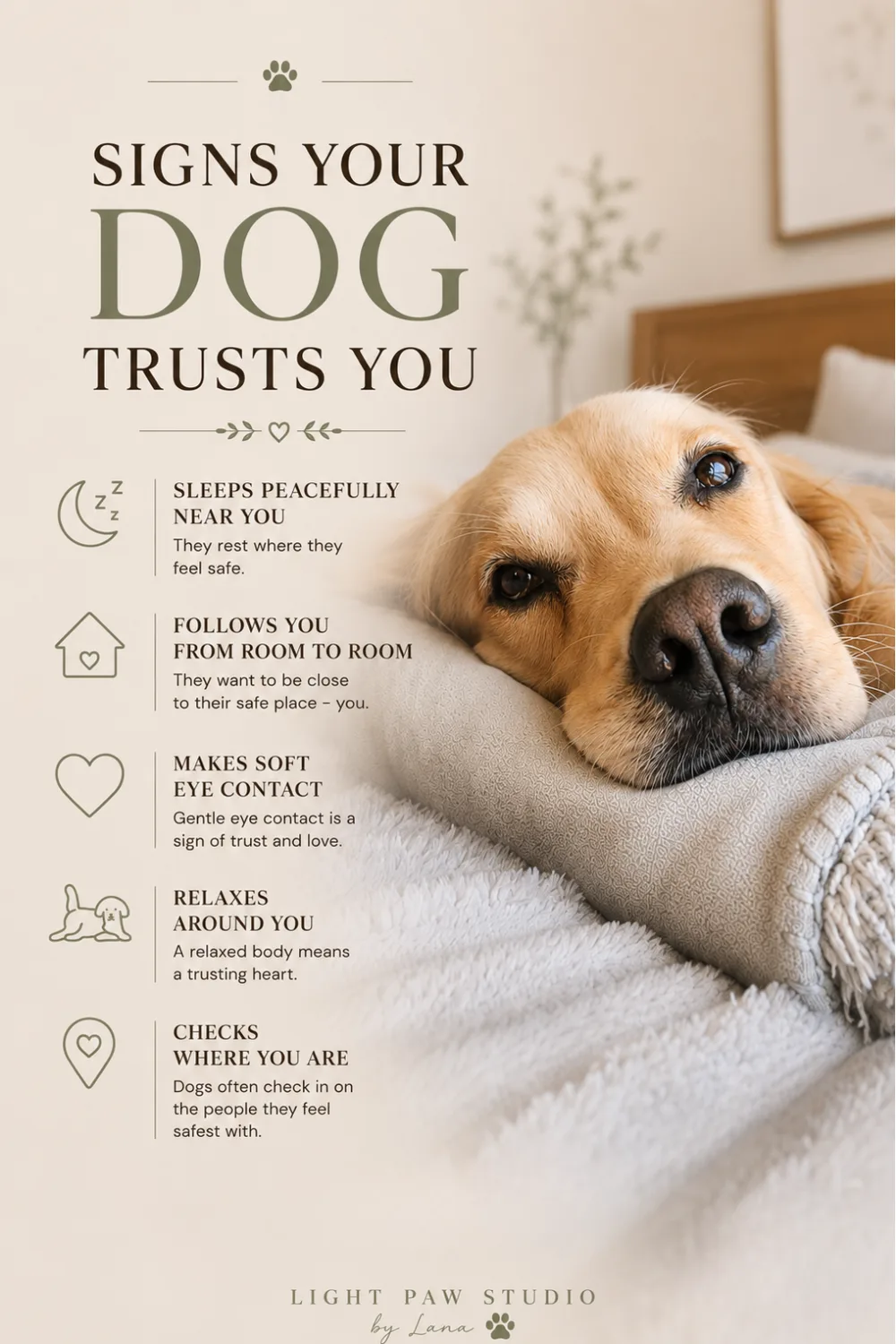
Signs your dog trusts you
Crate training done gently is one of the first real trust-builders. Here's what trust looks like.

5 signs your dog is truly happy
A settled, secure dog shows happiness differently, and a good crate routine is part of that picture.