Golden Retriever grooming essentials: should you shave a double coat?
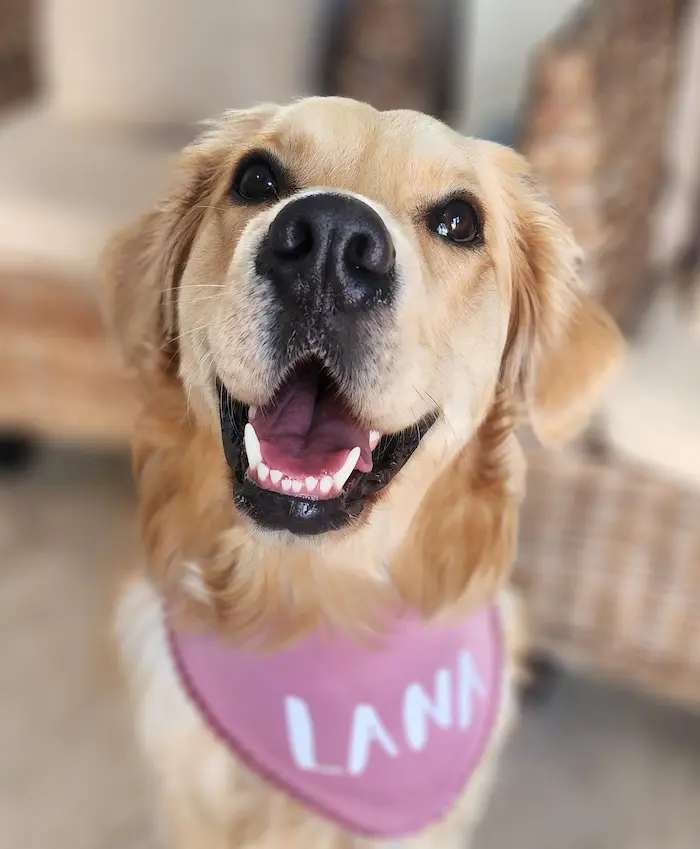
Her coat has a purpose. Once I understood that, caring for it changed completely, less fighting the fur, more working with it, and the same is true for any double-coated breed.
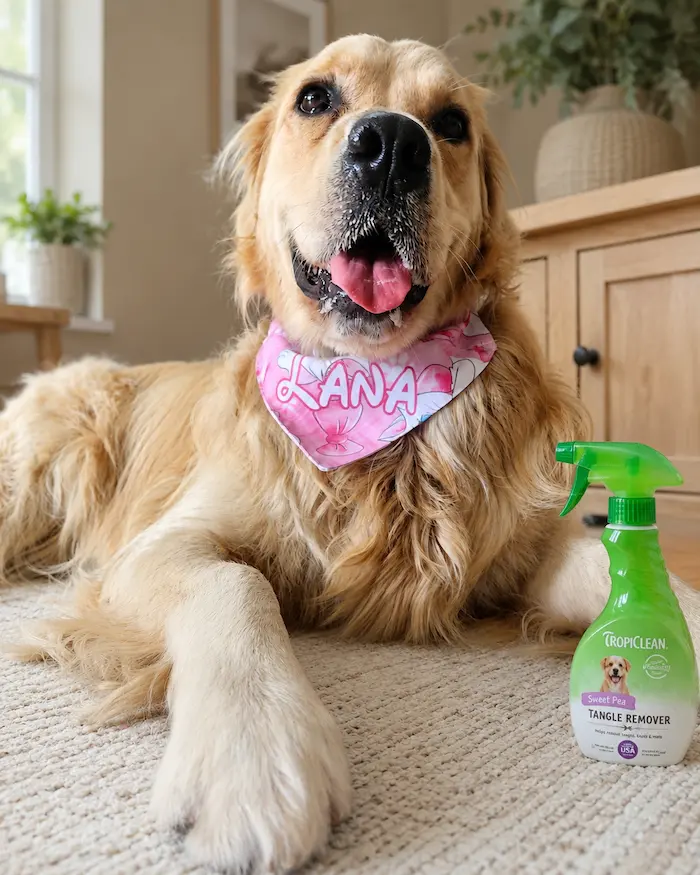
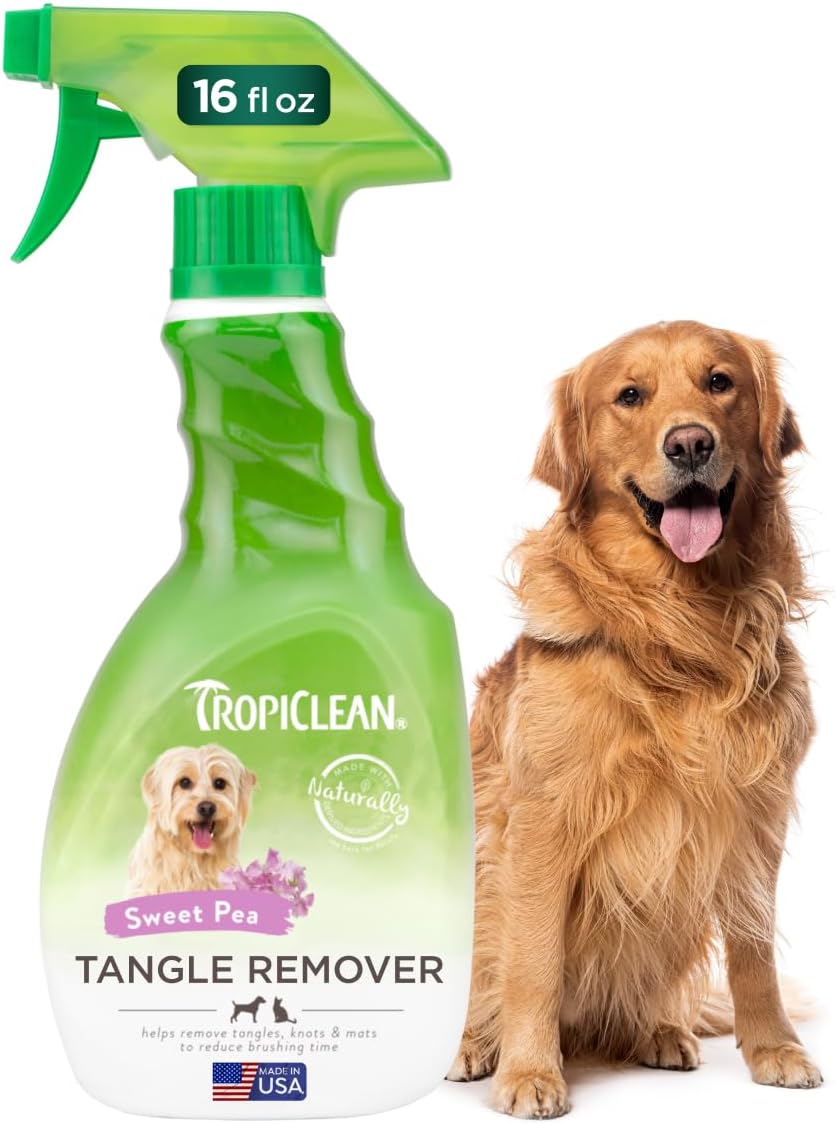
Lana and her beloved sweet pea tangle remover, the reason she always smells lovely after a brush.
You probably know exactly what I mean when I say Golden Retriever grooming can feel like a full-time job. One minute your house looks clean, the next there are little golden tumbleweeds rolling across the floor as if they pay rent. If you have a fluffy dog, this is just life, and I've made my peace with it.
With Lana, I've learned that grooming is not just about keeping her looking beautiful. Her coat has a job. It protects her, helps regulate her temperature, and needs to be cared for in the right way, not cut away. One of the biggest questions Golden Retriever owners ask is whether they should shave their dog to help with shedding or summer heat. I understand why people ask. But for double-coated dogs, it is not that simple.
In this post I'll share what I've learned, what I use, and how I try to keep Lana's fluffy coat manageable at home, without ever picking up a pair of clippers for her regular grooming.
This post may contain affiliate links. If you buy through my links, I may earn a small commission at no extra cost to you. I only share products that fit naturally into our home routine with Lana.
The question many Golden Retriever owners ask
If your dog is like Lana, you already know that the shedding is real. Golden Retrievers have a thick, water-repellent double coat. They shed moderately throughout the year and more heavily once or twice a year, usually as the seasons shift. When the undercoat starts coming out in full force, it is very natural to wonder: would shaving just… fix this?
Maybe your dog is leaving hair on every surface. Maybe it is summer and you are worried they are too hot. Maybe someone mentioned it and it sounded logical. But for a Golden Retriever, and most double-coated dogs, shaving is usually not the answer.
Understanding the coat
What is a double coat?
Two layers, two jobs, and both of them matter.
The undercoat
Soft, fluffy, and the main shedder
Sits close to the skin
Dense, soft, and insulating
Sheds seasonally, especially spring and autumn
Helps regulate body temperature in both heat and cold
The layer you see blowing out during brushing
The topcoat / guard hairs
Protective, water-repellent, and not meant to be shaved
The smooth outer layer you see from a distance
Repels water and light debris
Shields skin from sun, heat and UV exposure
Protects against insect bites and scratches
Should be preserved for normal grooming
Working the brush through her feathering, where the soft undercoat sits beneath the smooth topcoat.
With Lana, I notice this most when I'm brushing. Some days the soft undercoat comes out in little clouds. Other days her outer coat still looks smooth and shiny, even if I know there's plenty happening underneath. That's why grooming a double coat isn't just about brushing the top, you need tools that reach the undercoat without damaging the protective layer above it.
And it's worth saying: this isn't only a Golden Retriever thing. If you share your home with a Labrador, Husky, German Shepherd, Bernese Mountain Dog, Border Collie, Australian Shepherd, Corgi, Newfoundland, or any of the Nordic and mountain breeds, your dog most likely has a double coat too. So if any of this sounds familiar, everything here about brushing, shedding season, and why not to shave applies just as much to your pup as it does to Lana.
The honest answer
Why I don't shave Lana's coat
I don't shave Lana's coat because her coat is not just decoration. It has a job. The AKC's Golden Retriever grooming guidance notes that the topcoat protects the dog's body and should be preserved rather than shaved or clipped for normal grooming. Shaving a double-coated dog does not stop shedding, the hair is still there, just shorter, and can damage the topcoat, increase the chance of skin issues, and affect the undercoat's ability to help with insulation and airflow.
From the outside, it can look like less fur equals a cooler dog. But for double-coated dogs, the coat actually helps protect them. VCA Animal Hospitals warns against shaving down to the skin in summer, noting that dogs need coat left to help insulate them from heat and protect their skin from UV rays. That was an important lesson for me.
Shedding
Shaving does not stop shedding. The hair still grows back, and with a double coat, the undercoat can sometimes grow back faster or differently, making the coat harder to manage than before.
Sun & skin
When the topcoat is removed, the skin is more exposed to UV rays, heat, and irritation. For a dog like Lana who loves being outdoors, that protective layer matters more than it might seem.
Coat regrowth
After shaving, the soft undercoat often grows back faster than the guard hairs. This can cause the coat to feel coarser or look different, a change that is sometimes permanent.
“Her coat isn't decoration, it's protection. That's the whole reason I put the clippers away.”
There are exceptions
When shaving might be necessary
This is not about judging anyone. Sometimes shaving is done for the dog's comfort, safety, or medical care, and that is a completely different thing.
Medical or surgical reasons
If a vet needs to shave an area before a procedure, or there is a skin condition that requires it, this is always the right call.
Severe matting
When tangles are too tight or close to the skin to brush out safely, clipping them is far kinder than causing pain. VCA recommends using clippers rather than scissors for mats.
On a vet's recommendation
If your vet recommends clipping for a specific health or comfort reason, follow their lead. With a groomer's suggestion, I'd be a little more careful, a good groomer is worth listening to, but for anything to do with your dog's coat health or skin, I'd always check with your vet first before shaving a double coat.
What I do instead of shaving
Instead of cutting Lana's coat short, I keep a small grooming basket with the tools that actually help us. You do not need every grooming product in the world, I know it can feel overwhelming when you start looking at brushes, rakes, combs, shampoos, sprays, towels, and everything else. The best grooming tools are the ones that solve real, everyday problems: loose undercoat, little tangles behind the ears, muddy paws, bath-day chaos, and those dramatic Golden Retriever shedding seasons.
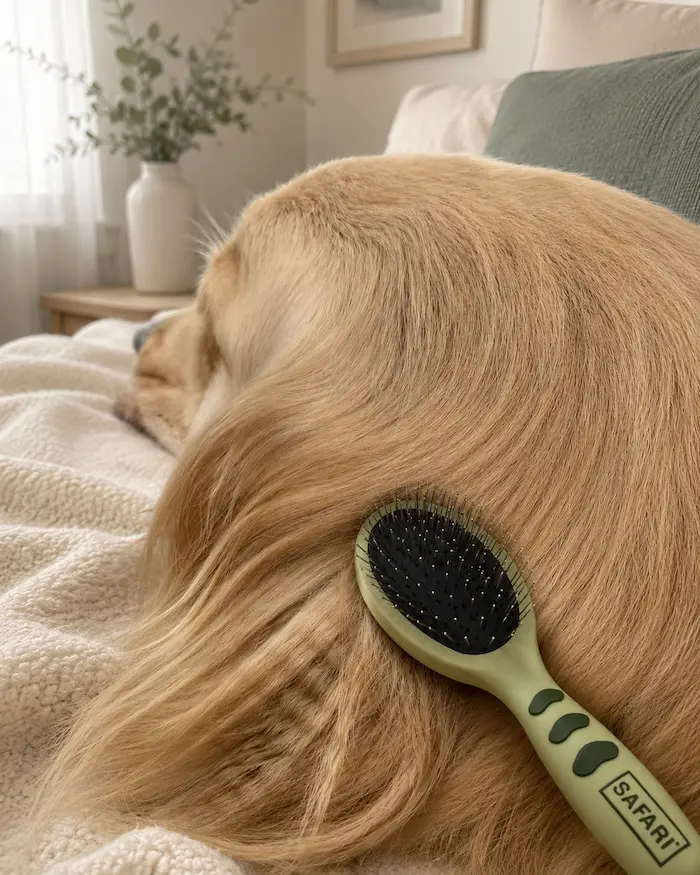
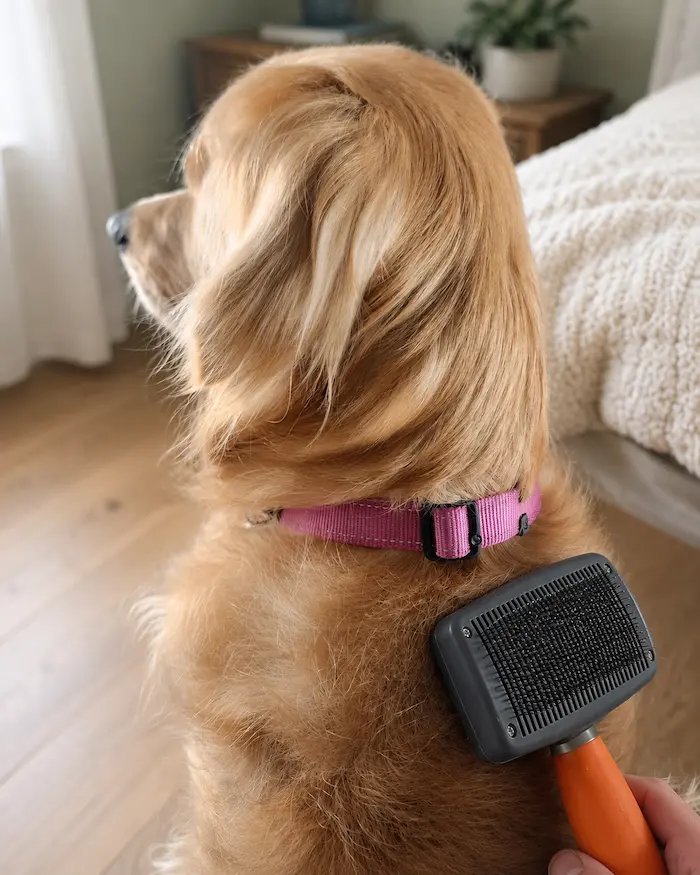
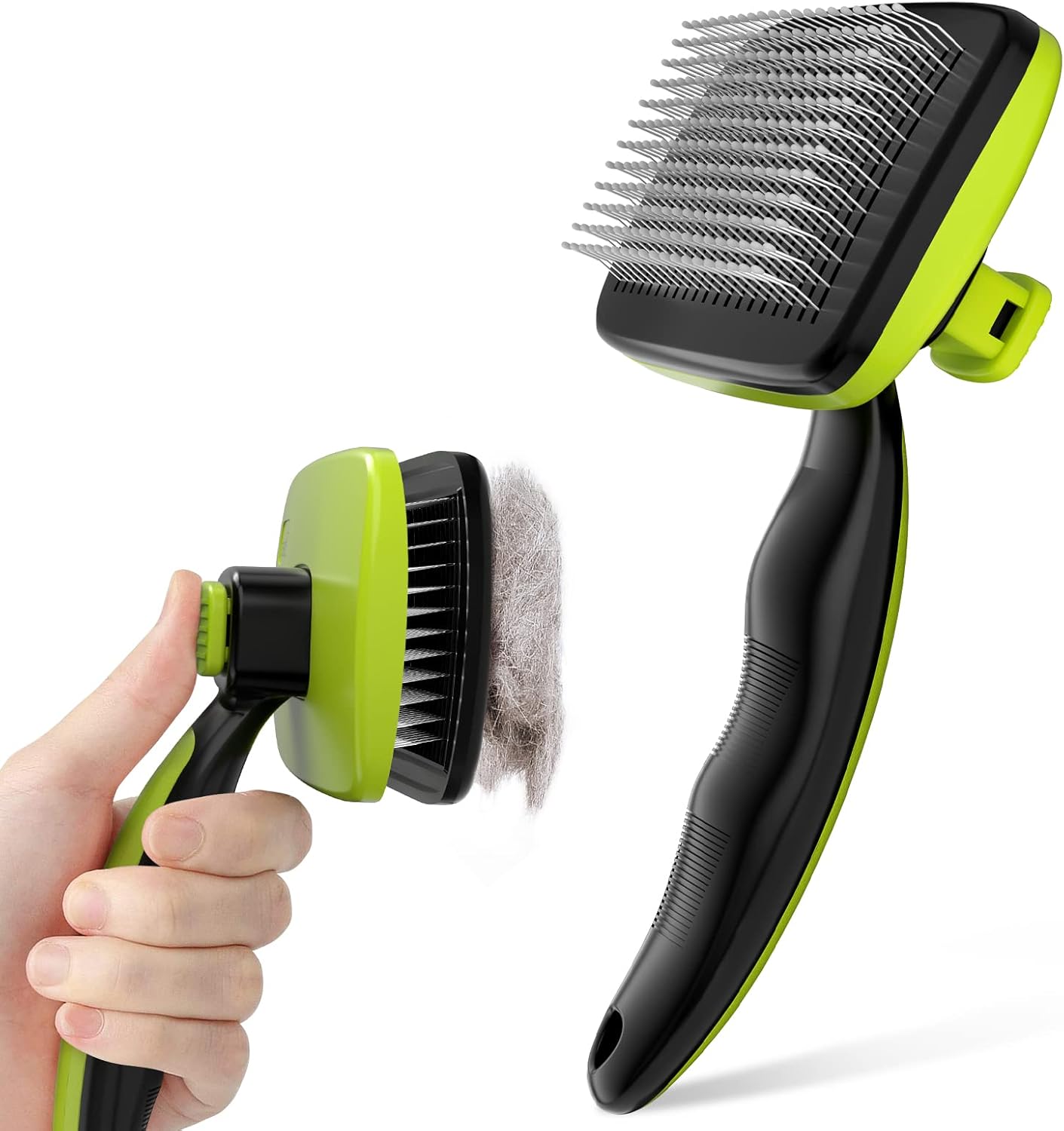
Gentle, short strokes with the slicker, Lana happily sits through it.
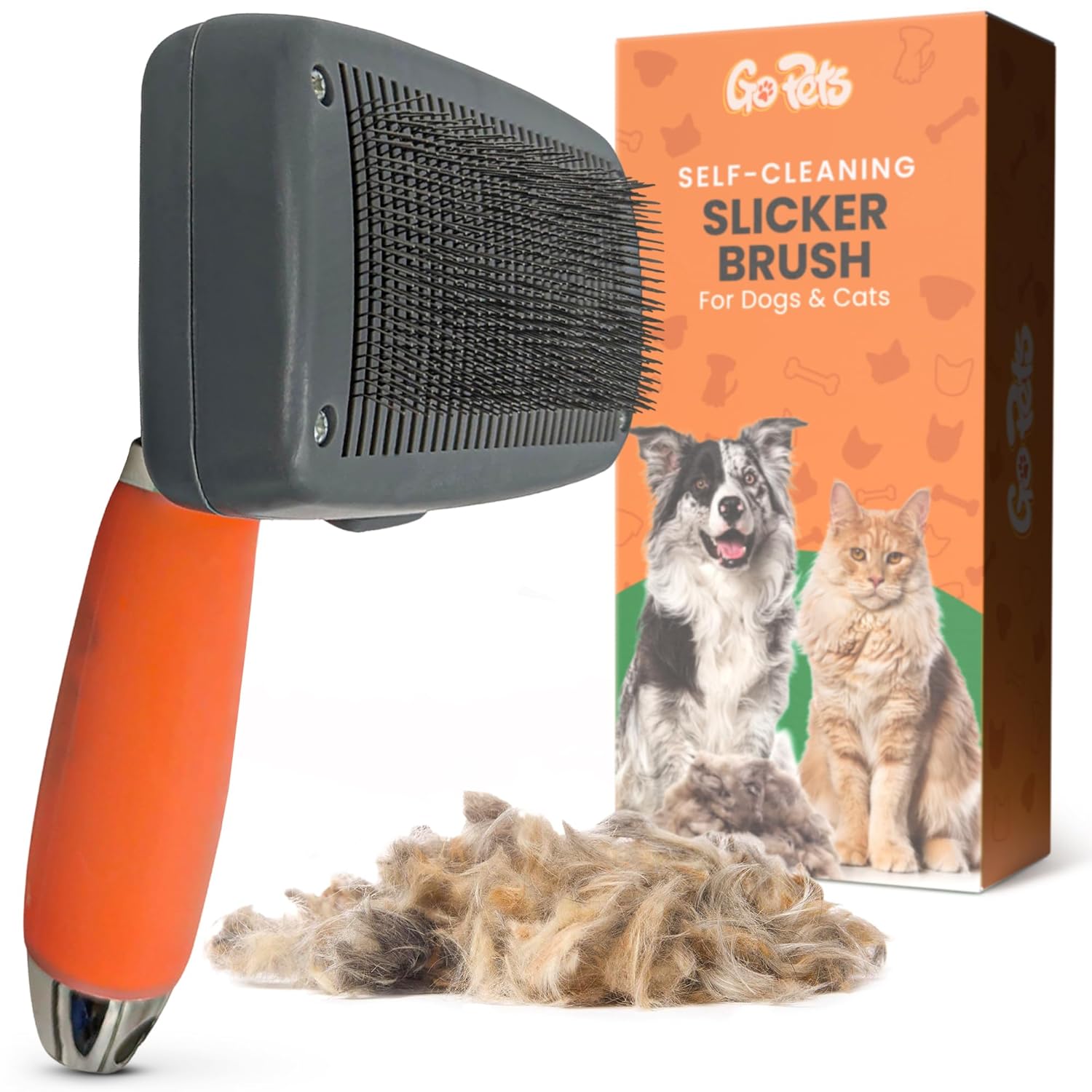
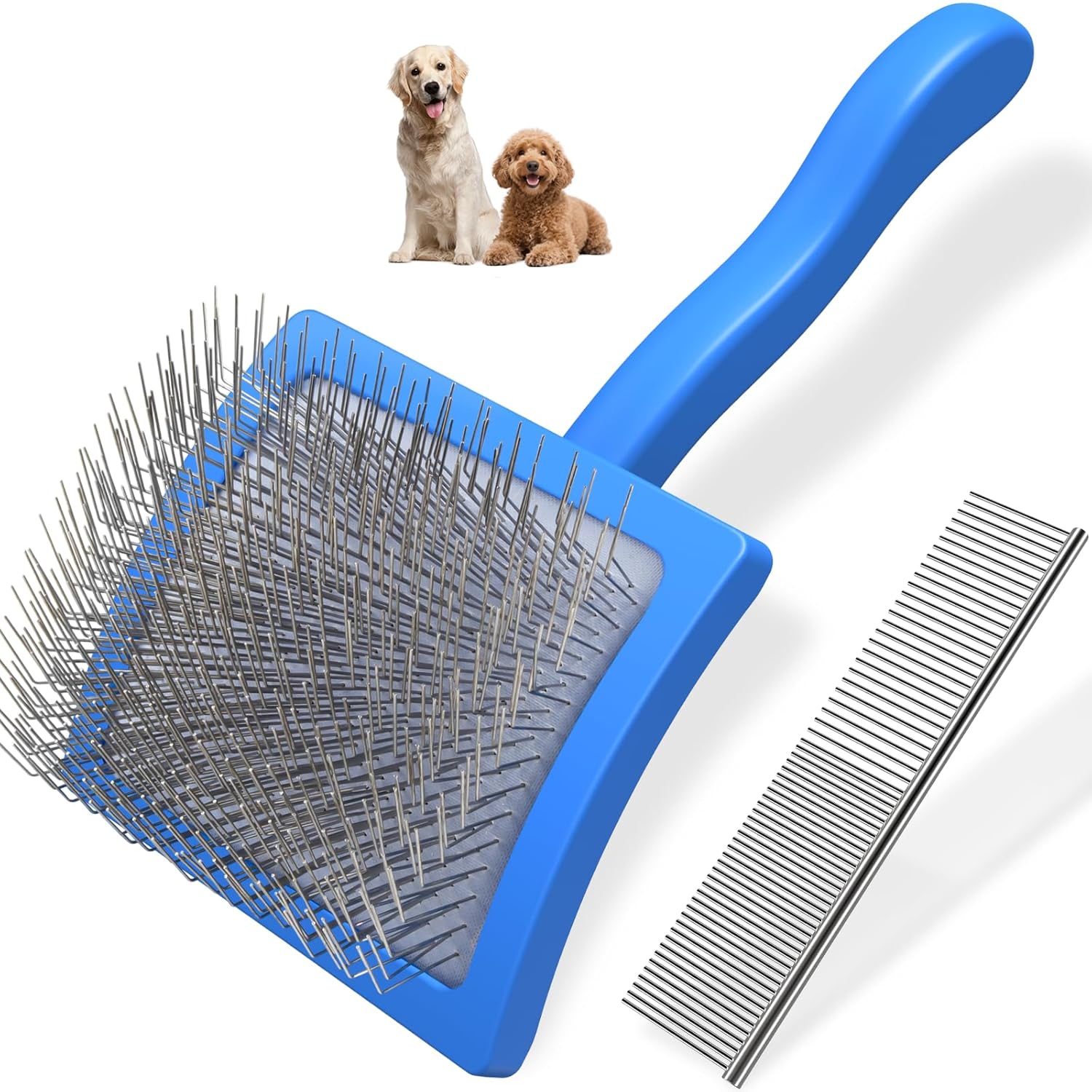
A slicker brush for loose hair and everyday brushing
A slicker brush is one of the most useful tools to keep nearby if you have a fluffy dog. It helps remove loose hair and small tangles, especially when the coat starts feeling a little messy. Use gentle pressure and short strokes, a slicker brush should never feel like scraping the skin.
Lana noteI use this as part of Lana's regular brushing routine. It makes her coat feel lighter without cutting anything away, and she's generally happy to sit still for it.
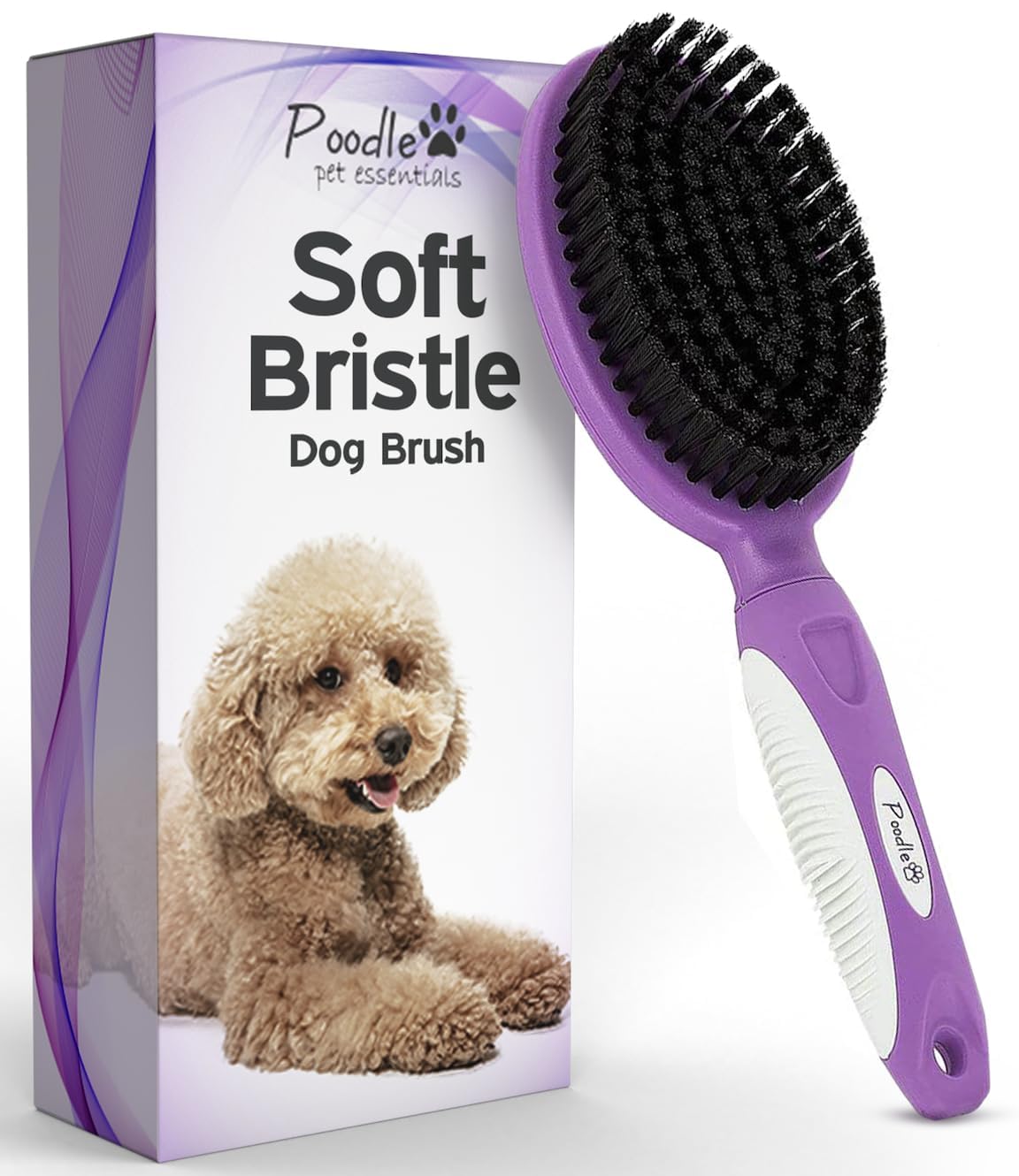
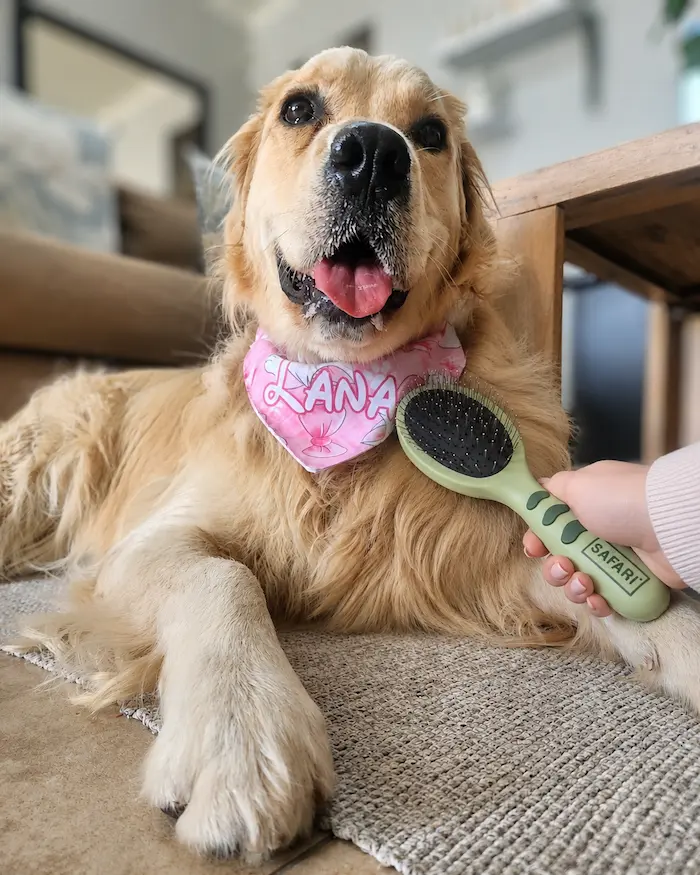
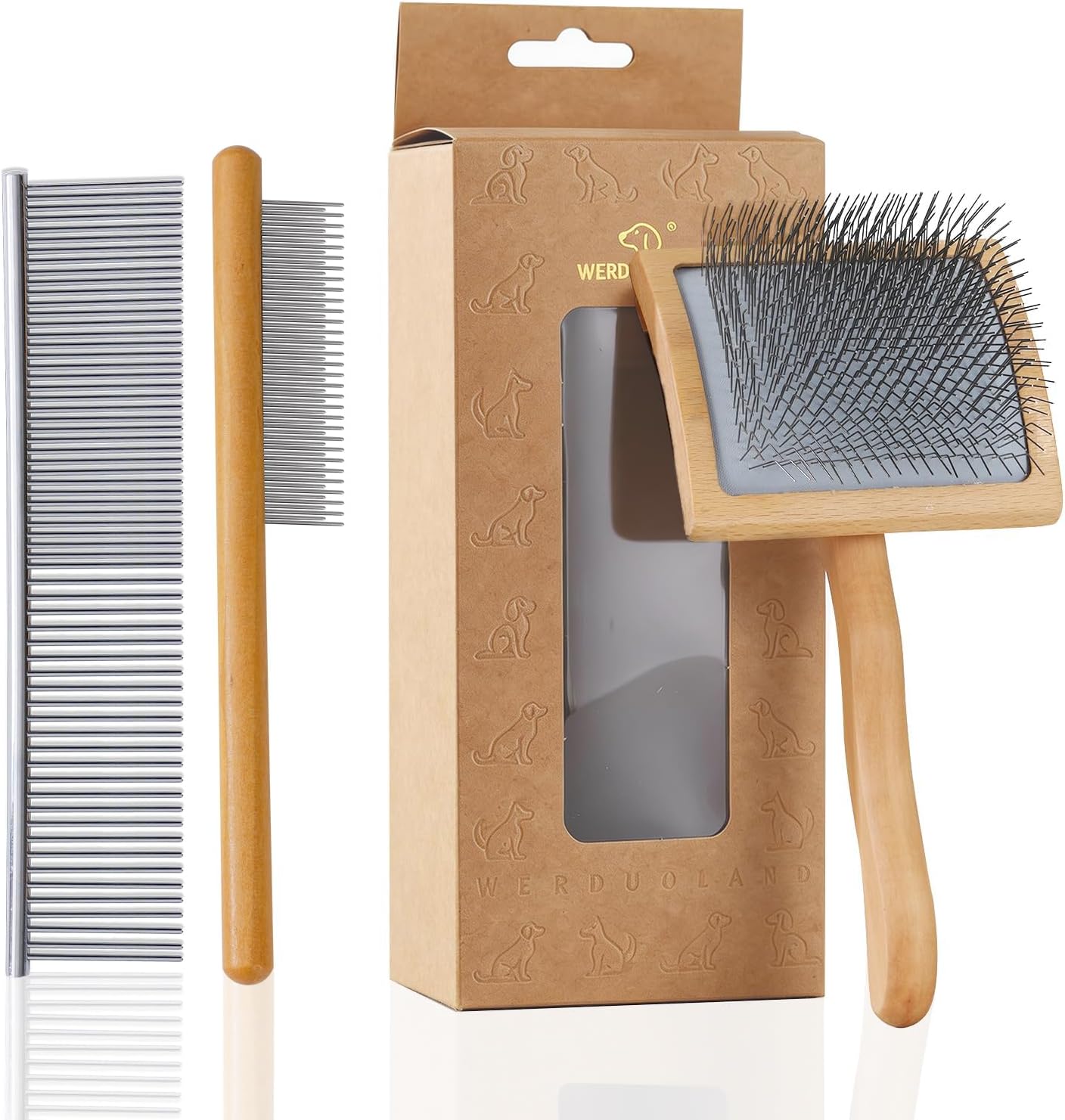
The pin brush for her body and feathering, simple but it keeps things neat.
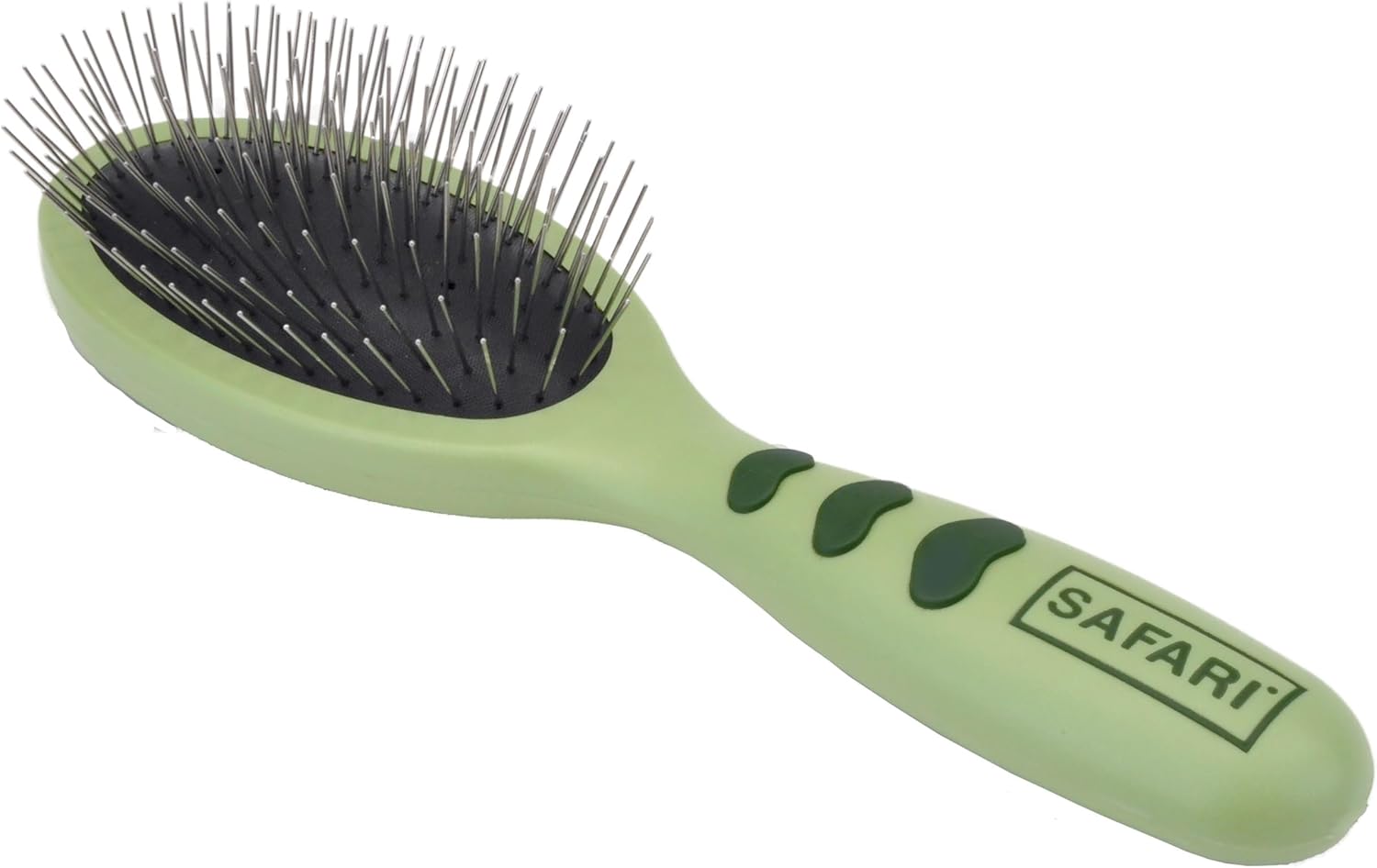
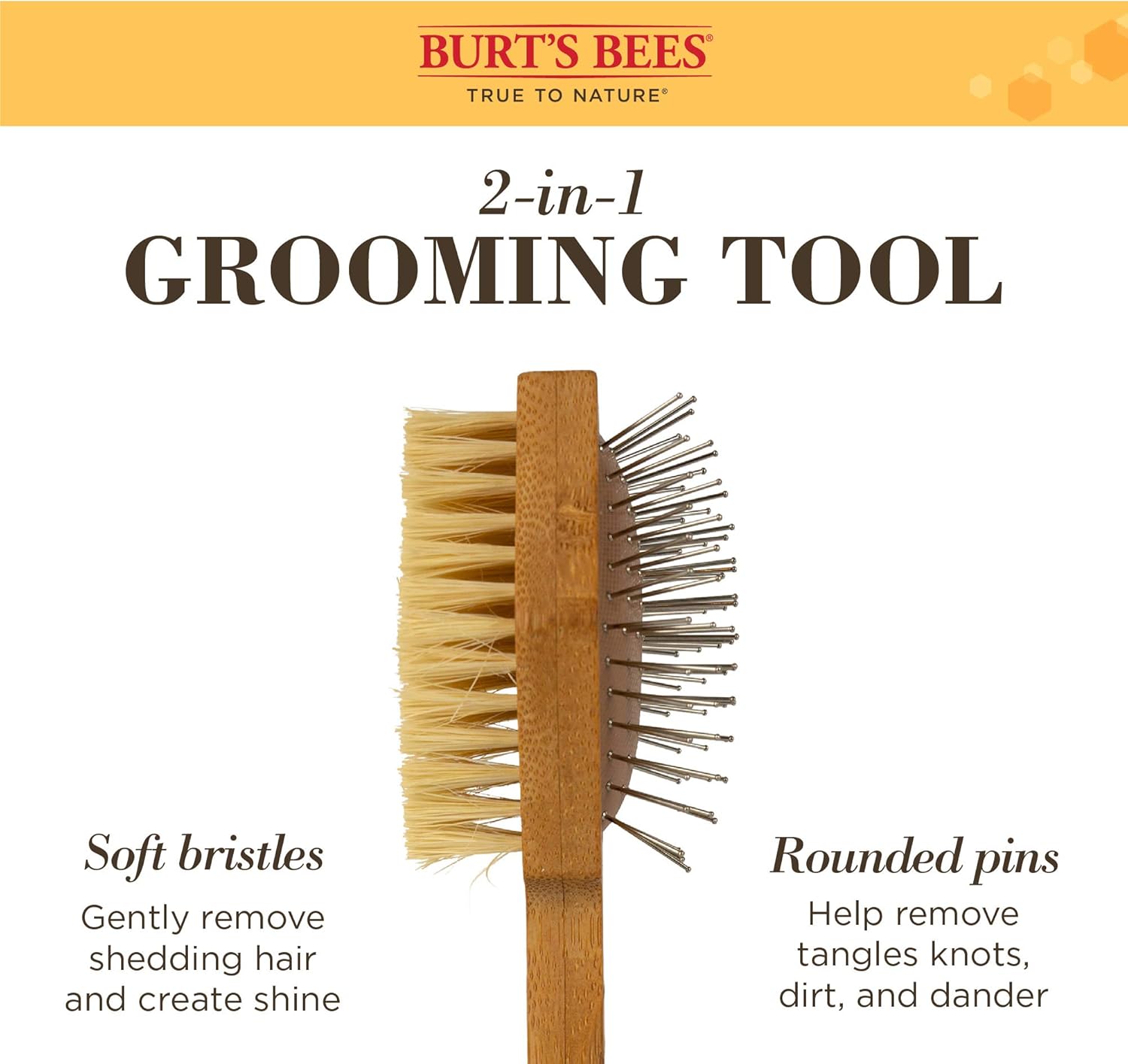
A pin brush for her longer Golden coat
A pin brush is lovely for the longer parts of a Golden Retriever's coat. I use this more for general brushing and smoothing, especially over Lana's body and feathering. It is one of those tools that feels simple but helps keep the coat neat and comfortable. The AKC includes a pin brush and metal comb as part of the basic grooming toolkit for the breed.
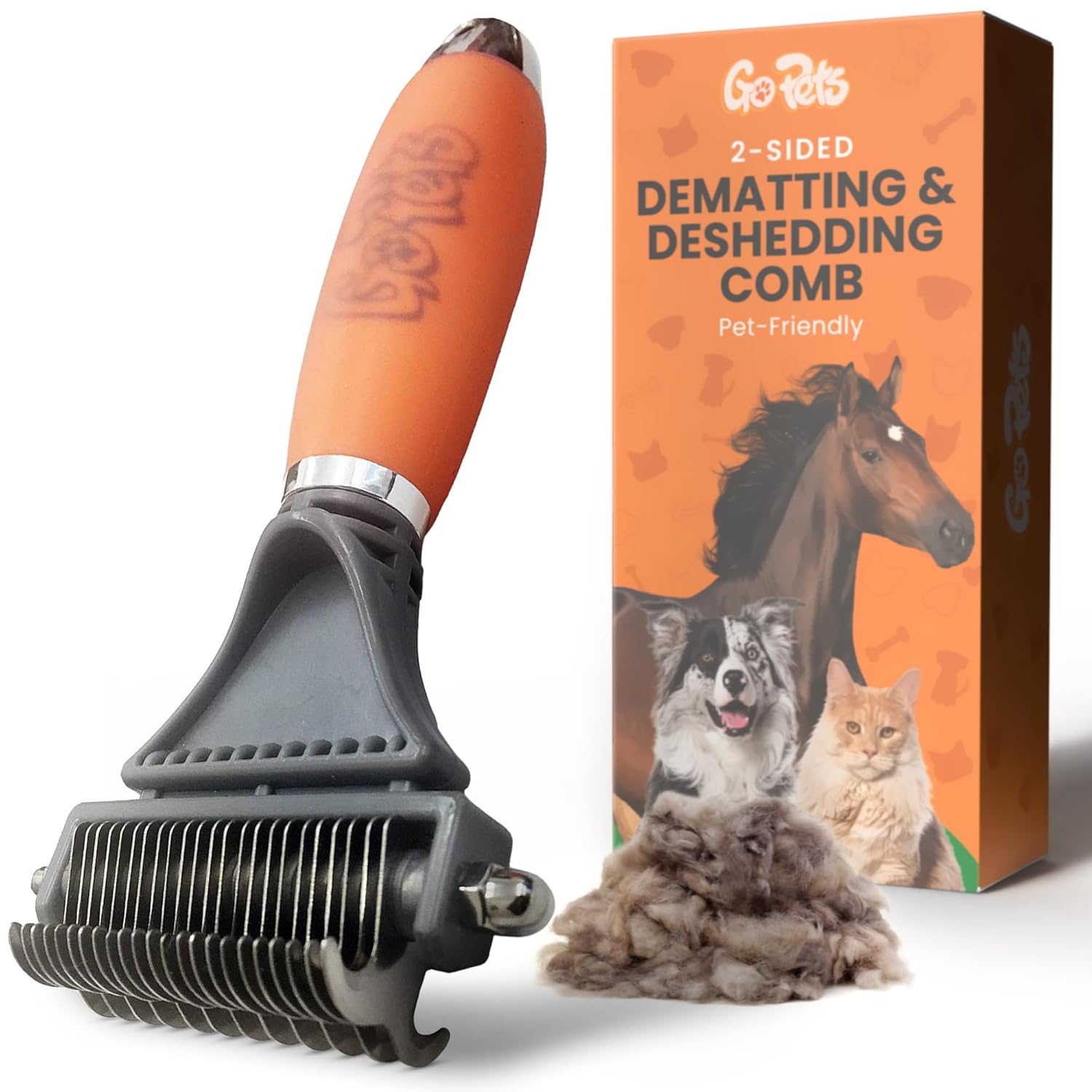
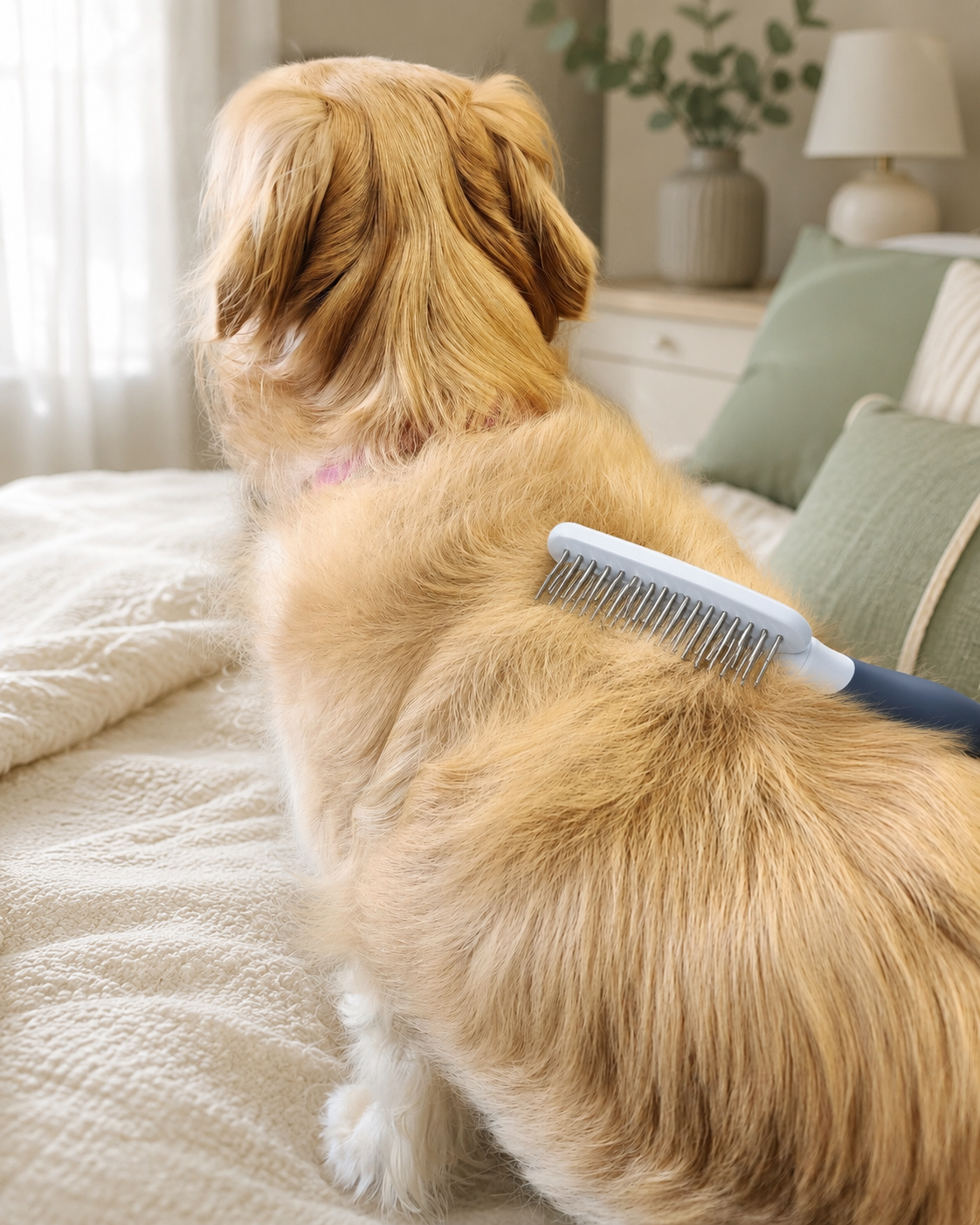
The undercoat rake down her back, lifting the loose, dead undercoat without touching the topcoat.
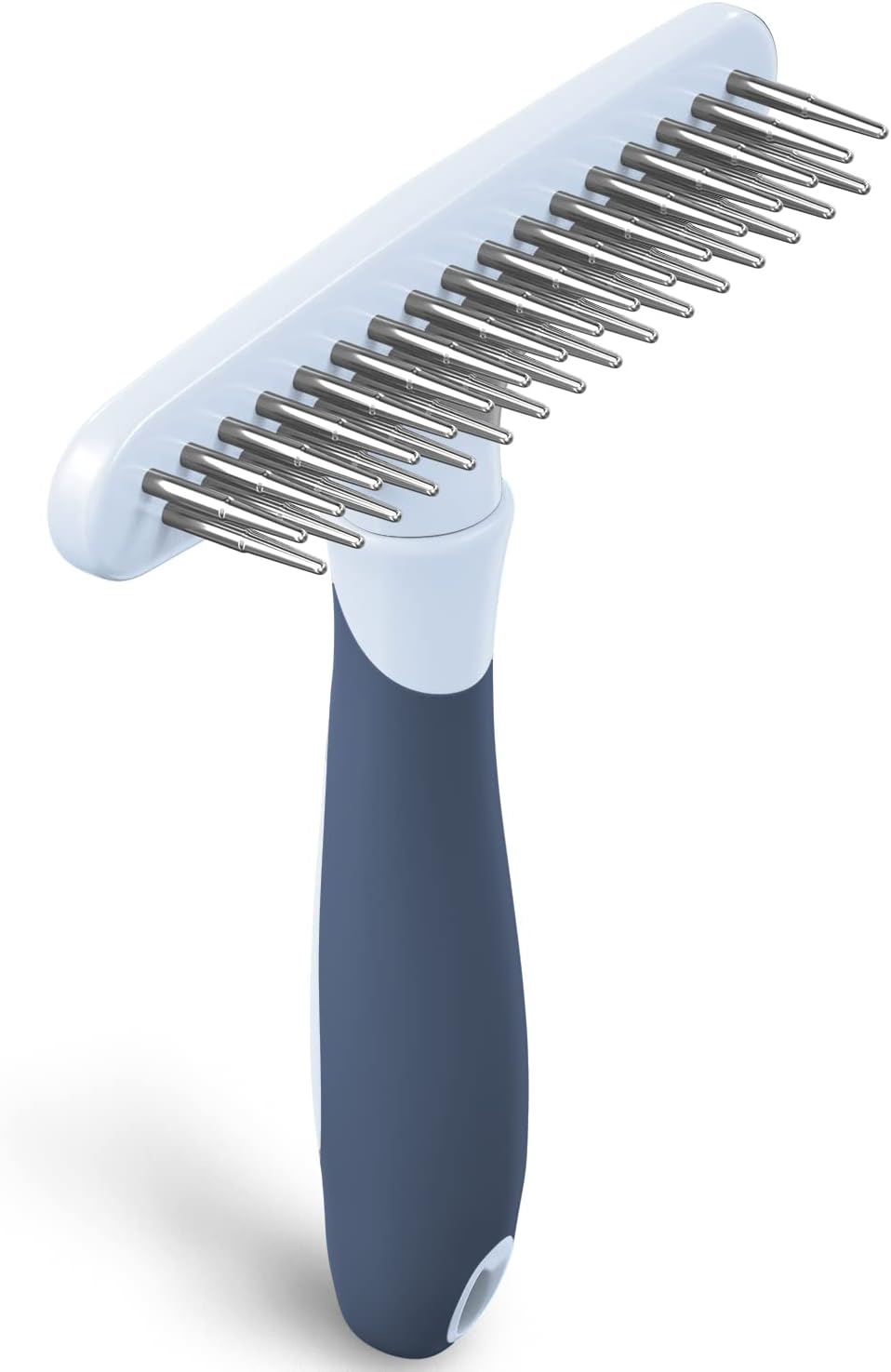
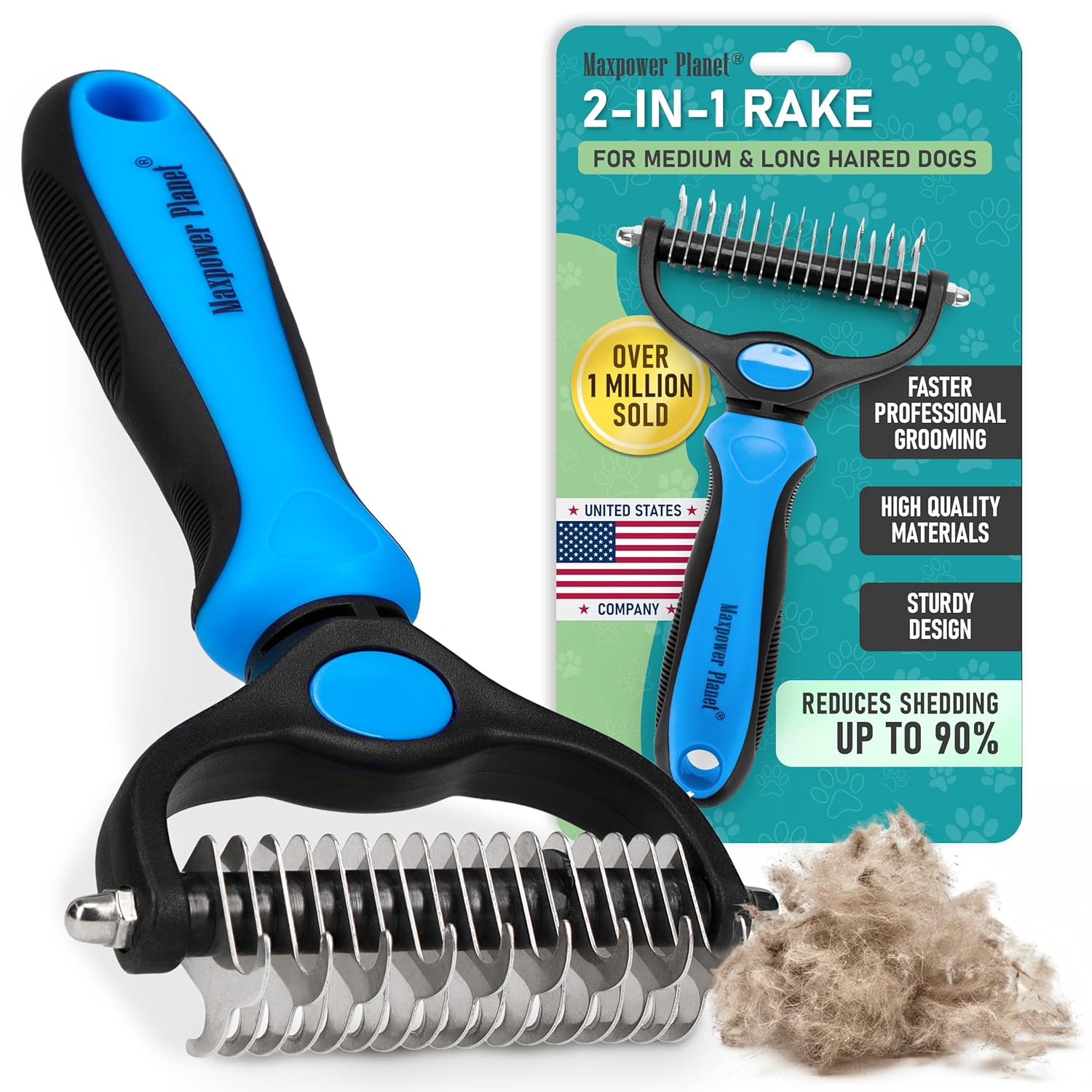
An undercoat rake for shedding season
This is the tool I reach for when the undercoat starts coming out properly. An undercoat rake is made to reach the loose undercoat without shaving the coat down, which is exactly why it makes sense for a double-coated dog. You are not removing the protective coat. You are helping remove the dead, loose hair underneath. During heavy shedding, this kind of tool can make a big difference.
Lana noteThe key is to go slowly. A few gentle passes are better than turning grooming into something your dog wants to avoid. I try to keep sessions short and positive.
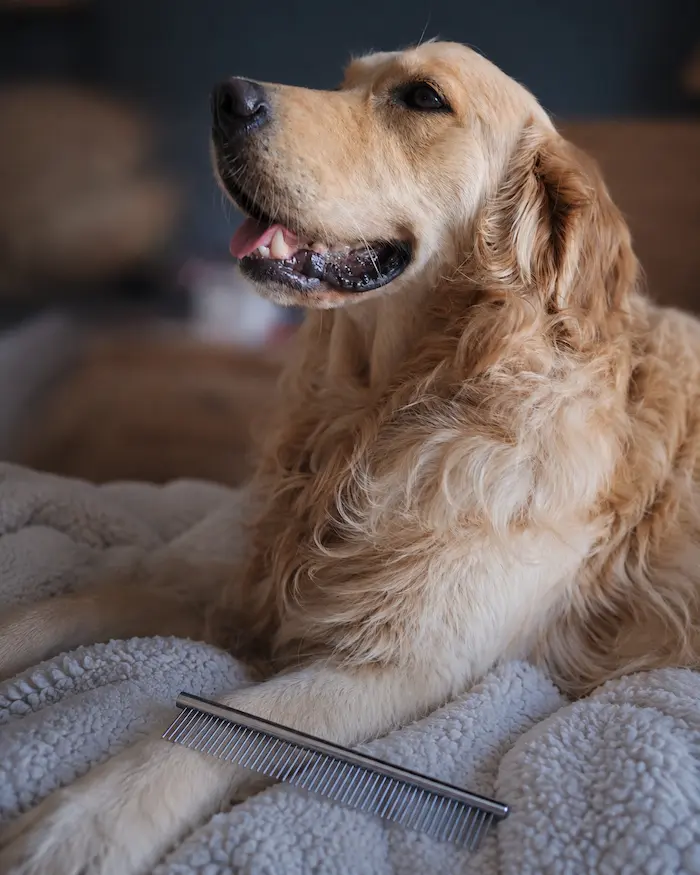
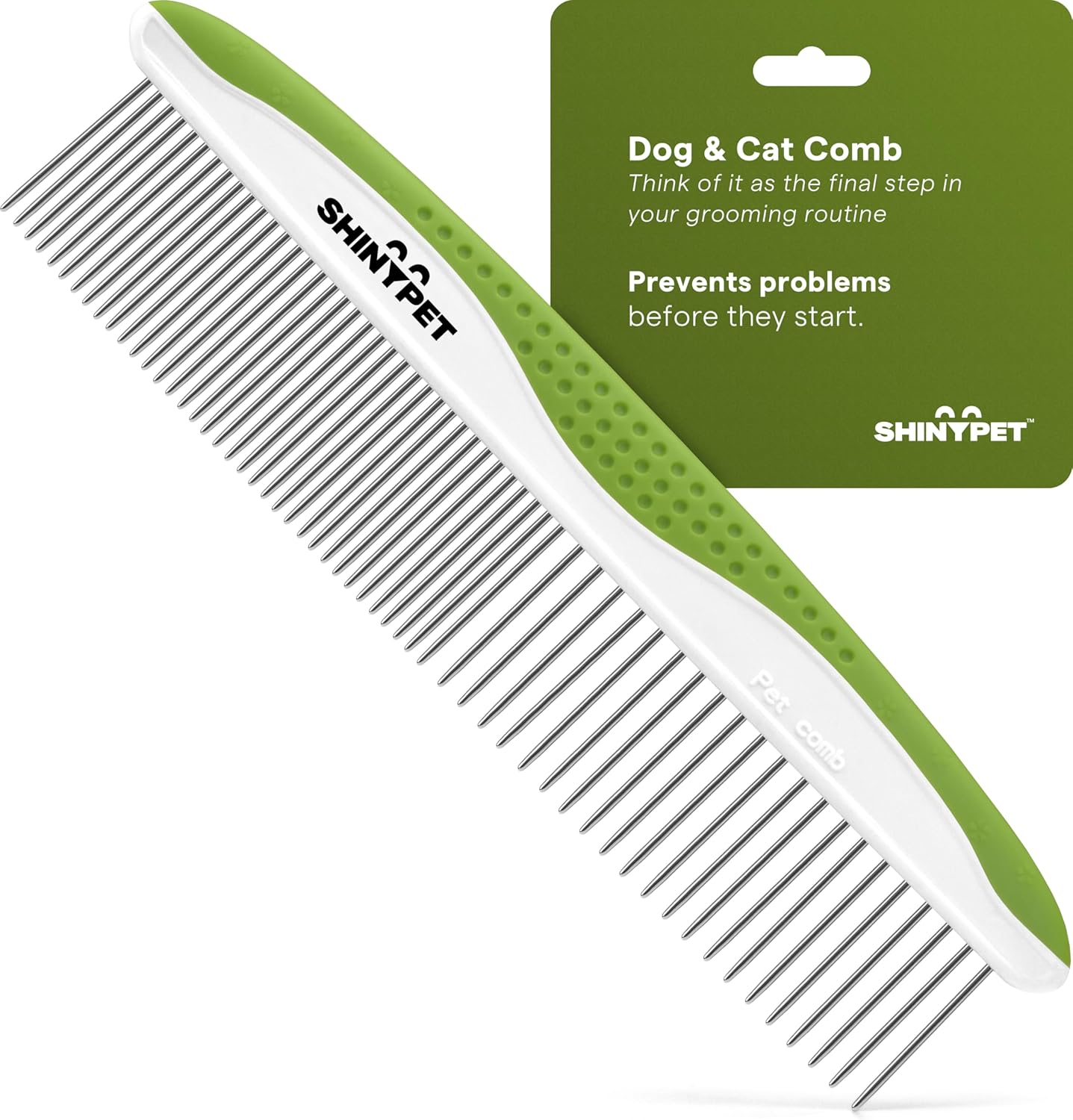
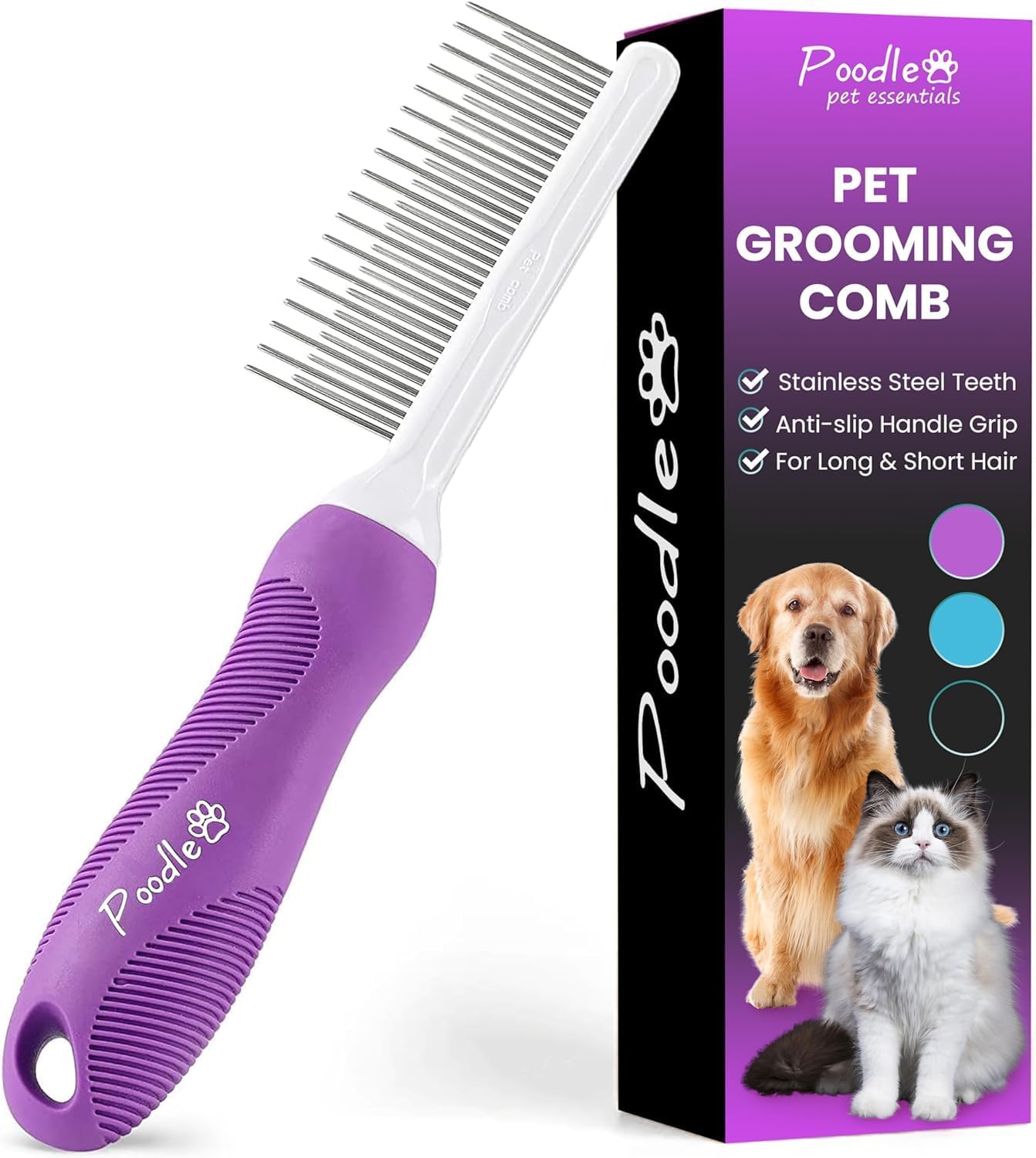
The steel comb, for checking the spots behind her ears and through the feathering.
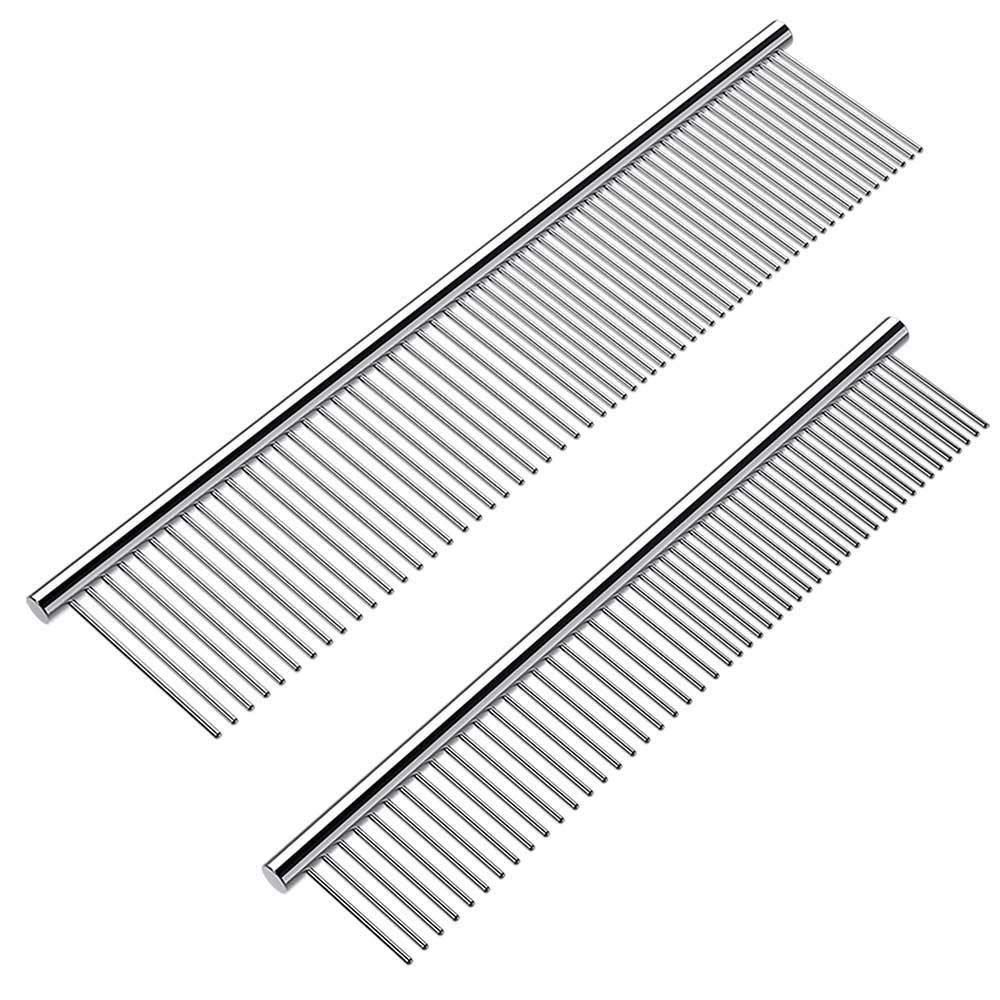
A stainless steel comb for the places brushes miss
If I could keep only one small but essential grooming tool, it might be a metal comb. A comb finds the little tangles that brushes can glide over. For a Golden Retriever, those spots are often behind the ears, around the chest, under the legs, in the tail, and through the feathering. This is the part of grooming that feels more detailed and slow, more like "let's check where the knots hide" than a quick brush-over.
Her beloved sweet pea spray, the little knots slip right out.
A dog-safe detangling spray for small knots
Sometimes a small knot needs a little help before you brush it out. A dog-safe detangling spray can make brushing easier and more comfortable for your dog, especially on the feathering or behind the ears. The goal is never to pull hard. If a knot is too tight, painful, or close to the skin, it is better to ask a groomer for help rather than force it.
Lana noteThis one is my absolute favourite, the sweet pea scent is gorgeous and Lana always smells lovely after. It slips through her feathering and makes the little knots behind her ears so much easier to work out.
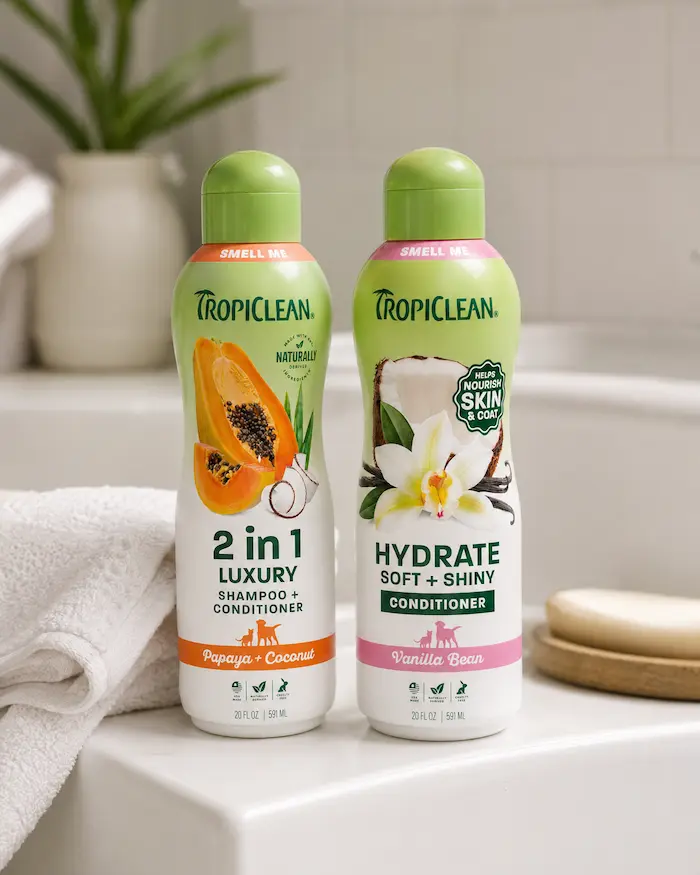
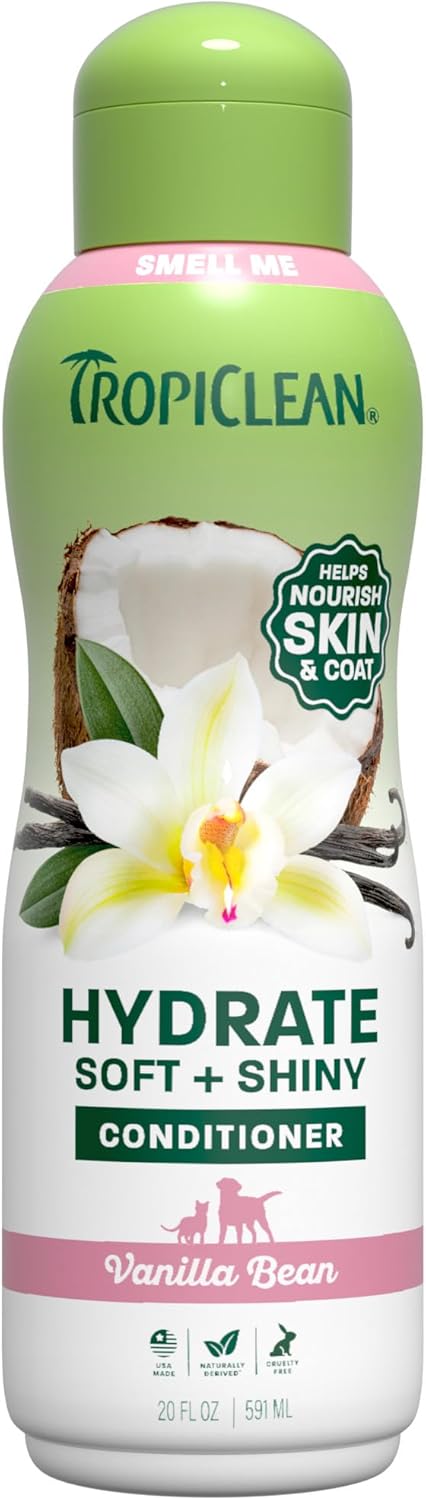
Her bath-day pair, a gentle shampoo and a conditioning rinse for a soft, easy-to-brush coat.
Gentle dog shampoo and conditioner for bath days
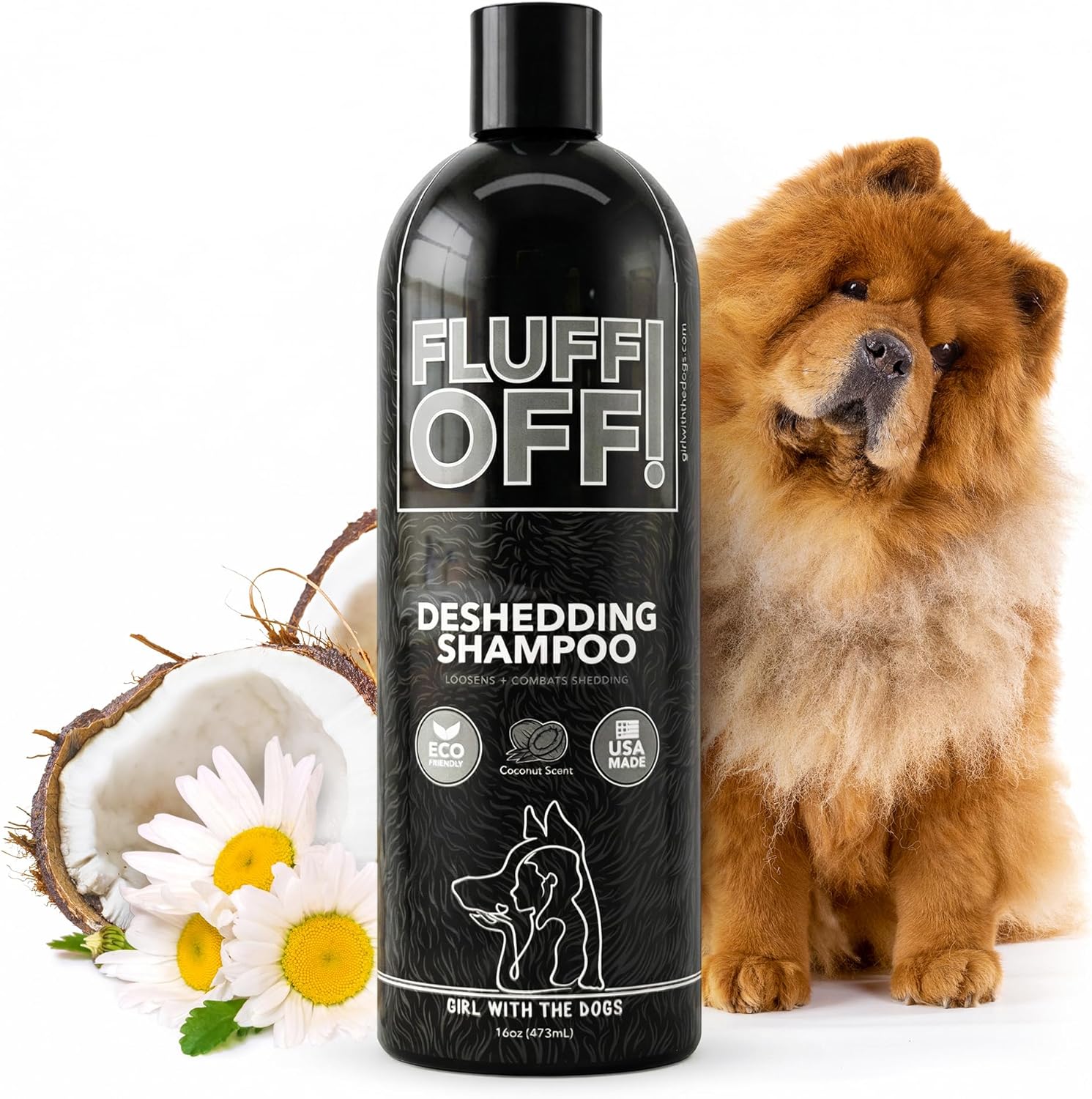
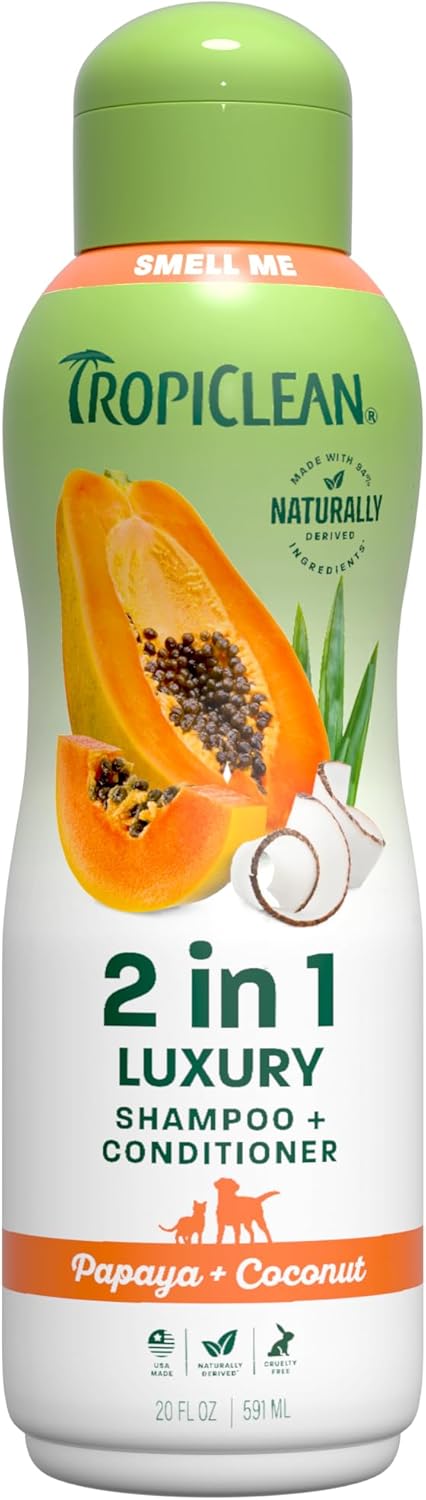
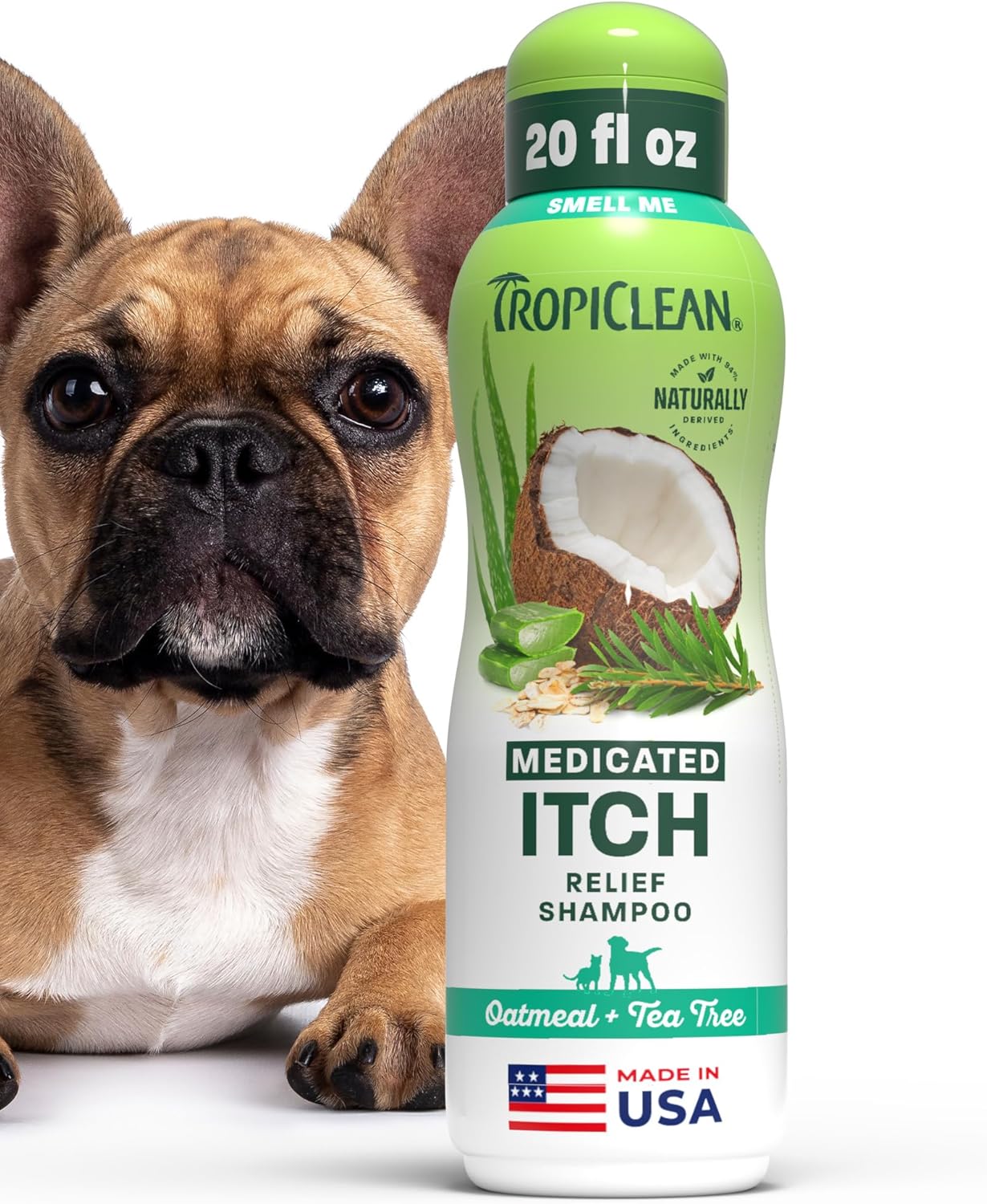
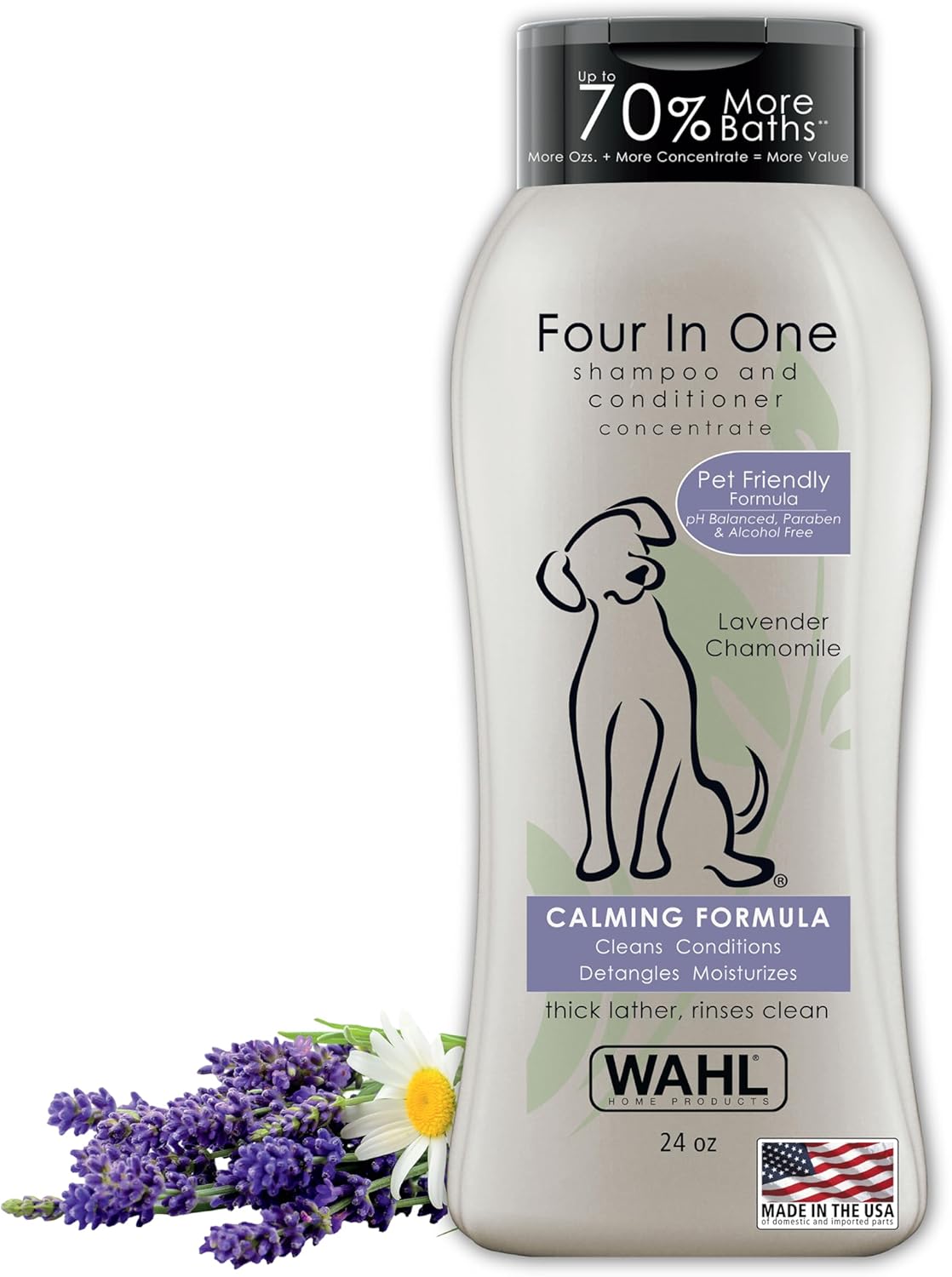
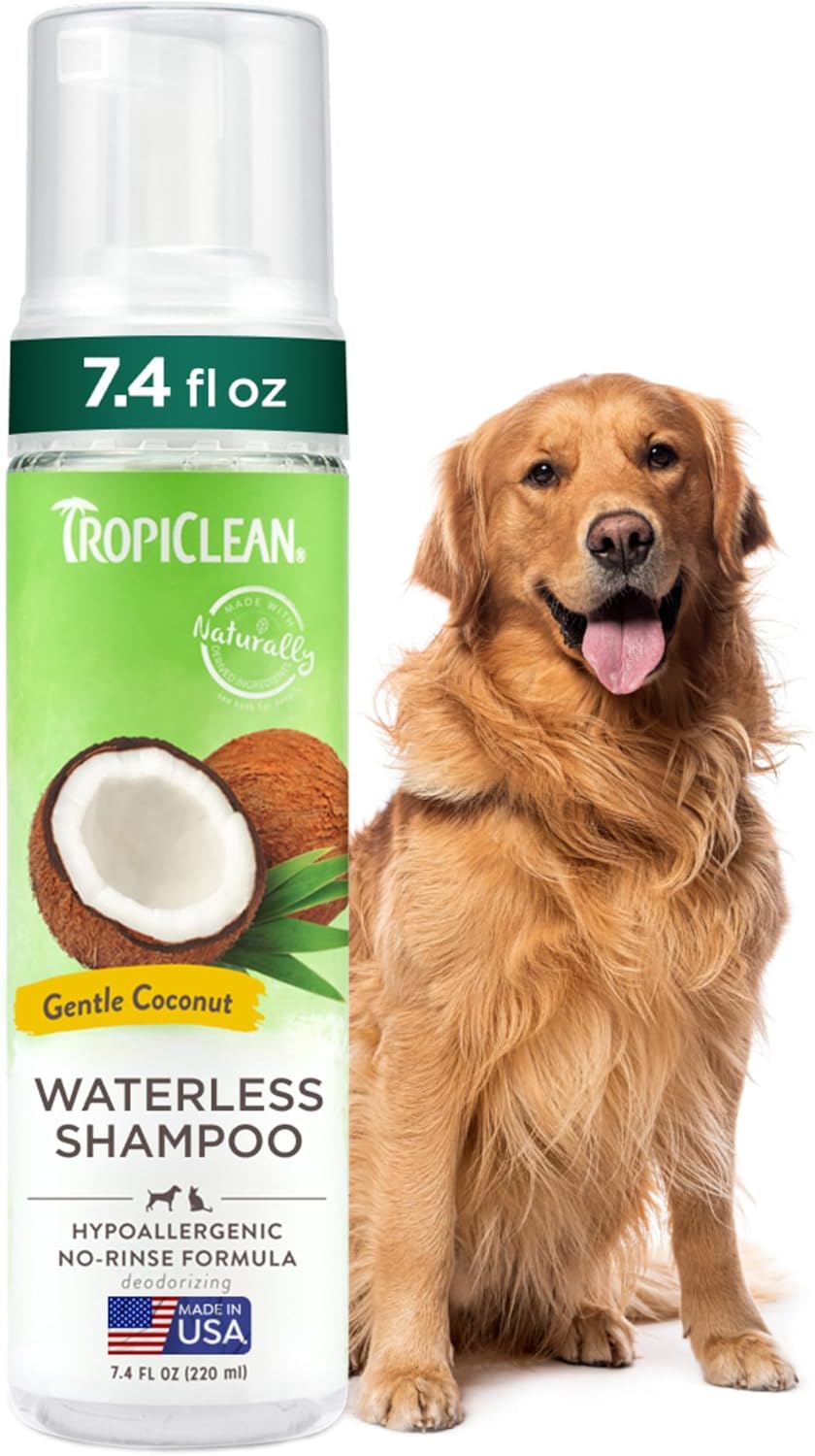
Golden Retrievers do not need to be bathed constantly, but when bath day comes, the right products matter. Always use shampoo made for dogs, VCA explains that human shampoo is too harsh for a dog's skin because their skin has a different pH. For a Golden Retriever, rinsing thoroughly is just as important as washing. A conditioning rinse after shampoo can restore moisture and make the coat softer and easier to brush when dry. And on the in-between days when there's no time for a full bath, I keep a waterless, no-rinse shampoo on hand, it's my go-to for a quick freshen-up before a training class or an outing.
Lana noteWith a thick coat, I've learned that rinsing takes longer than you'd expect. I give it an extra minute, especially around the chest and the thicker coat areas, before calling it done.
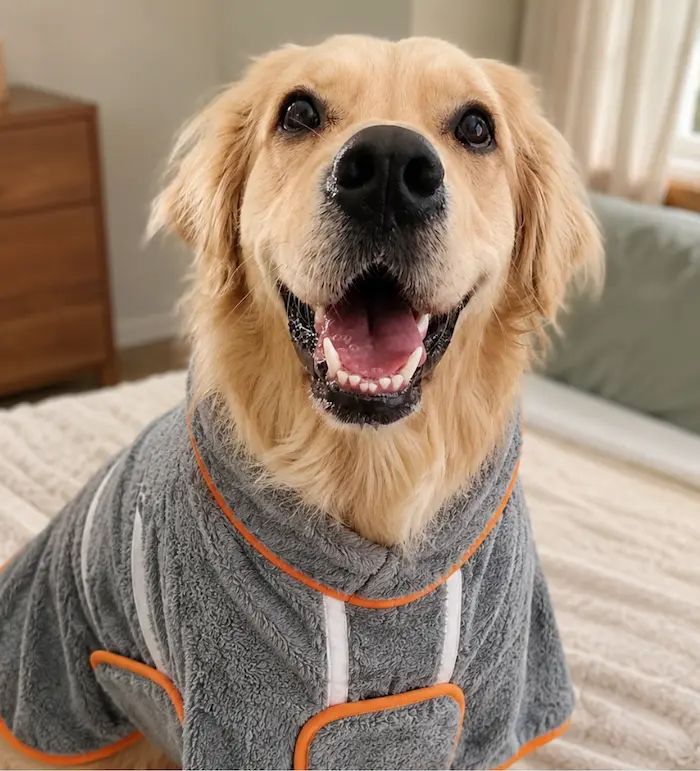
Fresh out of the bath in her drying robe, most of the wet already soaked up.
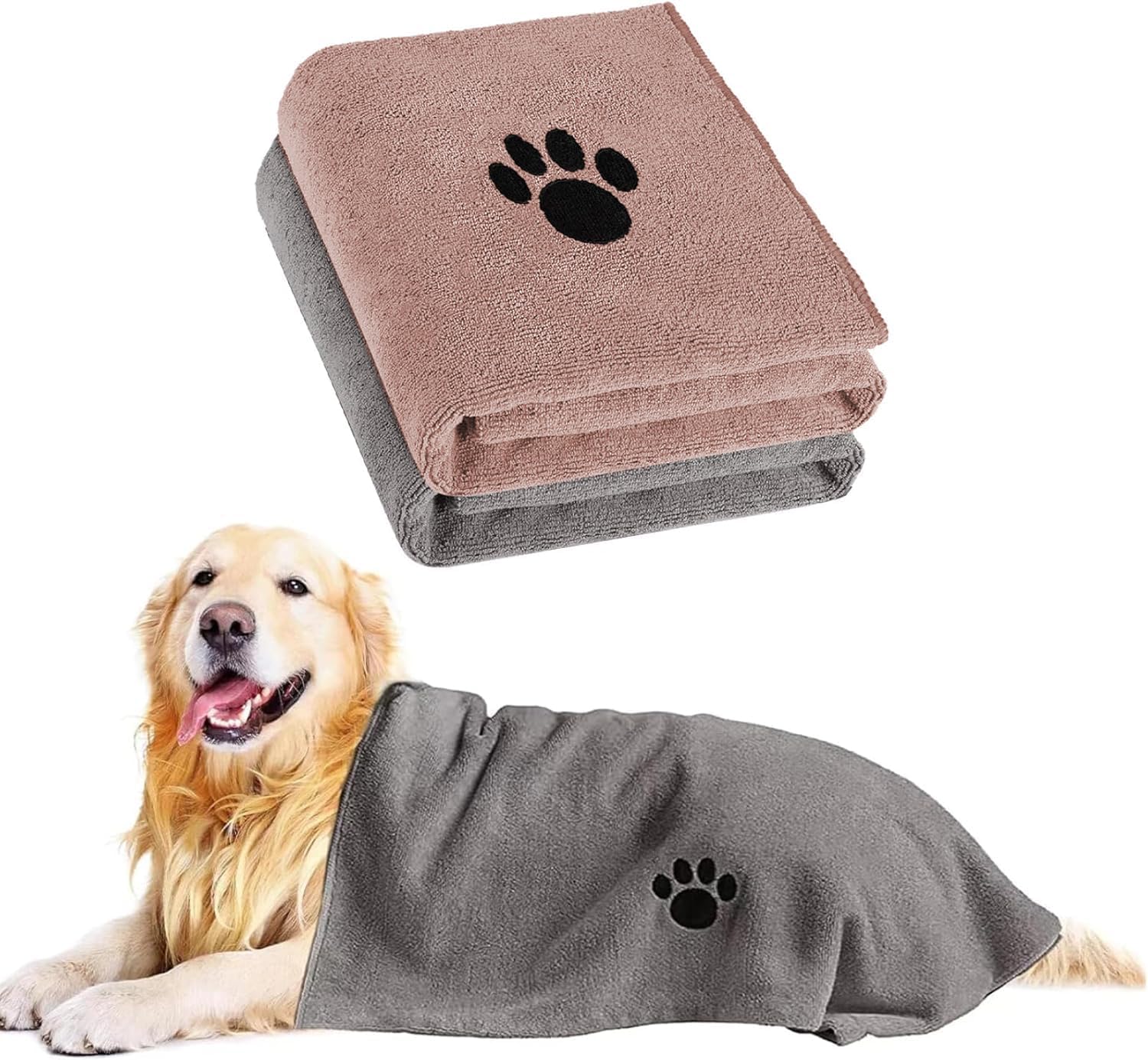
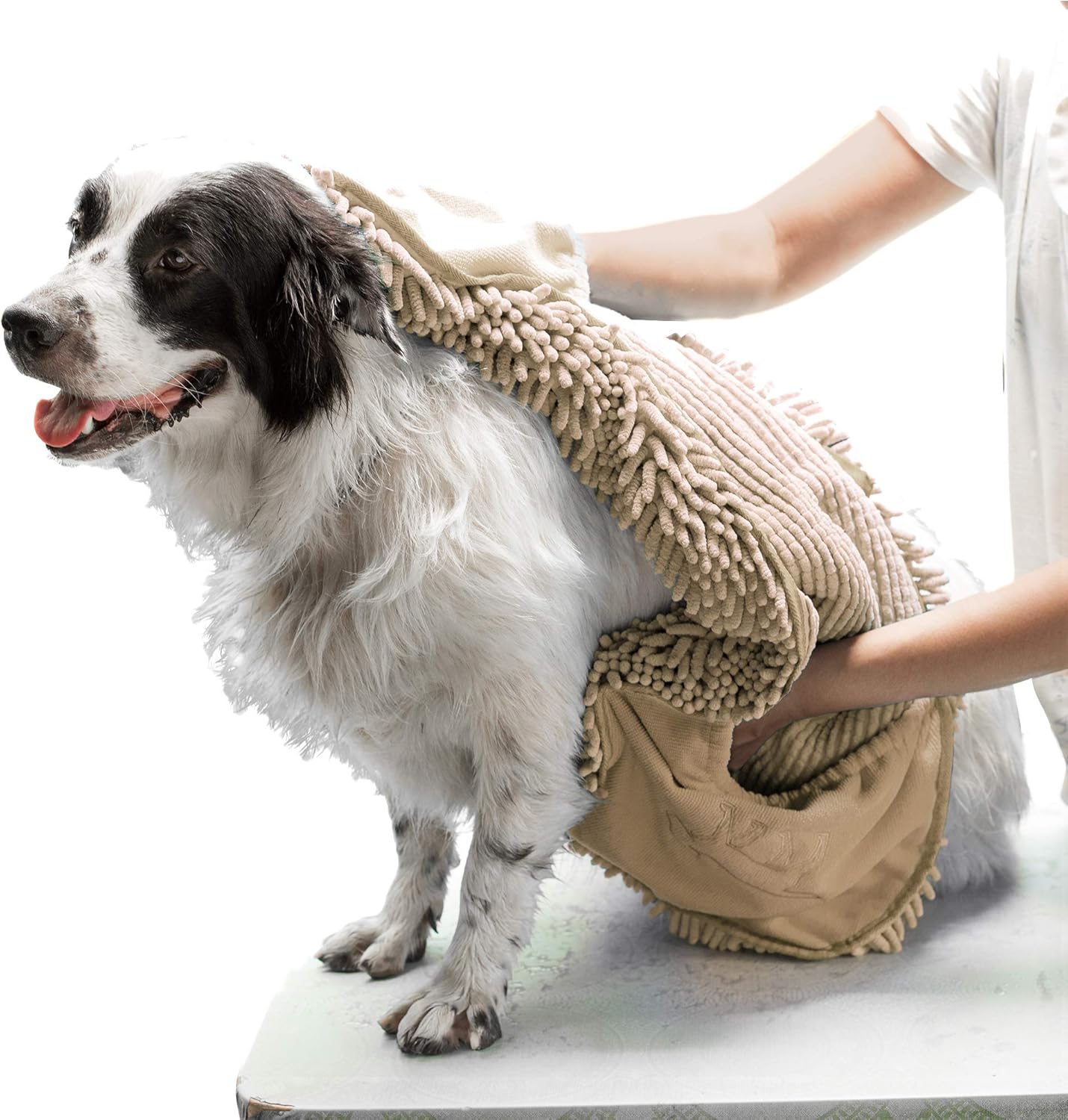
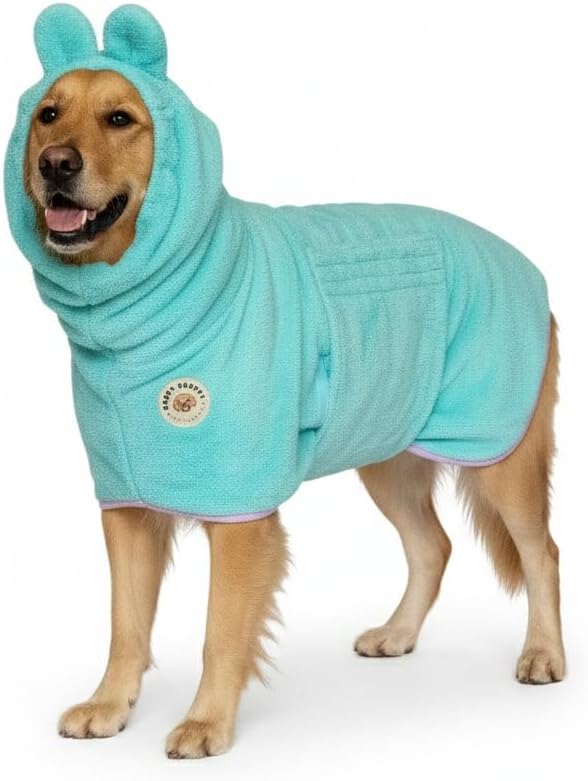
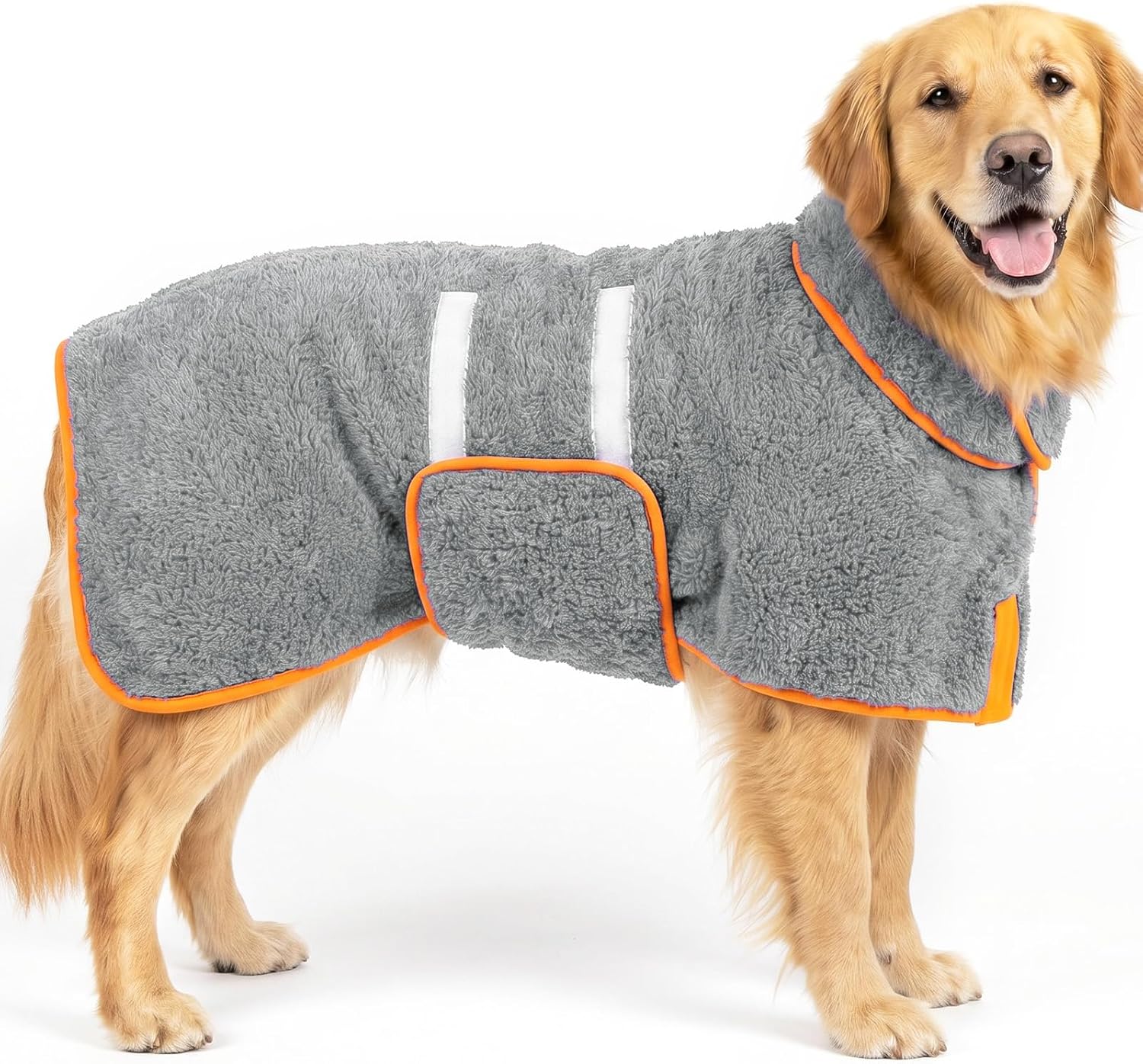
A drying robe (and a microfiber towel) for after the bath
If your dog loves water as much as Lana does, drying well matters just as much as the bath itself. A thick double coat holds a surprising amount of moisture, especially around the ears, paws and the dense areas where trapped damp can cause skin issues. I do still keep a microfiber towel for a quick first pass, but honestly my favourite is a drying robe. I wrap Lana in it and let it do the work, it absorbs so much that by the time I reach for the hair dryer, most of the moisture is already gone.
Lana noteThis is the one thing that changed bath day for us. The robe soaks up the worst of it while she wanders around, so the dryer time at the end is short and she stays relaxed the whole way through.
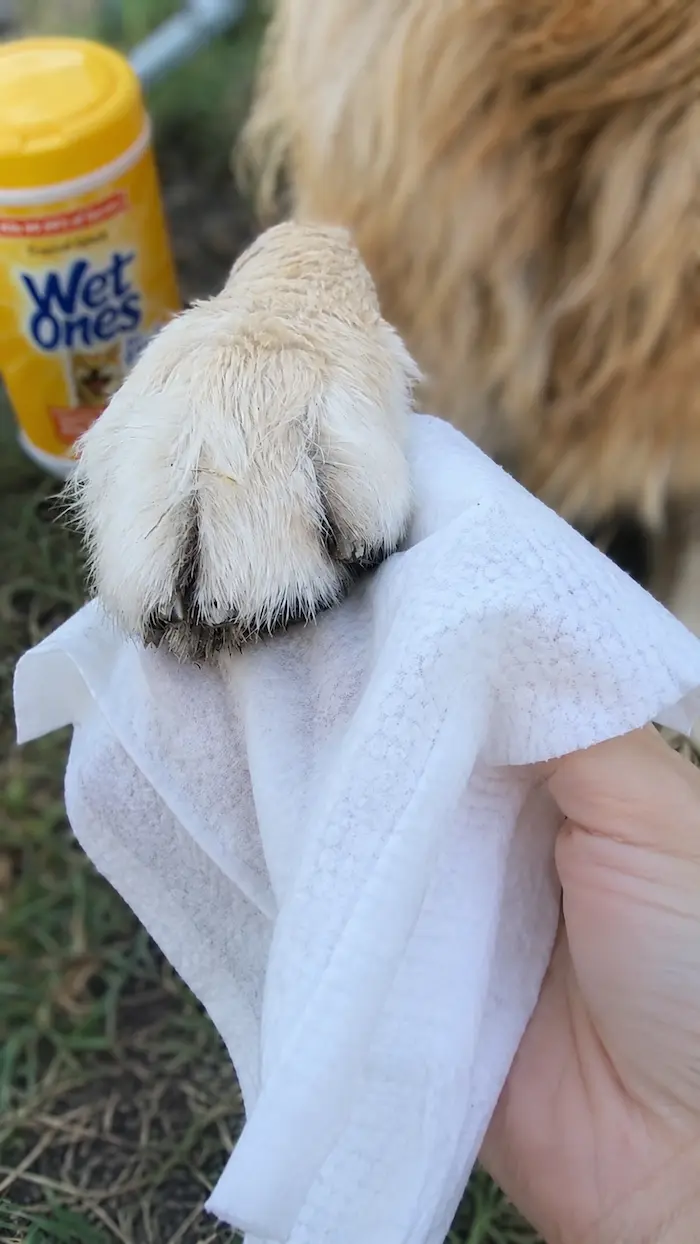
A quick wipe at the door, muddy paws sorted in about thirty seconds.
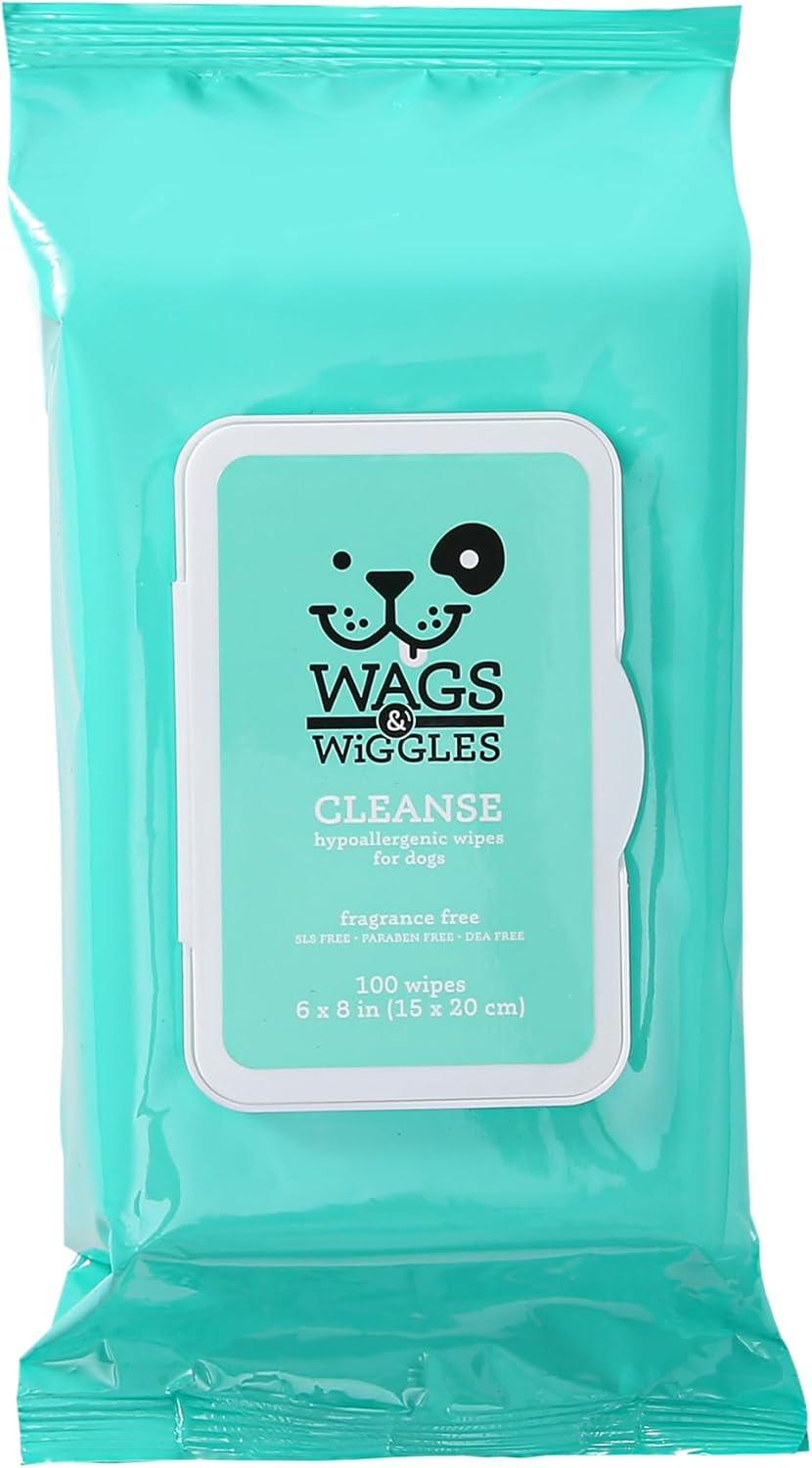
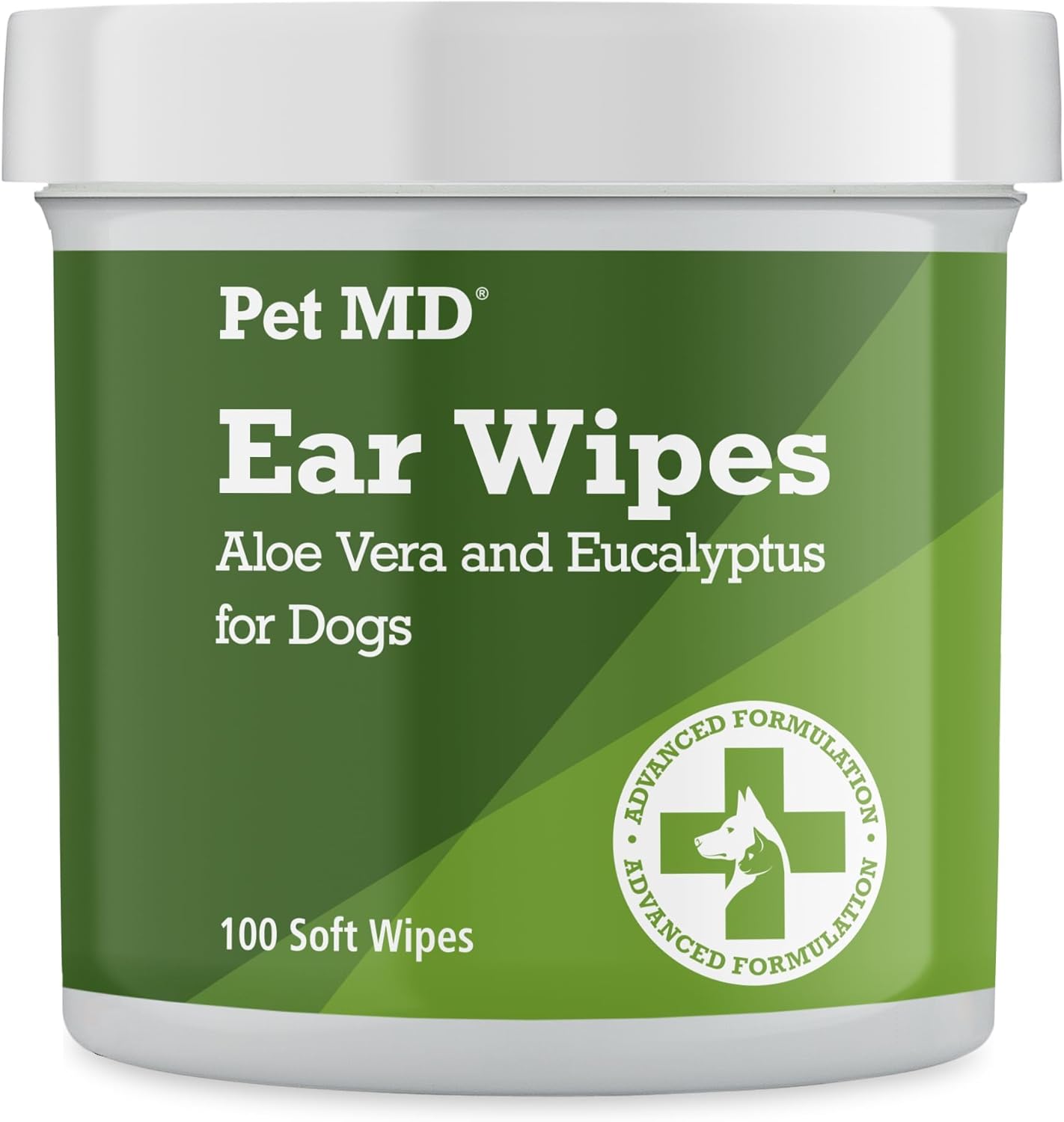
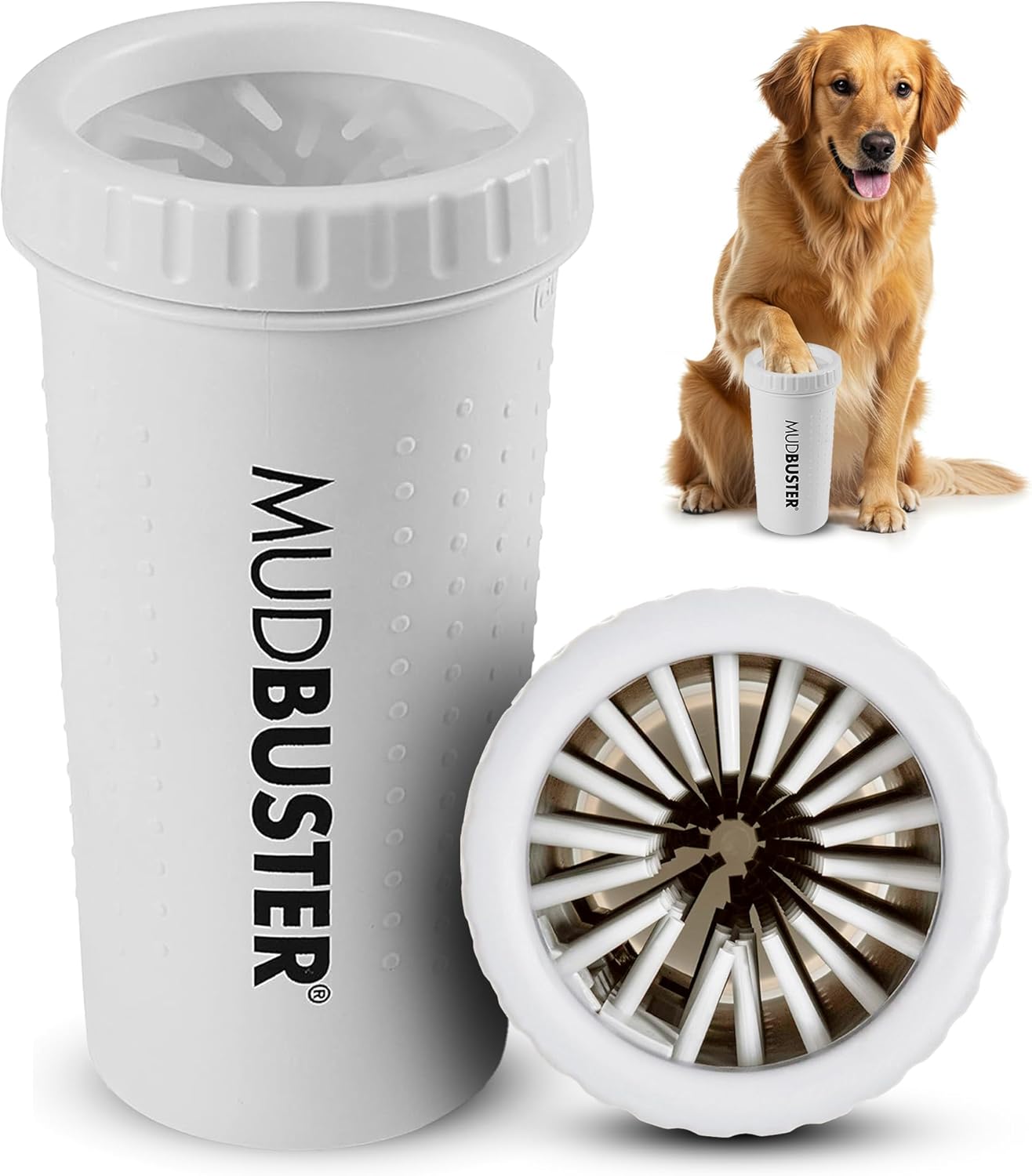
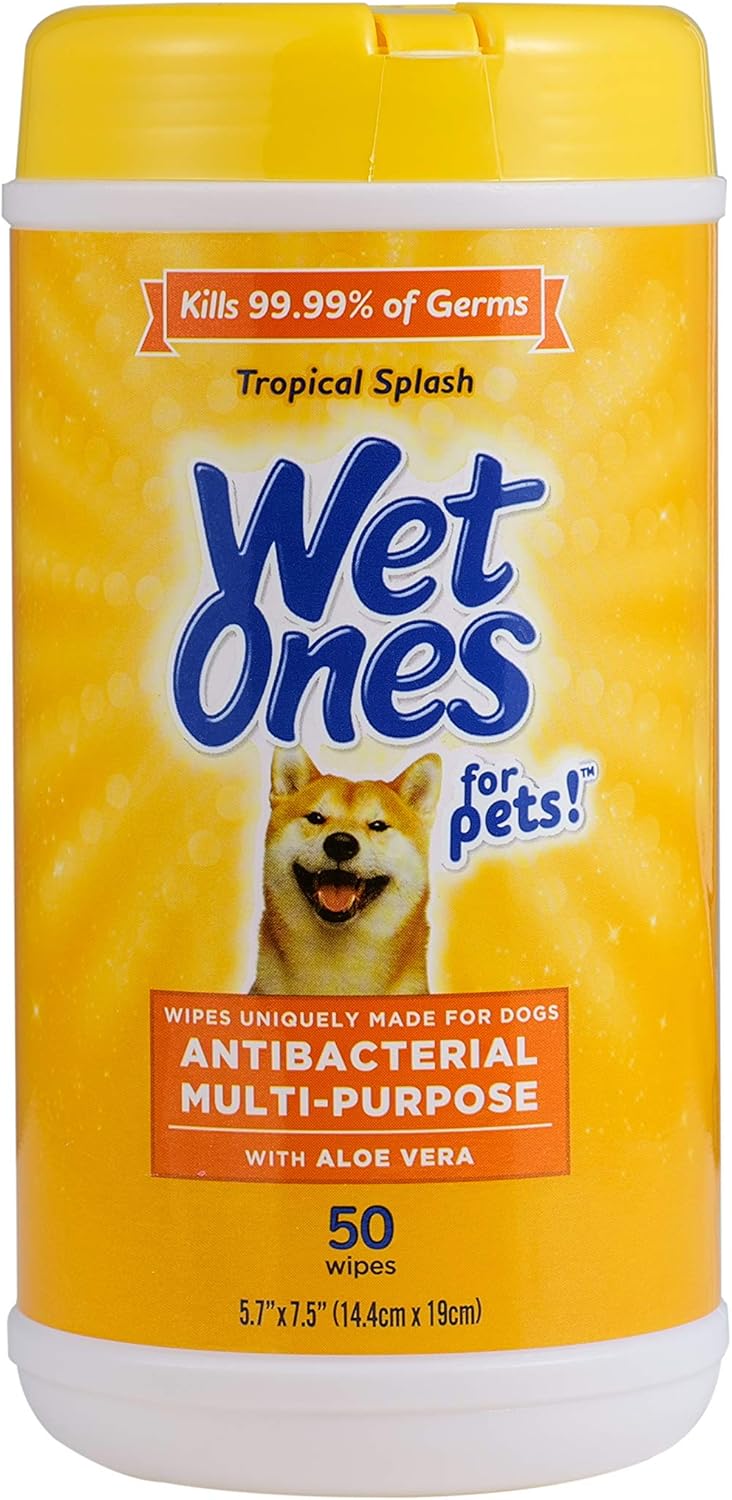
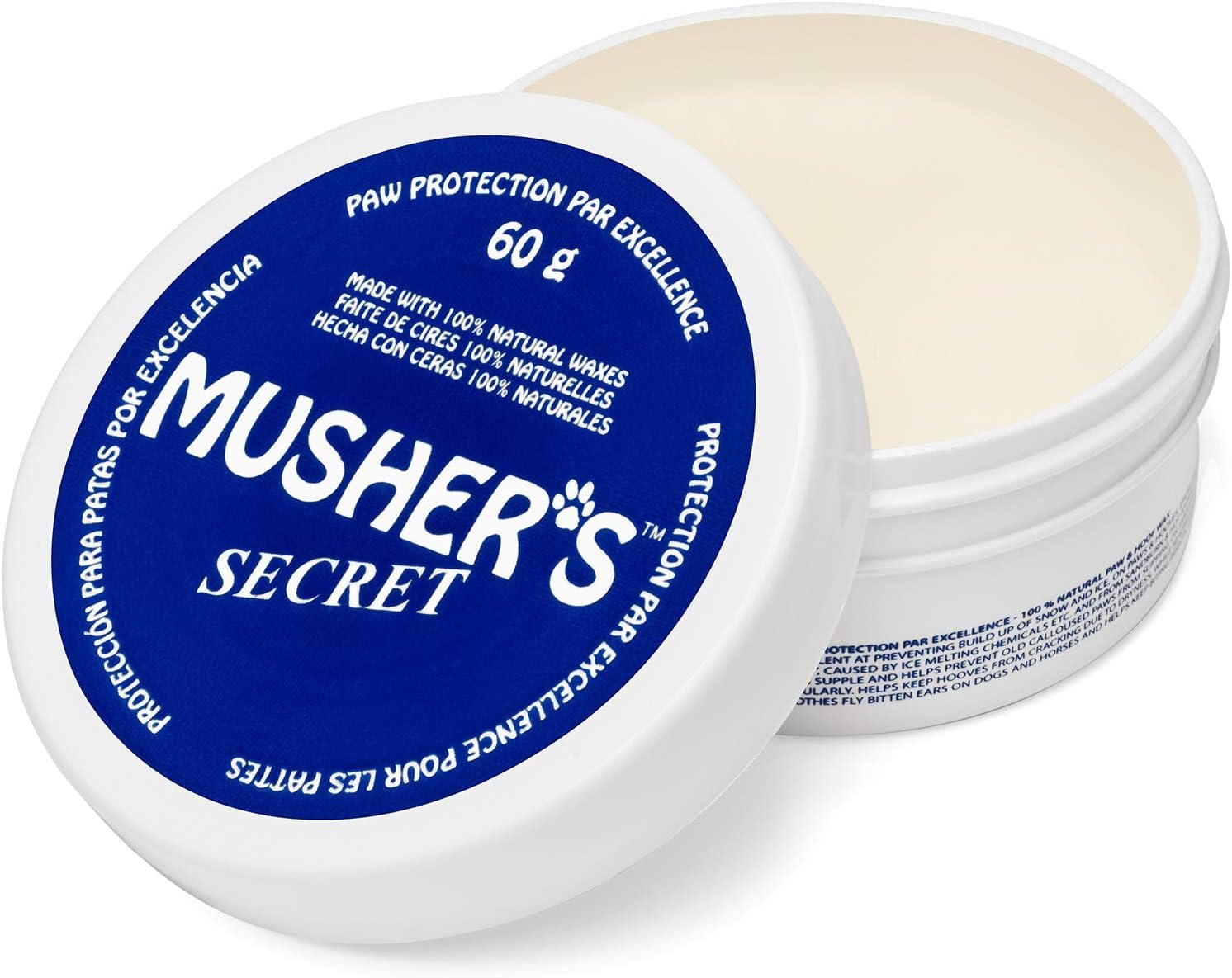
Paw wipes or a paw cleaner for muddy days
Not every grooming moment needs to be a full bath. Some days it is just muddy paws, and if your dog is like Lana, muddy paws happen regularly. A paw cleaner or gentle paw wipes can be so helpful after garden time, rainy walks, or a quick outdoor adventure. It also gives you a moment to check between the toes for bits of grass, dirt, or anything that might be causing irritation.
Lana noteThis is one of those simple things that makes daily life genuinely easier. A quick paw wipe at the door keeps the floors cleaner and takes about thirty seconds.
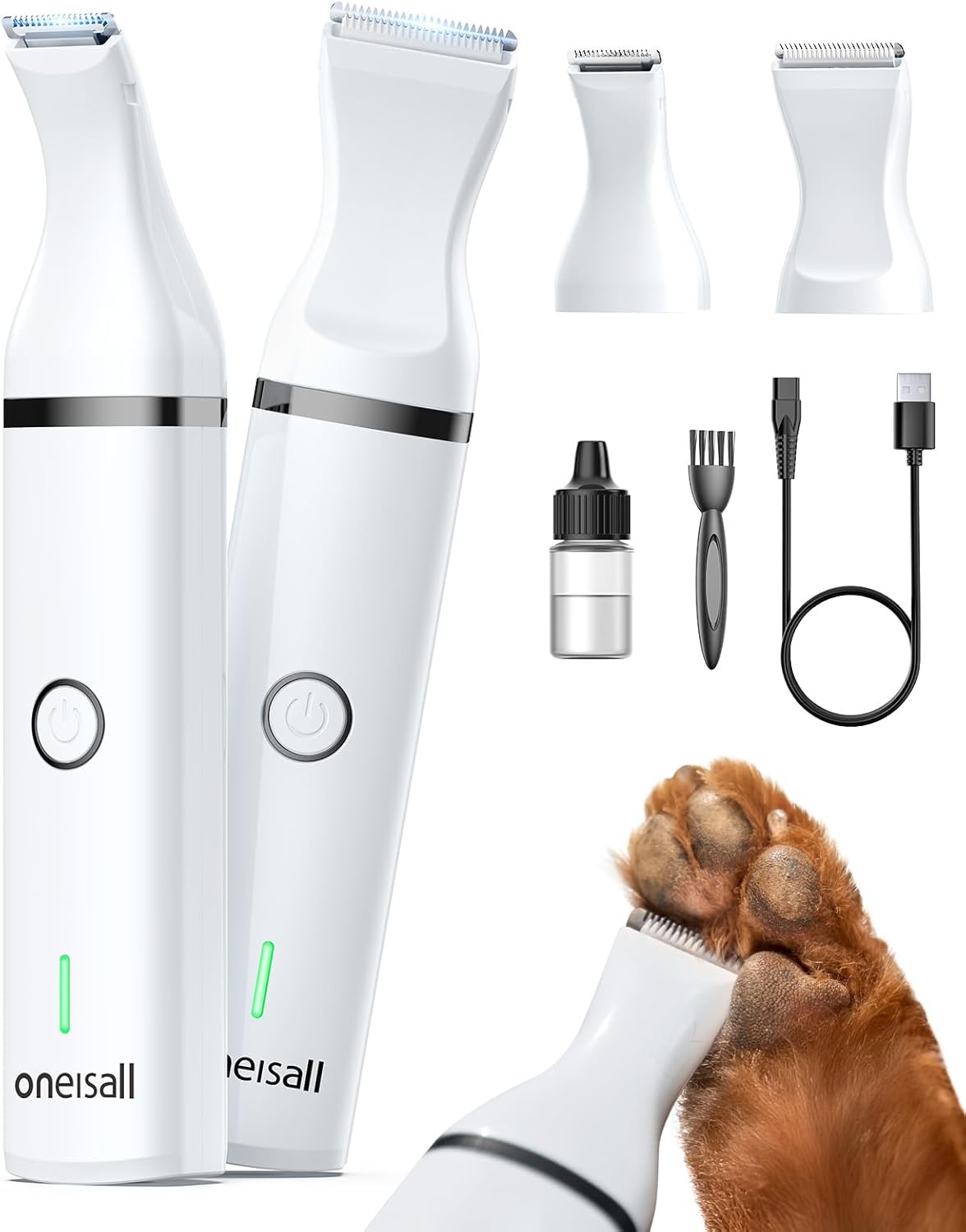
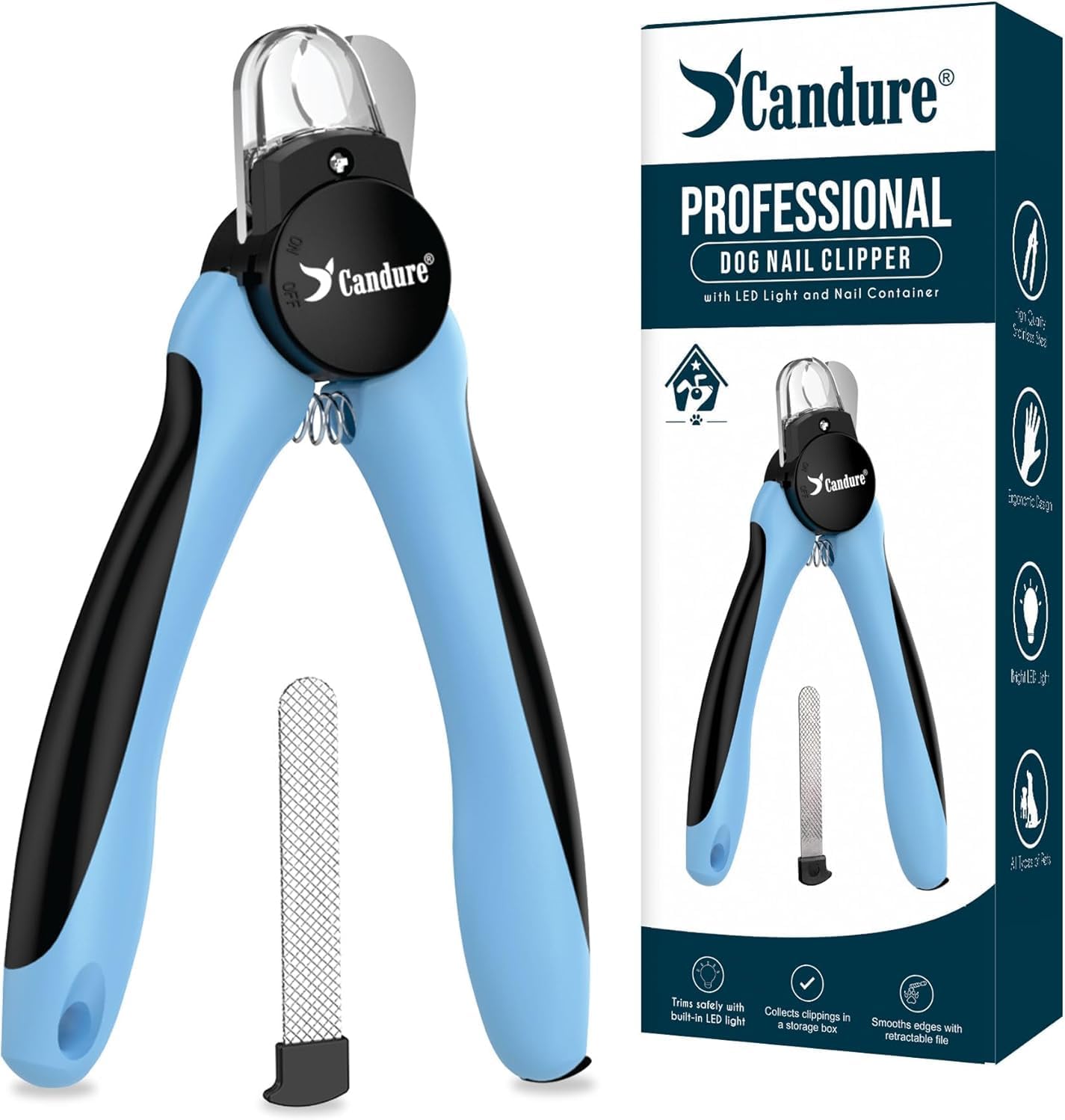
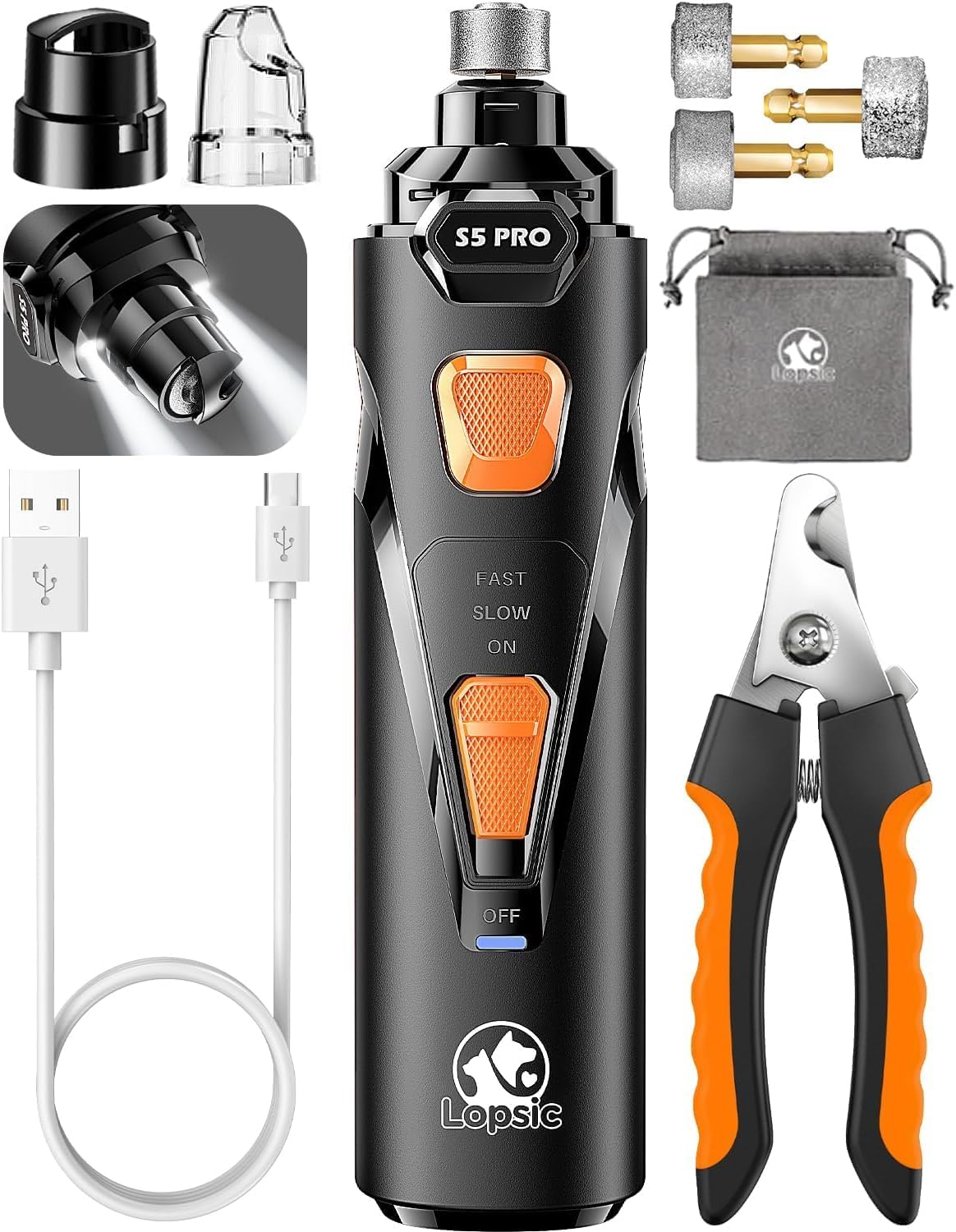
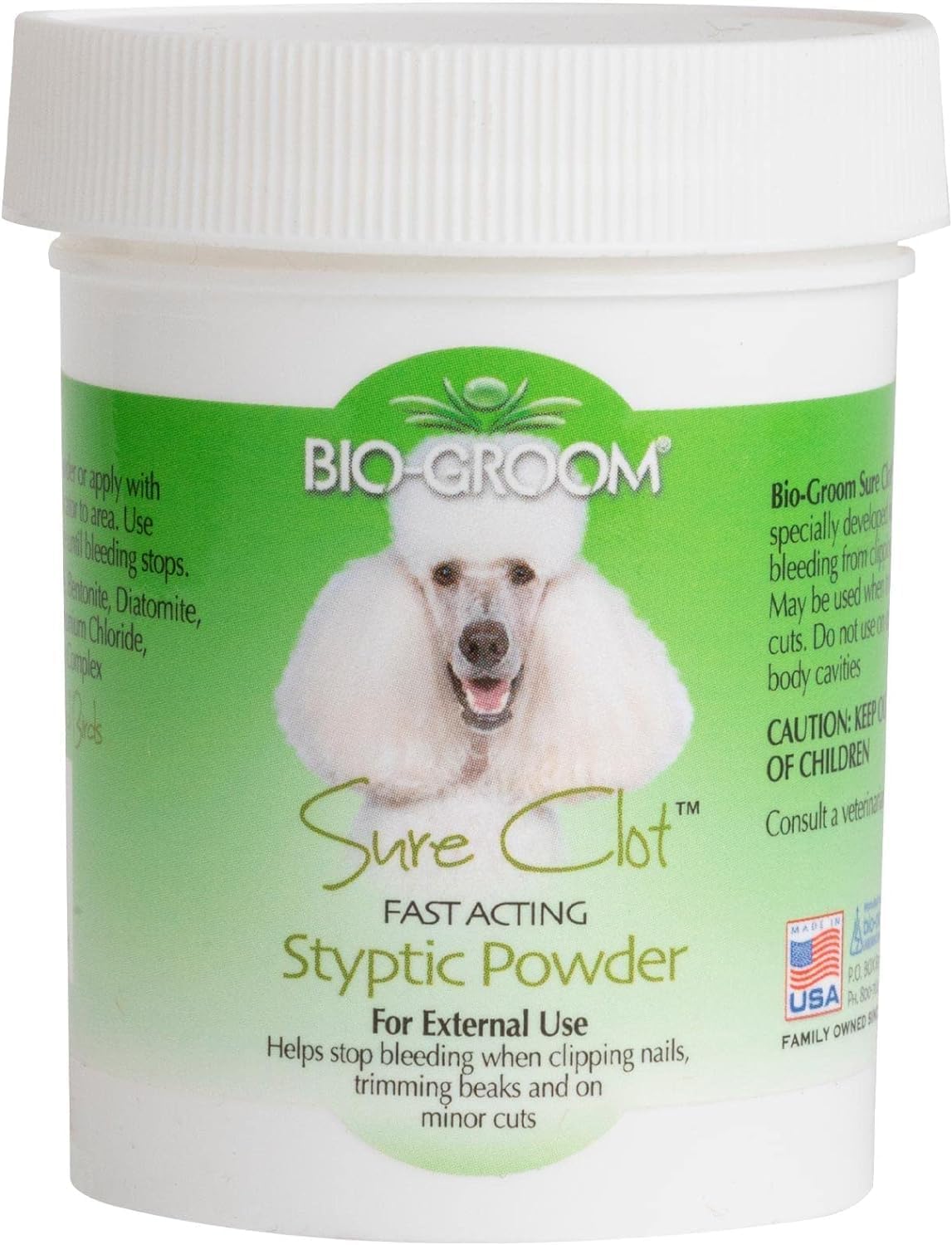
Nails matter more than people think, long nails can change how a dog stands, walks and feels, and they can catch or tear. If the whole idea makes you a little nervous, you are in very good company. You can use clippers or a grinder, whichever your dog minds least, and it is completely fine to ask your vet or groomer to walk you through it the first time.
Lana noteI'll be honest with you: Lana hates nail clippers, or really the sound of them, so for now we just skip it at home and live with slightly grinchy feet that occasionally smell like a packet of Fritos. If your dog is one of the calm ones who tolerates it, you're luckier than we are, go for it. If not, a quick groomer or vet visit sorts it out. You can't win them all, right?
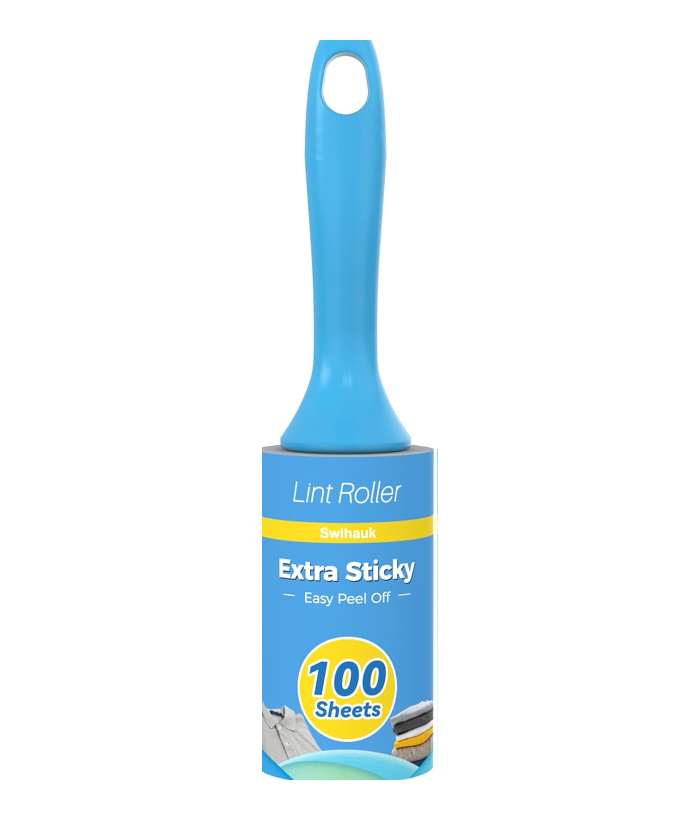
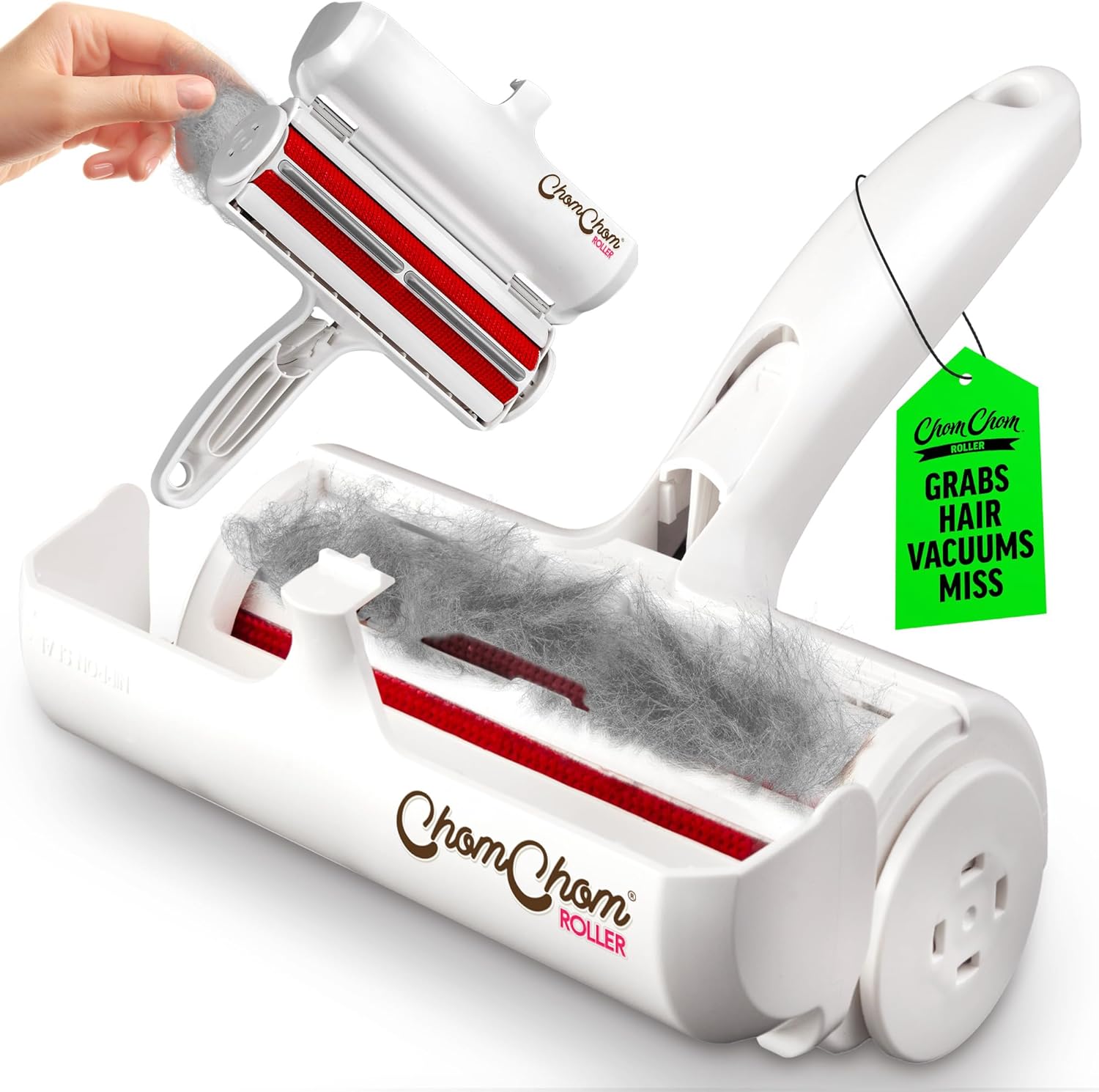
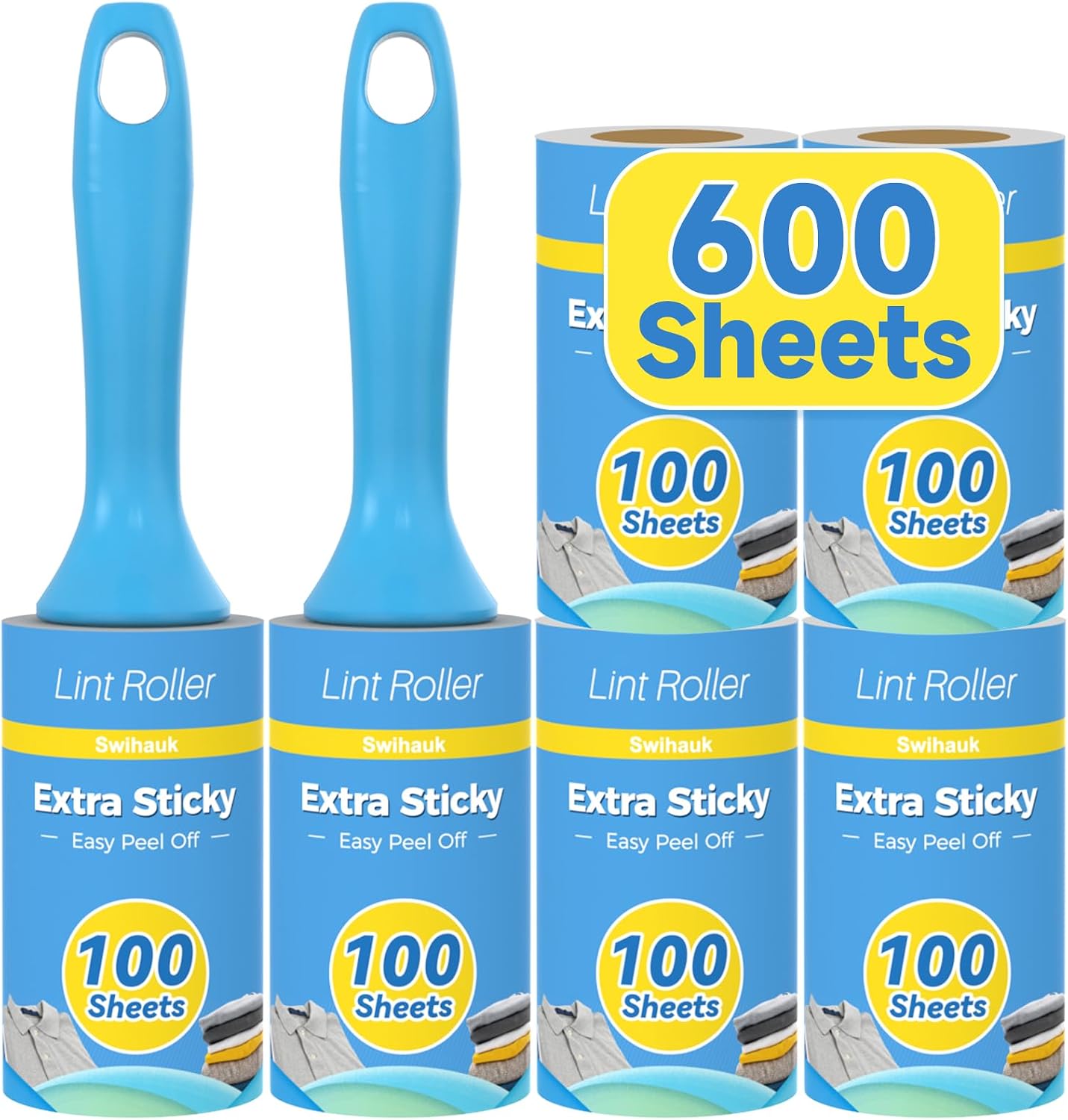
My ultimate go-to, a lint roller stashed in every room (and my handbag).
A pet hair remover, my absolute must-have
I love my Golden Retriever more than anything, but the hair? It sticks to everything, my clothes, the couch, the car seats, and somehow places I genuinely cannot explain. If you have a Golden, or any breed that sheds, you know exactly the feeling. This is the one product I keep everywhere: one in the car, one in almost every room. A reusable pet hair remover just rolls it all up and makes living with a shedding dog feel so much less overwhelming, and believe me, you will love it.
Lana noteI also have lint rollers stashed in every room, including my handbag, don't judge me, lol. Between the two, I'm never more than an arm's reach from de-fuzzing myself before I walk out the door.
Now that you know what each tool does, here's the order I move through them. On a normal week the whole thing takes about ten to fifteen minutes, longer when the undercoat is really blowing.
A few light strokes with the slicker, section by section, more of a massage than a scrape.
1
Start with a hands-on once-over
Before any brush comes out, I run my hands through her coat to feel for knots and check nothing is caught in the fur, grass seeds and burrs love the feathering. This tells me where to spend my time.
2
Mist any knots with detangling spray
A light spray on the tangles, mostly behind the ears, on the chest and through the tail feathering, softens them so they slide out instead of pulling. I never work a dry knot hard.
3
Reach the undercoat with a rake
During shedding season this is the big one. I work in the direction the coat grows, a few gentle passes over each area, lifting the loose, dead undercoat without touching the protective topcoat above it.
4
Brush the body with a slicker
Short, light strokes, section by section, more like a massage than a scrape. This lifts away the hair the rake loosened and starts to settle the coat smooth again.
5
Check the hidden spots with a comb
I run a steel comb through the trouble areas, behind the ears, under the legs, the chest and the feathering. If it glides through, that spot is done. If it catches, I go back with the slicker and try again.
6
Finish with a bristle brush
A few final passes smooth everything down and spread her natural coat oils, which is what leaves that soft, healthy shine. This is Lana's favourite part, she practically leans into it.
How often? A few times a week is plenty for most of the year. During heavy shedding, usually spring and autumn, I brush daily to stay ahead of the loose undercoat. Keep every session short and calm, grooming should be something your dog looks forward to, not something they tolerate.
Quick shop
The full grooming lineup
A hand-picked selection of grooming products for a double coat, grouped by job so it's easy to find what you need.
“Grooming is not about having a perfect dog. It is about caring for the dog you love, one brush stroke at a time.”
Light Paw Studio ♡
Final thoughts: grooming is not about perfection
Done gently, grooming becomes time together, and Lana is all in for it.
Living with a Golden Retriever means living with hair. On the floor. On your clothes. In the car. On the couch. Somehow everywhere. And I would not trade Lana's fluffy coat for anything.
Once I understood that her double coat has a purpose, grooming started to feel different. It stopped being about trying to control every strand of fur and became about helping her coat stay healthy, comfortable, and protected. If your dog is like Lana, you do not need to shave their coat to make grooming easier. Start with a few good tools. Brush gently and consistently. Learn where their tangles like to hide. Keep bath days simple. Ask for help when you need it.
♡ A gentle reminder
You do not need every grooming tool at once. Start with a good brush and a metal comb, and build from there. The most important thing is that grooming becomes a regular, calm part of your routine, something your dog learns to trust rather than tolerate.
No, for most Golden Retrievers, shaving is not recommended for summer cooling. The double coat actually insulates your dog from heat and protects the skin from UV exposure. Regular brushing to remove loose undercoat is a far better approach to keeping your dog comfortable in warm weather.
What is the best brush for a Golden Retriever?
A slicker brush is great for everyday brushing and removing loose hair. A pin brush works well for longer coat areas and general smoothing. An undercoat rake is especially useful during heavy shedding seasons, and a metal comb is essential for finding hidden tangles behind the ears, chest, and in the feathering.
How often should I brush a Golden Retriever?
A few times a week is a good baseline for most of the year. During heavy shedding seasons, usually spring and autumn, daily brushing helps manage the loose undercoat before it lands on your furniture. The AKC recommends more frequent brushing during shedding periods.
When is it okay to shave a double-coated dog?
Shaving may be necessary for medical reasons (such as pre-surgery preparation), when severe mats cannot be safely brushed out, or when a vet or professional groomer specifically recommends it for a health-related reason. In those situations, shaving is done for the dog's comfort and safety, which is a completely different thing from routine grooming.
Does bathing help with Golden Retriever shedding?
A bath followed by a thorough brush can help remove loose undercoat. The key is rinsing the coat completely and drying properly, trapped moisture in a thick double coat can cause skin issues. Regular brushing, not frequent bathing, is the most effective approach to managing everyday shedding.
How often should I bathe a Golden Retriever?
For most Golden Retrievers, every six to eight weeks is plenty, unless they get properly muddy or roll in something first. Bathing too often can strip the natural oils that keep the coat healthy and water-repellent. Between baths, a quick brush, some paw wipes or a waterless shampoo keep things fresh without a full wash.
Should I use a Furminator or deshedding blade on my Golden?
Use these kinds of blade tools sparingly and gently, if at all. They can pull out a lot of undercoat quickly, but used too hard or too often they can cut and damage the protective topcoat, which is the same reason we avoid shaving a double coat. A traditional undercoat rake and a slicker brush are gentler and give you more control during shedding season.
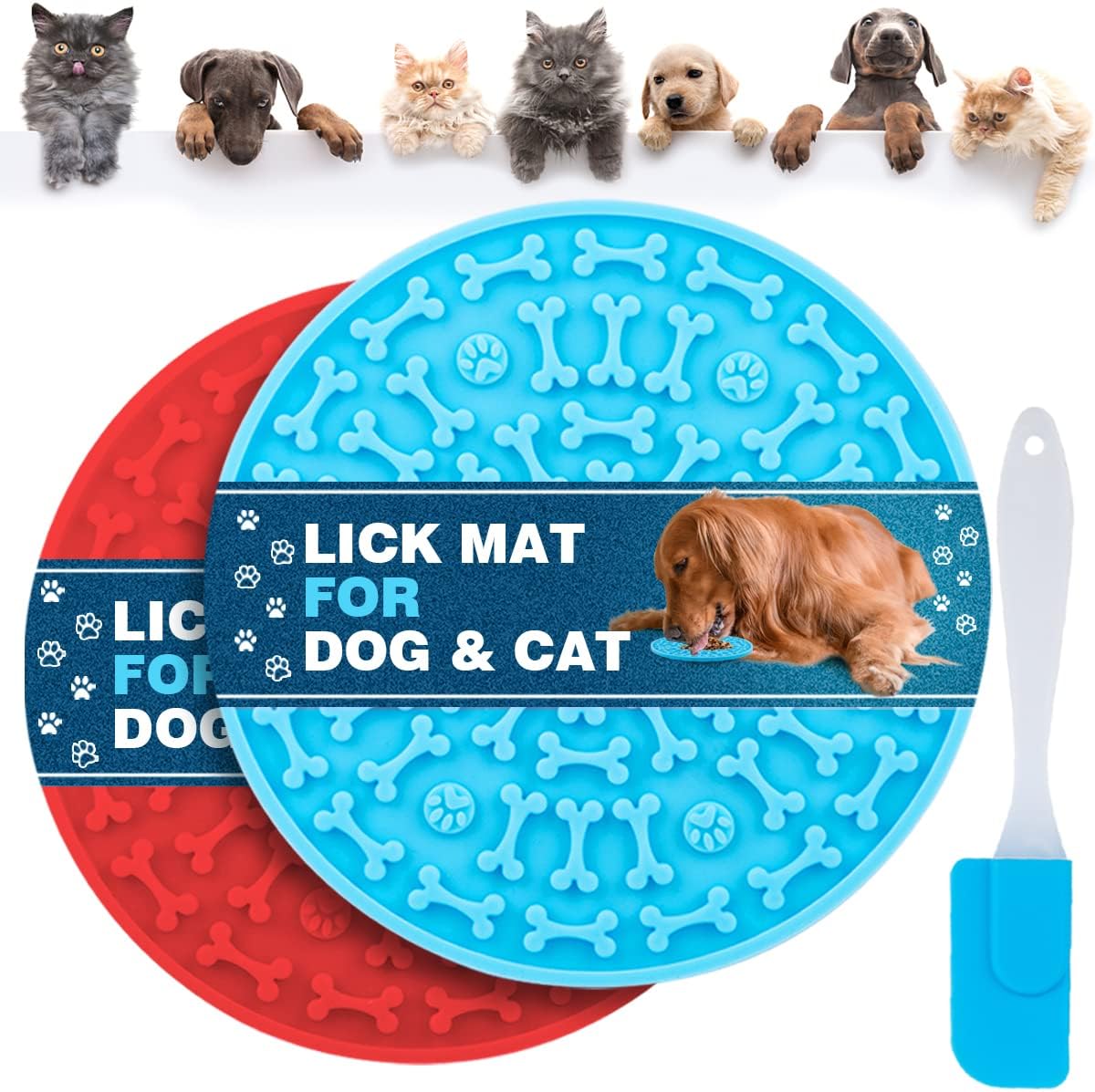
What if my dog hates being brushed or groomed?
Go slow and keep it short and positive. Start with just a few gentle strokes in an easy spot, pair grooming with treats or a loaded lick mat, and stop before your dog gets restless. Some dogs never love certain tools, Lana cannot stand nail clippers, and that is completely okay. When something is too stressful at home, a groomer or vet can help.